
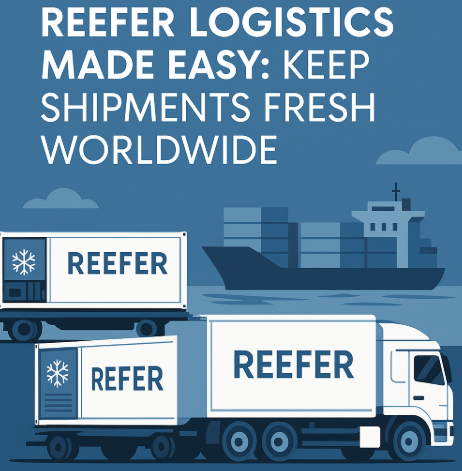
Transporting temperature-sensitive goods across continents requires precision, technology, and timing. Refrigerated freight — commonly known as reefer logistics — ensures perishable goods like food, pharmaceuticals, and chemicals reach global destinations safely. Velotac simplifies every step of this process, delivering cold chain shipping solutions that balance cost, safety, and speed for international trade.

What Is Reefer Freight and Why Is It Important?
A reefer (short for “refrigerated container”) maintains consistent temperatures for sensitive cargo. It’s vital for moving perishable or frozen goods over long distances, allowing producers to reach new global markets without compromising product quality.
Therefore, reefer logistics isn’t just a service—it’s an essential link in the global supply chain, ensuring products stay fresh, safe, and compliant during transit.
How Do Reefer Containers Work?
A reefer container integrates insulation and active cooling technology. Its built-in refrigeration unit keeps internal temperatures within the desired range, typically from -30°C to +30°C, while circulating air evenly to prevent hotspots.
| Cargo Type | Recommended Temperature | Humidity Level |
|---|---|---|
| Frozen Meat | -18°C | Low |
| Fresh Produce | +2°C to +8°C | Moderate |
| Pharmaceuticals | +2°C to +25°C | Controlled |
| Dairy Products | +1°C to +4°C | Low |
Modern refrigerated containers come with GPS, humidity tracking, and temperature monitoring systems. Velotac uses these technologies to give clients real-time visibility and data transparency throughout the cold chain.
Which Goods Depend on Temperature-Controlled Transport
Cold chain logistics supports a variety of industries beyond food.
- Food & Beverage: Fresh produce, frozen meals, seafood, dairy.
- Pharmaceuticals: Vaccines, insulin, biological samples.
- Chemicals: Adhesives, sensitive resins, and solvents.
- Floral & Agricultural: Flowers, bulbs, and seeds requiring humidity control.
Velotac coordinates every stage, from pre-cooling to customs, to guarantee product integrity for each sector.
Comparing Transport Modes for Cold Chain Shipping
Choosing the right mode depends on urgency, distance, and cost.
| Mode | Speed | Cost | Ideal Use |
|---|---|---|---|
| Sea Freight | Moderate | Low | Bulk shipments like frozen food |
| Air Freight | Fast | High | Urgent or high-value goods |
| Road Freight | Flexible | Moderate | Domestic and short-haul delivery |
| Intermodal | Balanced | Variable | Multimodal global shipments |
Sea freight dominates international cold chain shipping due to efficiency and scale, while air freight serves time-sensitive items. Velotac provides both, supported by specialized reefer terminals and airport facilities worldwide.
Common Challenges in Cold Chain Logistics
Temperature-controlled transport involves unique risks:
- Temperature deviations during power interruptions.
- Customs delays leading to product spoilage.
- Incorrect documentation delaying clearance.
- Congested routes affecting delivery timing.
Velotac mitigates these risks through real-time monitoring, automated alerts, and route optimization systems that ensure smooth international operations.
How to Prepare Goods for Reefer Shipping
Proper cargo preparation is crucial to maintaining product integrity. Below are essential steps:
- Pre-cool cargo before loading to minimize energy use.
- Use ventilated packaging to support air circulation.
- Label cargo clearly with “Perishable” or “Temperature-Sensitive.”
- Balance load weight to prevent airflow obstruction.
- Seal containers properly to avoid moisture ingress.
Therefore, preparation isn’t optional—it’s a quality control requirement. Velotac’s team assists clients with packing guidelines and temperature testing before shipment.
Need a reliable logistics partner? Share your shipment details and we’ll provide a tailored quotation quickly and accurately.
How Customs and Documentation Affect Reefer Freight
Customs compliance is one of the most critical parts of reefer shipping. Importing countries often require:
- Certificate of Origin
- Phytosanitary or veterinary certificates
- Temperature log reports
- Commercial invoice and packing list
Any inconsistency may trigger inspection or detention.
Velotac’s customs team pre-clears documentation and synchronizes delivery schedules with cold storage availability, preventing cargo exposure or thawing during customs procedures.
Reefer Freight Costs: What Factors Affect Pricing?
Reefer freight pricing depends on several variables:
| Cost Component | Description |
|---|---|
| Container Type | 20ft or 40ft reefer capacity and energy usage |
| Route Distance | Longer routes incur higher fuel and port fees |
| Seasonal Demand | Rates rise during harvest or holiday peaks |
| Power Charges | Electricity used for refrigeration |
| Additional Services | Pre-cooling, warehousing, customs handling |
To optimize costs, Velotac consolidates shipments and selects routes with stable temperatures and reliable transit times, ensuring both efficiency and affordability.
What Makes Velotac’s Reefer Solutions Different?
Velotac specializes in end-to-end reefer logistics for international traders and manufacturers. What sets Velotac apart includes:
- Comprehensive cold chain coverage: From pickup to final delivery.
- Real-time visibility: Remote monitoring and temperature tracking.
- Regulatory expertise: Seamless documentation and compliance management.
- Global partnerships: Access to major ports and airports worldwide.
With advanced reefer infrastructure and experienced teams, Velotac ensures every shipment stays within temperature parameters, regardless of distance or destination.
Reefer Logistics Trends in Global Trade
The demand for reefer shipping continues to rise due to global food trade and pharmaceutical expansion. Industry data shows reefer container volume growing by over 5% annually.
Emerging trends include:
- Digital cold chain platforms for tracking and predictive alerts.
- Eco-friendly refrigerants reducing carbon footprint.
- AI-based route optimization for lower transit time.
- Blockchain documentation improving traceability.
Velotac invests in these innovations, ensuring clients benefit from technology that enhances both sustainability and reliability.
Conclusion
Reefer logistics connects the world’s perishable goods markets. From fruits and seafood to vaccines and chemicals, it guarantees temperature integrity across global routes. However, success depends on coordination, documentation, and technology.
Velotac simplifies reefer freight through expert handling, compliance support, and global infrastructure. Whether shipping via sea or air, Velotac ensures your temperature-sensitive cargo stays fresh, compliant, and delivered on time.
Need a quote?
Ready to get started? Contact us now to request a free shipping quote.
Frequently Asked Questions (FAQ)
Reefer containers typically operate between -30°C and +30°C, adjustable to product requirements.
Most modern reefers include real-time monitoring systems that send temperature data directly to the logistics provider.
No, each reefer container maintains one consistent temperature setting for the entire load.
Backup generators and alarm systems activate immediately; logistics partners like Velotac monitor and intervene 24/7.
Food, pharmaceuticals, chemicals, and floral industries depend heavily on temperature-controlled transport.