
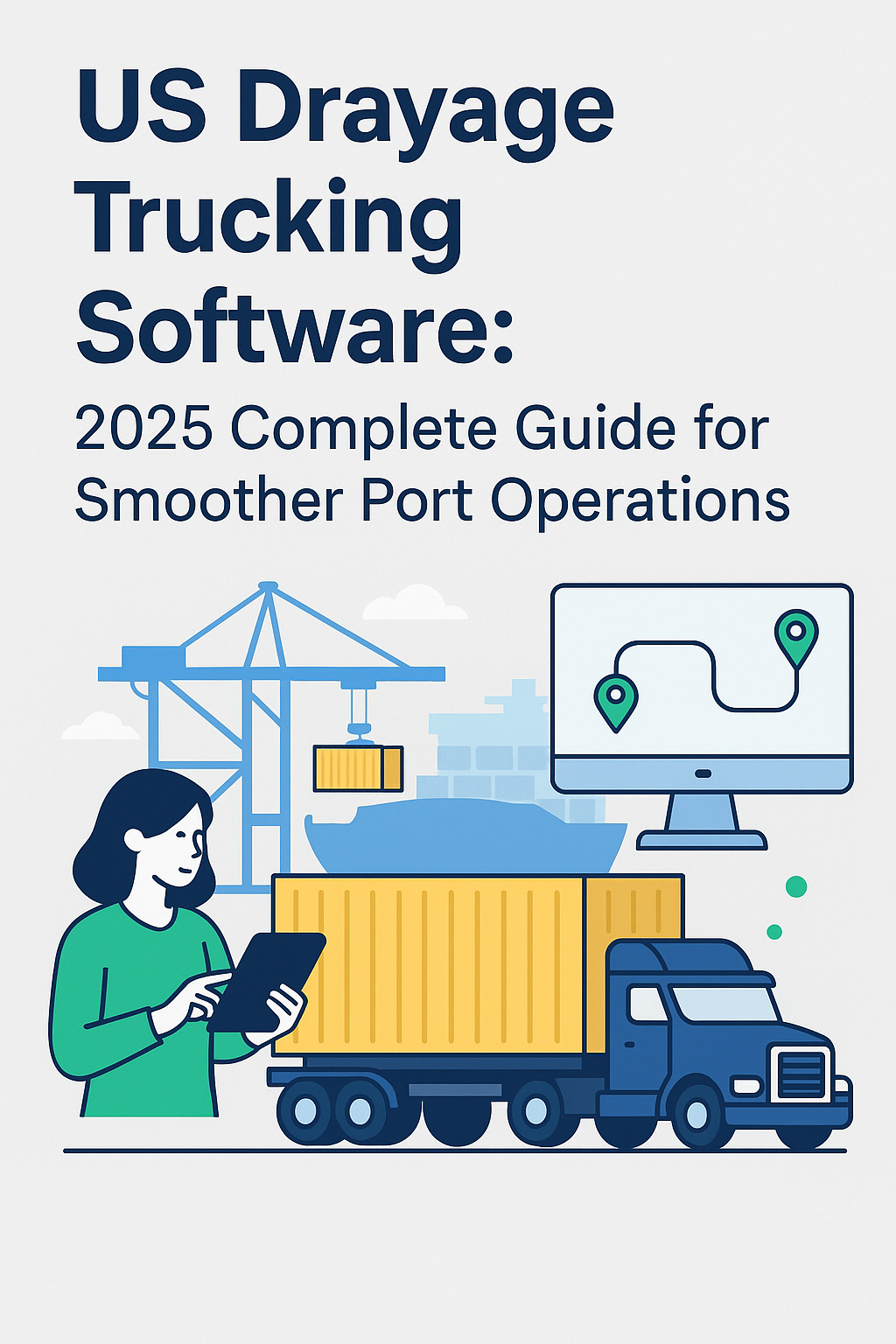
At busy US ports, even one delayed container can ripple through the entire supply chain. Dispatchers juggle dozens of calls, drivers wait for hours, and billing piles up. US drayage trucking software changes that rhythm — giving logistics teams real-time control, smoother coordination, and a clear overview from pickup to delivery.
What Is US Drayage Trucking Software?
It’s a specialized platform that manages short-haul container moves between terminals, depots, and warehouses. Designed for drayage carriers and importers, it synchronizes orders, drivers, chassis, and billing — all in one place.
Core capabilities include:
- Automated dispatch and driver scheduling
- Real-time truck and container tracking
- Electronic proof of delivery (ePOD) and document storage
- Built-in billing and invoice automation
- Terminal and EDI integration for instant status updates
By simplifying every link of the process, the software replaces guesswork with predictable, visible workflows.
How It Streamlines Daily Operations
Managing drayage without digital tools often means working reactively. With software, your operations become proactive.
Here’s how:
- Real-time dispatching: Assign loads instantly based on location, equipment, and driver availability.
- Faster turnarounds: Track containers from vessel discharge to delivery, avoiding idle time.
- Connected communication: Dispatchers and drivers share updates instantly through mobile apps.
- Seamless billing: Completed jobs trigger automatic invoices — no missing paperwork.
The result is a consistent flow of containers and fewer interruptions at every stage.
What Makes Modern Drayage Software Different
Unlike generic trucking tools, US drayage trucking software focuses on the unique rhythm of port operations — short distances, strict gate appointments, and rapid container turnover.
Modern systems stand out through:
- Smart Routing: Uses live data to assign the nearest driver.
- Chassis Monitoring: Tracks usage hours and prevents overcharges.
- Driver Apps: Let drivers upload photos and sign electronically.
- Automatic Alerts: Remind dispatchers before free time expires.
- Performance Insights: Dashboards showing driver, port, and lane efficiency.
This precision helps companies manage higher volumes with fewer resources.
Why It Matters for Carriers and Importers
Every hour saved in drayage translates to stronger delivery performance and fewer penalties.
For carriers:
- Optimize truck utilization and reduce empty miles.
- Simplify compliance with ELD and HOS rules.
- Accelerate cash flow through faster invoicing.
For importers and shippers:
- Gain container visibility across terminals.
- Avoid demurrage and detention through timely updates.
- Access real-time shipment information anytime.
Smooth coordination at the port reduces pressure downstream across the supply chain.
Implementing the System Smoothly
Rolling out new technology is easier than most teams expect.
Best practices for a smooth transition:
- Start with a pilot phase: Run software on one route or terminal first.
- Train dispatchers and drivers: Short online sessions usually suffice.
- Integrate data sources: Connect TMS, accounting, and EDI feeds.
- Set measurable KPIs: For example, reduce idle time by 20%.
- Review results monthly: Fine-tune settings for optimal performance.
When everyone’s aligned, the software quickly becomes a natural part of daily operations.
Example: How a Florida Carrier Improved Turn Times
A regional drayage company managing 800 monthly containers adopted a cloud-based solution.
- Dispatch time dropped from 9 minutes to under 3 minutes per load.
- On-time delivery rate improved from 88% to 97%.
- Idle hours fell by 26%, saving $5,000 per month in fuel.
- Invoices sent within 24 hours of job completion improved cash recovery.
In less than three months, the company fully offset the subscription cost.
How to Select the Right Partner
Look for a technology provider that understands port operations as deeply as you do.
Evaluation checklist:
- Proven experience in drayage or intermodal logistics.
- Scalable pricing that fits your fleet size.
- US-based support and training resources.
- Integration with port EDI and chassis providers.
- Transparent contract terms and no hidden add-ons.
A good software partner should feel like an operational ally, not a vendor.
Conclusion
In today’s high-volume logistics environment, reliability at the port determines the success of your supply chain. US drayage trucking software gives you visibility, control, and faster workflows from dispatch to billing. It doesn’t just organize data — it transforms how your team works every day.
📦Get a Free Quote
Most carriers can go live in 3–4 weeks, including setup, data import, and staff training.
Yes. Even fleets with fewer than 10 trucks benefit from automated dispatch and digital billing.
Absolutely. Leading US platforms integrate with EDI feeds from major ports for container status updates.
Most plans range from $25 to $70 per truck monthly, depending on features and service level.
Yes, it automatically generates invoices once proof of delivery is uploaded by the driver.