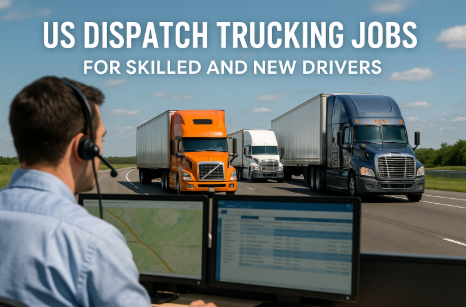
The trucking industry powers the American economy, moving over 70% of all domestic freight each year. For both experienced and new drivers, US dispatch trucking jobs offer rewarding opportunities, flexibility, and stable income. As logistics demand continues to grow, dispatchers and drivers play a vital role in ensuring timely deliveries across the nation.
What Are US Dispatch Trucking Jobs?
US dispatch trucking jobs involve coordinating freight movement between shippers, drivers, and logistics companies. Dispatchers manage route assignments, communicate schedules, and ensure drivers meet deadlines safely and efficiently. On the road, drivers transport goods nationwide, supported by dispatchers who monitor conditions and guide them through each delivery step.
Why Are Trucking Dispatch Jobs in High Demand?
The US logistics network operates around the clock. Rising e-commerce, manufacturing output, and global trade expansion have created a strong need for reliable dispatchers and skilled drivers. In addition, the ongoing driver shortage means many companies are offering better pay packages, incentives, and modern equipment to attract and retain professionals.
How Does a Dispatcher Support Truck Drivers?
Dispatchers are the backbone of freight coordination. They plan routes, communicate pickup and drop-off times, handle customer instructions, and resolve unexpected issues. With real-time tracking tools, they can reroute vehicles during congestion or weather disruptions. Therefore, dispatchers ensure that every driver remains productive while maintaining compliance with regulations.
Comparison: Dispatcher vs. Truck Driver Responsibilities
Role
Core Duties
Typical Pay Range
Required Skills
Dispatcher
Route planning, load scheduling, communication
$45,000–$70,000
Coordination, tech-savvy, problem-solving
Truck Driver
Transport goods safely and efficiently
$55,000–$95,000
Driving skill, time management, endurance
Both positions are interdependent. Dispatchers guide operations, while drivers execute the physical movement of goods — together forming the backbone of American freight.
What Skills Are Essential for Dispatch Professionals?
A successful dispatch professional combines logistics knowledge with soft skills. Essential abilities include:
Multitasking: Managing multiple drivers and routes at once.
Communication: Providing clear instructions and updates.
Technology Use: Navigating GPS, load boards, and tracking software.
Problem Solving: Quickly adapting to route changes or equipment issues.
Moreover, dispatchers must understand federal transportation laws and safety regulations to maintain compliance at all times.
What Are the Benefits of US Dispatch Trucking Jobs?
Working in dispatch or trucking offers several advantages:
Competitive salaries with growth potential.
Flexible schedules for work-life balance.
Opportunities to work with national or regional carriers.
Constant demand ensuring job stability.
Exposure to advanced logistics technology and digital tools.
Furthermore, both fields open doors for career advancement — dispatchers may move into operations management, while drivers can transition into owner-operator or logistics roles.
These figures vary depending on region, fleet size, and the type of freight hauled.
How Can New Drivers Get Started?
For newcomers, the first step is obtaining a Commercial Driver’s License (CDL) through an accredited training program. After that, drivers can gain experience with regional carriers before applying for nationwide dispatch-supported routes. Additionally, joining reputable freight companies offers mentorship programs, bonuses, and long-term growth.
What Is the Role of Technology in Modern Dispatching?
Technology has revolutionized the dispatch process. Digital load boards, automated scheduling tools, and GPS tracking systems now handle tasks that once required manual coordination. Artificial Intelligence predicts the best routes, while mobile apps provide real-time updates for drivers. In addition, telematics data helps improve fuel efficiency, safety, and performance monitoring across fleets.
How Can Dispatch Systems Improve Efficiency?
Advanced dispatch systems reduce downtime by automatically matching loads with available drivers. This ensures continuous utilization and fewer empty miles. Furthermore, they help optimize load distribution, prevent scheduling conflicts, and cut unnecessary fuel expenses. Companies using smart dispatch tools can achieve 10–20% higher efficiency across their fleets.
Key Benefits of Advanced Dispatch Systems
Feature
Benefit
Example Impact
Route Optimization
Faster deliveries
15% shorter transit time
Load Matching
Higher truck utilization
Fewer empty miles
Real-Time Updates
Improved visibility
Faster response to issues
Automated Invoicing
Streamlined admin work
20% less paperwork
These technologies simplify communication between dispatchers, drivers, and shippers — leading to faster turnaround times.
Conclusion
In a fast-moving economy, US dispatch trucking jobs remain among the most essential and stable careers. From dispatch coordination to long-haul driving, these roles keep America’s supply chain strong and efficient. Whether you’re a new driver seeking steady income or a dispatcher looking for career growth, this field offers unmatched potential, stability, and opportunity.
Need a quote?
Ready to get started? Contact us now to request a free shipping quote.