
Table of Contents
Exporting from the United States opens vast global opportunities, but without the correct paperwork, shipments can face costly delays or even rejection. Understanding US export documentation and procedures is essential for compliance, efficiency, and credibility in international trade. Partnering with VELOTACTICS LOGISTICS ensures every export process — from documentation to delivery — runs smoothly, minimizing risks and saving time.
What Are US Export Documentation and Procedures?
US export documentation and procedures refer to the standardized process of preparing, verifying, and submitting all required forms and data before goods leave the country. These ensure compliance with U.S. laws, international regulations, and destination-country requirements.
The process typically involves:
- Preparing commercial documents (invoice, packing list).
- Obtaining export licenses where necessary.
- Filing the Electronic Export Information (EEI).
- Coordinating transportation and insurance.
- Managing customs declarations and clearance.
Exporters who neglect any of these steps risk penalties, delays, or cargo holds.
Why Are Export Documents So Important?
Accurate export documentation serves as both a legal requirement and a logistics necessity. It ensures:
- Customs authorities approve export clearance.
- Buyers receive goods with complete records for import.
- Payment is processed through banks under documentary credit.
- Shippers and insurers can verify claims if issues arise.
Without these documents, even the best logistics strategy fails. For smooth customs clearance, send an inquiry to learn how VELOTACTICS ensures every document meets compliance standards.
Key Documents Required for US Exports
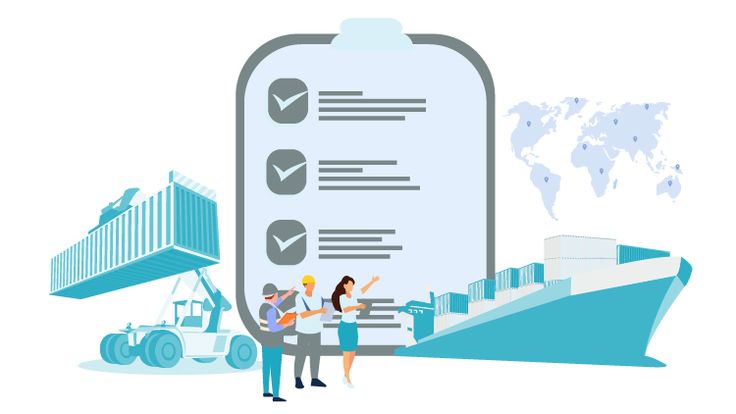
Below is a checklist of the most common and essential export documents:
| Document | Purpose | Issued By |
|---|---|---|
| Commercial Invoice | Details goods, value, and buyer info | Exporter |
| Packing List | Describes shipment contents | Exporter |
| Shipper’s Export Declaration (EEI) | Filed electronically via AES | Exporter or agent |
| Bill of Lading / Air Waybill | Contract of carriage | Carrier |
| Export License | Required for controlled goods | BIS or DDTC |
| Certificate of Origin | Verifies product’s origin | Exporter/Chamber |
| Insurance Certificate | Covers shipment risk | Insurer or forwarder |
| Proforma Invoice | Pre-shipment offer for buyer | Exporter |
Partnering with a Customs Brokerage provider ensures all forms are filed correctly, preventing any compliance issues.
How to Prepare Export Documentation Step by Step
Export procedures follow a strict sequence to maintain legality and efficiency.
| Step | Description | Responsible Party |
|---|---|---|
| 1 | Identify product classification (HS Code) | Exporter |
| 2 | Determine license requirements | Exporter/Agency |
| 3 | Verify restricted parties and embargoes | Exporter |
| 4 | Prepare invoices, packing list, and certificate | Exporter |
| 5 | File EEI in the Automated Export System (AES) | Forwarder/Exporter |
| 6 | Arrange freight and insurance | Service provider |
| 7 | Deliver goods to carrier | Exporter |
| 8 | Track export clearance and destination receipt | Forwarder |
Each stage must align with both U.S. export laws and destination-country import rules.
Who Regulates US Export Documentation and Procedures?
Several U.S. government bodies oversee export operations:
- Bureau of Industry and Security (BIS): Controls dual-use goods and technology.
- U.S. Customs and Border Protection (CBP): Manages physical export and clearance.
- U.S. Census Bureau: Collects export data via AES filings.
- Department of State (DDTC): Handles defense-related exports under ITAR.
Understanding which agency governs your goods is critical for compliance. VELOTACTICS LOGISTICS helps identify the correct regulations for each product category.
How to File Electronic Export Information (EEI)

The EEI is filed via the Automated Export System (AES) to provide data on shipments valued above $2,500 or requiring a license.
| Field | Requirement | Example |
|---|---|---|
| USPPI (U.S. Principal Party in Interest) | Exporter’s info | ABC Export LLC |
| Schedule B/HS Code | Classification number | 8471.30 |
| ECCN | Export Control Classification | 3A001 |
| Destination | Final country of delivery | Germany |
| Value & Quantity | Commercial details | $25,000 / 100 pcs |
Filing errors can cause fines up to $10,000 per violation. For secure EEI submission, contact VELOTACTICS for guidance through our Express Service.
How to Choose the Right Freight Mode for Export
The export procedure also involves selecting the best shipping method for your cargo type and timeline.
| Mode | Avg. Cost (USD/CBM) | Transit Time | Ideal For | Pros | Cons |
|---|---|---|---|---|---|
| Air Freight | 8–12 | 3–7 days | Urgent & high-value cargo | Speed | Cost |
| Sea Freight | 1–3 | 25–40 days | Large-volume goods | Low price | Slow transit |
| Door To Door | Varies | 10–30 days | SMEs, e-commerce | Simplicity | Limited speed |
| Break Bulk | Custom | 30–50 days | Oversized shipments | Flexibility | Higher cost |
For customized shipment planning, visit our Sea Freight or Air Freight pages.
Common Mistakes in US Export Documentation
Even experienced exporters can make documentation errors that cause serious delays.
Common mistakes include:
- Incorrect HS Code or ECCN classification.
- Missing consignee or end-user information.
- Filing late or inaccurate EEI forms.
- Failing to verify restricted-party lists.
- Using outdated export license numbers.
VELOTACTICS assists exporters in avoiding these costly issues through our Door To Door and Cargo Insurance programs.
Case Example: Electronics Export to Germany
A California-based electronics exporter faced customs rejections due to mismatched documentation. VELOTACTICS reviewed the EEI filings, corrected the ECCN classification, and reissued the commercial invoice.
Results:
- Clearance achieved in 24 hours (previously delayed 5 days).
- Freight cost reduced by 12% through optimized routing.
- Client gained full compliance certification.
👉 Real outcomes prove that expert logistics partners save time and protect your reputation. Send Inquiry →
How Export Insurance Protects Your Shipment
Export documentation should always include proof of cargo insurance. This ensures coverage against:
- Theft or loss during transit.
- Damage caused by handling or weather.
- Delays leading to financial loss.
Our Cargo Insurance ensures every shipment has comprehensive protection from pickup to delivery.
| Coverage Type | Protection Scope | Best For |
|---|---|---|
| All-Risk | Covers most losses | General goods |
| Named Perils | Specific listed risks | Low-value cargo |
| Total Loss | Only full loss covered | Bulk cargo |
Conclusion:
Mastering US export documentation and procedures is the key to a successful international business. From EEI filings to certificates of origin, every form plays a critical role in legal compliance and smooth logistics. With VELOTACTICS LOGISTICS as your trusted partner, exporters gain the confidence to trade globally — efficiently, safely, and in full compliance with export laws.
Get a Quote
Looking to simplify your export process? 🚀 Get your personalized logistics plan and quote in less than 24 hours. VELOTACTICS LOGISTICS offers full documentation support, freight coordination, and customs expertise — request your quote now and start exporting confidently!
FAQ
You need a commercial invoice, packing list, bill of lading, and EEI filing for most shipments.
The Electronic Export Information (EEI) is filed for shipments over $2,500 or those requiring export licenses.
Licenses are issued by the Bureau of Industry and Security (BIS) or Department of State (DDTC) for controlled goods.
Use licensed forwarders like VELOTACTICS for review, classification checks, and electronic filing support.
An All-Risk or Named Perils cargo policy ensures compensation for loss or damage during transport.
All export documentation must be stored for at least five years after shipment for compliance audits.