
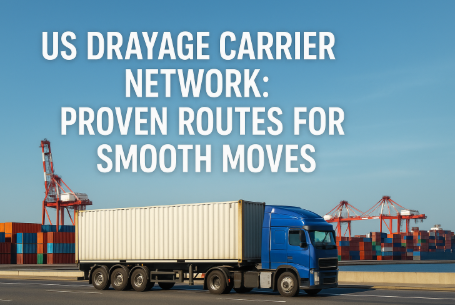
Because port trucking is driven by precision, timing, and carrier availability, the US drayage carrier network often determines how quickly freight clears terminals and reaches the next stage of the supply chain. Although drayage may seem like a short-haul service, its complexity demands strong coordination, dependable partners, and the ability to adapt quickly to port congestion and scheduling rules. Therefore, understanding how carrier networks operate gives importers a major advantage when planning deliveries.

What Is a US Drayage Carrier Network and Why Does It Matter?
Although drayage appears straightforward, the underlying carrier network consists of hundreds of specialized trucking companies, owner-operators, chassis providers, dispatch centers, and port-registered drivers. Additionally, ports operate with unique appointment systems and strict security protocols.
Therefore, the US drayage carrier network determines:
- How fast a container can be retrieved
- Whether a driver can enter a terminal within the appointment window
- How well the truckload aligns with warehouse receiving schedules
- The cost efficiency of port-to-warehouse transfer
- The consistency of customer delivery timelines
Because these variables can shift daily, importers rely heavily on carrier networks that remain flexible yet reliable under pressure.
How Does the US Drayage Carrier Network Operate at Major Ports?
Although every port functions differently, drayage networks follow a common operational cycle:
- Carrier assignment based on location, equipment, and driver availability
- Terminal appointment booking according to port rules
- Driver check-in at the terminal gate
- Container retrieval using port equipment
- Outbound dispatch to the warehouse or transload facility
- Empty container return to designated depots
Because ports such as Los Angeles, Newark, and Savannah update appointment windows daily, strong carrier networks quickly adjust to shifting conditions.
Velotac Logistics operates across the nation with an optimized drayage partner network that monitors appointment slots, dynamically allocates drivers, and uses route intelligence tools to shorten delays.
What Problems Do Importers Face Without a Strong Drayage Carrier Network?
Although cargo may arrive on schedule, poor coordination can create significant bottlenecks:
- Missed terminal appointments
- Long wait times for drivers
- Chassis shortages
- Split-terminal pickups
- Incorrect depot routing
- Inconsistent communication between dispatchers and warehouses
- Excessive demurrage and detention
However, these challenges are preventable when importers work with a broad, well-managed carrier network that can reposition resources quickly and predict operational risks.
How Does Carrier Coverage Influence Port-to-Warehouse Speed?
Because port layouts vary dramatically, network coverage must include multiple specialized carrier types:
- Local drayage carriers within 10–15 miles
- Regional short-haul carriers for 30–80 mile moves
- Owner-operators certified for pier access
- Carriers with RFID and TWIC credential requirements
- Specialized drivers for overweight or reefer containers
Therefore, wide carrier coverage guarantees reliability even when port congestion spikes.
Below is a general comparison of coverage and performance benefits.
| Coverage Level | Description | Result |
|---|---|---|
| Limited Network | Few carriers; narrow radius | Higher delays & unstable pricing |
| Moderate Network | Several partners across city | Adequate reliability |
| Expanded Network | Broad carrier mix across regions | Faster pickups; fewer delays |
| Nationwide Network | Multi-port access & deep resources | Highest stability & predictable ETAs |
A robust carrier network does more than increase truck availability — it ensures smoother operational flow across every step of the supply chain.
What Role Does Technology Play in Carrier Network Efficiency?
Because modern drayage depends on real-time visibility, high-performing networks rely on digital tools such as:
- GPS-based truck tracking
- Automated dispatch systems
- Port queue monitoring
- AI-powered route guidance
- Real-time chassis availability feeds
- Dynamic ETA updates
- Proof-of-delivery automation
Moreover, strong carrier networks integrate directly with warehouse systems, ensuring receiving teams prepare for unloading at the right time.
Velotac Logistics incorporates live data feeds, allowing importers to preview risks before they become costly delays.
How Do Drayage Carrier Networks Handle Chassis, Equipment, and Depot Rules?
Although drayage seems simple, carriers must navigate multiple equipment variables:
- Steamship line chassis pools
- Terminal chassis shortages
- Off-dock chassis rental yards
- Specialized equipment for overweight units
- Reefer plug-in availability at depots
- Flipped, tri-axle, or split-chassis requirements
Because these rules shift by terminal, carrier networks with broad equipment access outperform smaller operators.
| Equipment Type | Requirement | Impact |
|---|---|---|
| Standard Chassis | Port or pool pickup | Fast availability |
| Overweight Chassis | Permits & specialized axles | Higher cost, stable for heavy cargo |
| Reefer Chassis | Plug-in monitoring | Essential for perishables |
| Tri-Axle | Heavy 20’ containers | Reduces fines & risk |
| Flip/Transloading Chassis | Cross-dock operations | Faster inland distribution |
Although importers rarely manage these details directly, choosing a partner with the right carrier network ensures equipment is never the bottleneck.

How Does a Strong Carrier Network Reduce Drayage Costs?
Although drayage pricing depends on fuel, mileage, and congestion, network strength affects several cost-saving elements:
- Fewer missed appointments
- Reduced idle time at gates
- Access to the most efficient routes
- Better chassis availability
- Lower detention and demurrage exposure
- Faster empty returns
- Improved truck utilization
Consequently, importers experience more predictable billing and fewer surprise charges.
How Does a US Drayage Carrier Network Support Transloading and Multimodal Moves?
Because drayage is only the first domestic step, strong networks integrate with downstream logistics:
- Transloading into 53’ trailers
- LTL or FTL trucking for long-haul moves
- Intermodal rail ramps for inland distribution
- Short-haul regional delivery
- Cross-dock operations near major gateways
Below is a simplified overview.
| Drayage Step | Integrated Mode | Benefit |
|---|---|---|
| Port Pickup | Transload | Faster inland routing |
| Terminal → Warehouse | LTL / FTL | Cost-effective regional delivery |
| Port → Rail Ramp | Intermodal Rail | Lower long-haul cost |
| Warehouse → DC | Final Mile | Smooth retail/e-commerce flow |
Therefore, a strong carrier network improves the consistency and speed of every downstream supply-chain function.
How Velotac Logistics Strengthens Drayage Through Network Design
Velotac Logistics operates a continuously expanding drayage carrier network across major US ports, supporting importers that require:
- Fast port pickups
- Reliable coverage during peak cargo surges
- Transparent delivery schedules
- Real-time visibility for dispatch and routing
- Integrated cross-dock and transload options
- Easy multi-port coordination for complex flows
Moreover, Velotac uses technology-driven dispatching to match the right carrier with each container, reducing delays and ensuring consistent performance.

Conclusion
Because drayage operates under strict terminal rules and fast-changing conditions, the strength of the US drayage carrier network determines how efficiently containers move through ports. When businesses rely on networks with broad coverage, strong visibility tools, and integrated routing intelligence, port-to-warehouse operations become smooth, predictable, and cost-efficient.
Therefore, importers who partner with a dependable drayage network gain better scheduling, fewer delays, and higher supply-chain reliability.
Need a quote?
Ready to get started? Contact us now to request a free shipping quote.
Frequently Asked Questions (FAQ)
It optimizes driver allocation, reduces wait times, and ensures carriers are strategically located near terminals for fast turnarounds.
Many do. TWIC, RFID tags, port authority certifications, and terminal-specific access rules often apply depending on location.
Yes. With more drivers and equipment options, containers move faster, decreasing the risk of costly storage fees.
Stronger networks access multiple chassis pools and rental yards, reducing delays caused by equipment shortages.
Absolutely. Specialized carrier partners handle reefer monitoring, overweight permits, and tri-axle chassis needs.