
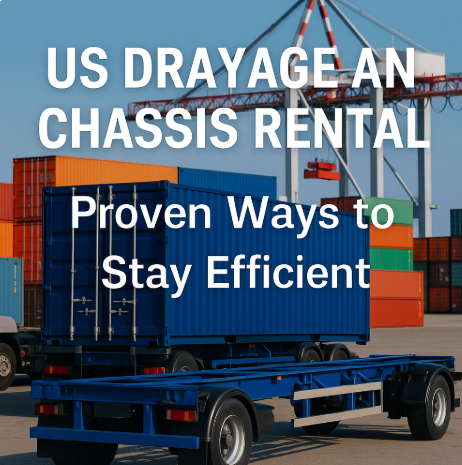
Because port operations shift rapidly every week, businesses importing goods into the United States rely heavily on efficient drayage and reliable chassis access. Although drayage moves cargo only a short distance, it determines how fast containers leave congested terminals, enter transloading facilities, and flow into the nationwide distribution network. Therefore, understanding how US drayage and chassis rental services work—and how to optimize them—helps importers reduce costs, prevent delays, and improve overall supply-chain performance.

What Are US Drayage and Chassis Rental, and Why Do They Matter?
Although many importers focus on ocean freight, the domestic port-to-warehouse segment is equally vital. US drayage refers to short-haul container moves between ports, rail ramps, warehouses, and cross-dock facilities. Meanwhile, chassis rental provides the specialized equipment that allows trucks to carry containers safely.
Because carriers cannot move containers without chassis, the availability of both services determines:
- Pickup speed
- Terminal gate efficiency
- Detention and demurrage risk
- Warehouse receiving coordination
- Overall delivery predictability
Therefore, importers who understand the relationship between drayage and chassis rental gain better control over port-side operations and avoid many hidden costs.
How Does the US Drayage Process Work from Port to Warehouse?
Although each port has its own rules, drayage follows a consistent flow:
- Container becomes available after vessel unload
- Chassis is assigned (from pool, private fleet, or rental depot)
- Terminal appointment is booked
- Driver arrives at the gate during the assigned window
- Container is retrieved and mounted on chassis
- Delivery to warehouse or transload
- Empty container is returned to an approved depot
Because ports like Los Angeles, New York, and Savannah use appointment-only systems, timing becomes critical. Moreover, chassis shortages or depot closures can disrupt the entire schedule if not planned in advance.
Velotac Logistics manages these operational details daily, preventing delays and helping importers avoid unnecessary storage fees.

What Challenges Do Importers Face with Drayage and Chassis Rental?
Although drayage should be simple, several unpredictable variables create risk:
- Appointment congestion and time-slot shortages
- Chassis unavailability during peak periods
- Multiple return depots with inconsistent hours
- Split shipments across terminals
- Long in-gate and out-gate wait times
- Unexpected per-diem, detention, and chassis fees
However, these issues can be minimized by working with providers who maintain strong drayage capacity and have access to multiple chassis pools and rental partners.
How Is Chassis Rental Priced and What Factors Influence It?
Because chassis availability fluctuates, rental pricing depends on several factors:
- Daily or weekly rental rate
- Region and port congestion
- Chassis pool demand
- Weight of container (standard vs. overweight)
- Reefer requirements (trailer plug-ins)
- Diesel price trends (fuel surcharge impact)
Below is a simplified overview of typical chassis rental charges across US ports.
| Region | Chassis Type | Daily Rate | Weekly Rate |
|---|---|---|---|
| West Coast | 20′ / 40′ Standard | $28–$39 | $160–$210 |
| Gulf Coast | Standard + Overweight | $24–$36 | $140–$195 |
| East Coast | Standard | $27–$40 | $150–$225 |
| Midwest Ramps | Standard | $25–$35 | $145–$185 |
Because rates change quickly during peak import periods, importers should forecast chassis demand early and maintain communication with their drayage provider.
How Does Chassis Availability Affect Drayage Speed?
Because trucks cannot move containers without chassis, availability directly influences:
- Pickup timing
- Terminal congestion impact
- Driver wait times
- Scheduling flexibility
- Total cost of each move
Below is an overview of common scenarios.
| Availability Level | Operational Result |
|---|---|
| High Availability | Fast pickups, predictable delivery |
| Moderate Availability | Occasional delays but manageable |
| Low Availability | Long gate waits, delayed appointments |
| Critical Shortage | Missed pickups and increased fees |
Therefore, tracking chassis availability is essential for preventing missed terminal appointments and storage charges.
How Do Drayage Carriers Choose the Right Chassis for Each Container?
Although the process seems simple, choosing the correct chassis is essential for compliance and safety:
- 20’ chassis for standard 20-foot containers
- 40’ chassis for standard 40-foot containers
- Tri-axle for heavy 20-foot units
- Reefer chassis with electrical plug-in
- Extendable chassis for special cargo or out-of-gauge needs
Because state laws regulate weight distribution, carriers must match the correct chassis type to avoid fines and damaged equipment.
Moreover, Velotac Logistics ensures that all chassis assignments comply with state and terminal rules, preventing unnecessary delays.
How Much Does US Drayage Cost and What Influences Pricing?
Although pricing varies by port and distance, drayage fees typically reflect:
- Mileage
- Fuel surcharge
- Terminal wait time
- Appointment windows
- Chassis rental duration
- Return depot location
- Driver detention time
- Congestion surcharges
Below is a general overview of typical drayage costs.
| Distance | Cost Range |
|---|---|
| 0–15 miles | $300–$500 |
| 15–30 miles | $350–$580 |
| 30–60 miles | $450–$750 |
| 60–100 miles | $600–$950 |
| 100–150 miles | $750–$1,200 |
Because peak seasons significantly raise congestion levels, drayage costs can climb if containers are not moved quickly.
Why Do Drayage and Chassis Management Require Strong Planning?
Because port operations shift every hour, poor planning creates avoidable delays:
- Missed terminal appointments
- Truck idle time due to unavailable chassis
- Non-compliant overweight containers
- Miscommunication with receiving warehouses
- Limited appointment availability during peak season
Therefore, smart planning leads to smoother container flows and predictable delivery schedules.
Importers should:
- Pre-reserve chassis when possible
- Confirm container availability early
- Align warehouse receiving hours with port appointments
- Avoid peak congestion windows
- Combine drayage with transloading when inland travel is far
When these steps are followed, drayage and chassis rental become far more efficient.
How Can Importers Reduce Drayage and Chassis Rental Costs?
Although drayage charges are unavoidable, several strategies help lower total spend:
- Consolidate containers to reduce multi-trip drayage
- Use nearby cross-dock facilities for quick turnarounds
- Return empties promptly to avoid penalties
- Track diesel surcharge trends
- Use multi-port routing during heavy congestion
- Coordinate warehouse hours for minimal driver wait time
- Upgrade from drayage-only to drayage + transloading when inland moves exceed 150 miles
Moreover, Velotac Logistics offers cost-effective routing models and chassis access through trusted equipment partners, helping importers stabilize both availability and pricing.
How Technology Strengthens Drayage and Chassis Efficiency
Because drayage depends on speed and timing, technology enhances workflow consistency:
- Real-time container availability
- Automated appointment scheduling
- Digital chassis inventory systems
- GPS-based truck tracking
- Live wait-time analytics for ports
- AI-based routing optimization
- Integrated warehouse ETA notifications
Therefore, tech-driven drayage significantly reduces uncertainty and improves port-to-warehouse synchronization.
How Velotac Logistics Supports Drayage and Chassis Operations
Velotac Logistics provides:
- Nationwide drayage coverage
- Strong chassis access through multiple rental pools
- Fast terminal appointment management
- Real-time visibility and automated milestones
- Integrated transloading and trucking
- Transparent pricing for drayage and chassis rental
Because Velotac handles both equipment and transport coordination, importers experience fewer delays and more stable costs.

Conclusion
US drayage and chassis rental are essential components of the import supply chain. When coordinated effectively, they deliver smooth port-to-warehouse operations, reduce storage fees, and protect delivery schedules. Because drayage performance depends on timing, routing, and equipment availability, importers benefit greatly from working with reliable partners who offer transparent pricing, strong chassis access, and technology-driven scheduling.
Therefore, choosing the right drayage provider ensures faster cargo flow, fewer disruptions, and consistent supply-chain performance.
Need a quote?
Ready to get started? Contact us now to request a free shipping quote.
Frequently Asked Questions (FAQ)
Chassis availability determines whether trucks can move containers quickly, directly impacting delivery speed and storage-fee risk.
Yes. Many providers allow pre-booking, which helps avoid shortages during peak demand periods at busy ports.
Reefer units typically require plug-in-capable chassis to maintain temperature during short-haul transport.
Overweight cargo often needs tri-axle chassis and state permits, which increases cost and limits availability.
Yes. Transloading reduces drayage distances and minimizes chassis rental duration, especially for inland destinations.