
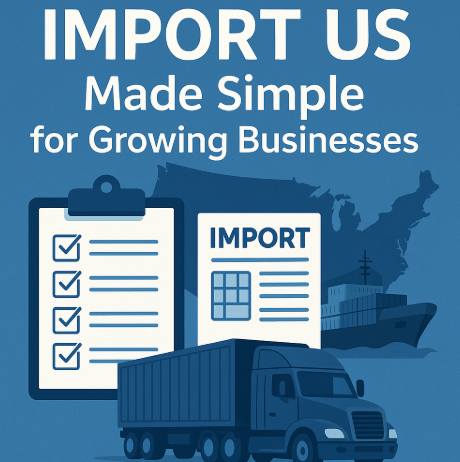
For many companies, the decision to import US goods is a major step toward expanding product lines, lowering sourcing costs, and increasing competitiveness. However, because customs rules, documentation, and duty requirements can be overwhelming, many businesses hesitate to enter the import market. Therefore, this guide explains every step you need to import into the United States smoothly, from compliance to cost calculation, so you can build a reliable and efficient supply chain.

What Does “Import US” Mean and Why Does It Matter for Businesses?
Since importing goods into the United States involves federal agencies, tariff systems, and transportation choices, understanding the full process helps companies avoid costly mistakes. Import US refers to the legal movement of goods from another country into the United States for resale, distribution, or internal use.
Moreover, businesses import for reasons such as:
- Access to lower-cost manufacturing
- Better product variety
- Availability of specialized components
- Expanded customer offerings
- More flexible inventory strategies
Additionally, the U.S. remains one of the world’s largest import markets. Therefore, companies that master compliance and logistics can scale quickly and confidently.
How Does the Import US Process Work Step-by-Step?
Although the process may appear complex, the import US workflow follows a predictable sequence. Understanding each step ensures fewer delays and more accurate planning.
Standard import US process:
- Confirm product admissibility
- Classify goods using HTS codes
- Identify duty rates and taxes
- Prepare commercial invoice and packing list
- Arrange transportation (air, sea, express, truck)
- Obtain a customs bond
- File customs entry documentation
- Clear arrival inspections
- Pay duties and fees
- Release and deliver cargo
Since customs verifies documentation thoroughly, accuracy is essential for avoiding delays.
What Documents Do You Need to Import US Goods Successfully?
Documents determine the speed and success of customs clearance. Therefore, importers should prepare them before shipping.
Table 1 — Required Documents for Importing Into the U.S.
| Document | Purpose |
|---|---|
| Commercial Invoice | Confirms value, description, and transaction terms |
| Packing List | Details weights, dimensions, and packaging |
| Bill of Lading / Air Waybill | Proof of shipment and carrier information |
| HTS Classification | Determines duty rates |
| Certificate of Origin | Required for some trade agreements |
| Customs Bond | Mandatory for all commercial imports |
| FDA / USDA / EPA Documents | Needed for regulated goods |
| Arrival Notice | Issued by the carrier upon arrival |
Additionally, discrepancies between documents often cause customs holds. Therefore, consistency across all paperwork is critical.
Why Are HTS Codes Essential When You Import US Goods?
HTS (Harmonized Tariff Schedule) codes determine duty rates, admissibility requirements, and regulations for imported goods.
HTS codes influence:
- Duty percentage
- Section tariffs
- FDA or USDA requirements
- Documentation level
- Classification accuracy
Because incorrect codes can lead to fines or delays, importers should classify products carefully. Many businesses rely on logistics partners like Velotactlcs Logistics for HTS verification to prevent costly mistakes.
How Much Duty Will You Pay When You Import US Goods?
Duty rates vary widely depending on product category, materials, and country of origin. While some goods enter duty-free, others carry higher tariffs.
Categories of U.S. duties:
- Base HTS duty
- Additional tariffs (e.g., Section 301, Section 232)
- AD/CVD (anti-dumping and countervailing duties)
- Excise taxes (alcohol, tobacco, specialty items)
Factors that affect duty cost:
- Correct HTS code
- Country of origin
- Trade agreement eligibility
- Product material composition
- Declared customs value
Accurate estimates allow businesses to plan final retail prices and profit margins.
What Additional Fees Apply Besides Duty?
Duty is not the only cost. Importers must also account for government fees and logistics charges.
Table 2 — U.S. Import Fees
| Fee | Description | Typical Cost |
|---|---|---|
| MPF (Merchandise Processing Fee) | Applies to most imports | 0.3464% (min $31.67, max $614.35) |
| HMF (Harbor Maintenance Fee) | For ocean freight | 0.125% of cargo value |
| Customs Bond | Required for clearance | $50–$500 (value-based) |
| ISF Filing Fee | Ocean shipments | $30–$100 |
| Brokerage Fee | Customs filing | Varies by provider |
| Inspection Charges | If CBP examines cargo | Case-by-case |
Since these fees affect landed cost, importers should include them in advance budgeting.
Which Shipping Methods Are Best When You Import US Goods?
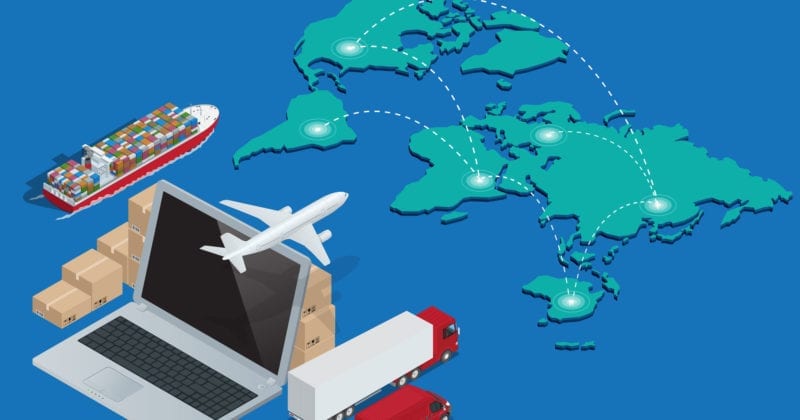
Shipping method influences transit time, cost, and customs processing.
Table 3 — Comparison of Import US Shipping Methods
| Method | Transit Time | Cost | Best For | Strengths | Limitations |
|---|---|---|---|---|---|
| Air Freight | 2–5 days | High | Urgent shipments | Fast, reliable | Higher cost |
| Sea Freight FCL | 20–35 days | Low | Large volumes | Economical | Longer transit |
| Sea Freight LCL | 25–40 days | Medium | Small loads | Flexible | Shared delays |
| Express Courier | 2–7 days | High | Small packages | Easiest clearance | Limited size |
| Truck Freight | 2–6 days (neighboring regions) | Medium | North America trade | Fast border crossing | Region-limited |
Additionally, Velotactlcs Logistics helps importers choose cost-efficient routes and carriers to optimize transit times and reduce risk.
What Compliance Rules Must You Follow to Import US Goods Legally?
Because federal agencies regulate many products, compliance is essential before shipping.
Key agencies include:
- CBP — overall customs enforcement
- FDA — food, cosmetics, medical items
- USDA — agricultural and wood items
- EPA — chemicals, engines, environmental products
- FCC — communication and electronic devices
Moreover, agency requirements vary by product category. Therefore, importers must confirm compliance early to avoid border holds.
How Does Customs Clearance Work for US Imports?
Clearance timing depends on the accuracy of documentation and whether customs selects a shipment for inspection.
Typical clearance times:
- Air: 1–2 days
- Sea: 2–5 days
- Express: Same day to 1 day
Additionally, delays happen when:
- HTS codes are incorrect
- Invoice descriptions are vague
- Country of origin is unclear
- FDA or USDA permits are missing
- Values do not match documentation
Therefore. accuracy saves time and money.
Can You Speed Up the Import US Process?
Yes. Importers can use several strategies to accelerate clearance:
- Submit documents before cargo arrival
- Use a continuous customs bond
- Choose reliable carriers
- Work with an experienced customs broker
- Maintain consistent invoice formatting
- Use clear product labeling
- Avoid undervaluation or vague descriptions
Velotactlcs Logistics offers pre-clearance review and customs coordination, helping businesses reduce uncertainty and eliminate avoidable delays.
How Can Businesses Reduce Import US Costs Legally?
Cost reduction is possible through compliant strategies such as:
- Correct HTS classification
- Duty drawback for re-exported goods
- Using tariff exclusions if available
- Shipping components instead of finished goods
- Adjusting Incoterms
- Using Foreign Trade Zones (FTZs)
- Consolidating shipments
Additionally, understanding logistics trends allows businesses to plan seasons, lead times, and inventory levels more effectively.

Conclusion
Therefore, mastering how to import US goods helps businesses reduce risk, improve cost planning, and strengthen their supply chains. Because customs clearance, tariff rates, and documentation play major roles in overall performance, importers must approach the process with clarity, accuracy, and strategic planning.
Moreover, using the right HTS codes, preparing documents early, and selecting the best shipping method significantly improves delivery outcomes. With reliable coordination and compliance support, growing businesses can import into the United States smoothly and confidently.
Need a quote?
Ready to get started? Contact us now to request a free shipping quote.
Frequently Asked Questions (FAQ)
Not all goods require duty. Duty depends on HTS classification, value, and country of origin. Some categories enter duty-free.
Review admissibility rules from agencies like CBP, FDA, EPA, or USDA. Each product category has its own requirements.
No. Duty rates remain the same across air, sea, and express shipments. However, fees and clearance processes vary.
Express courier is simplest for small items because they handle customs clearance on your behalf.
A bond is required for commercial imports above $2,500. Frequent importers often choose a continuous bond.