

Table of Contents
For global traders and logistics professionals, understanding US import tariffs by country 2025 is critical to managing costs and ensuring compliance. Tariffs influence every stage of import—from supplier selection to final delivery. In this article, VELOTACTICS LOGISTICS explains how tariffs are structured, which countries face higher rates, and how importers can plan smarter logistics to reduce expenses and avoid delays.
What Are US Import Tariffs and Why Do They Matter?
Tariffs are taxes applied to imported goods to protect domestic industries and generate government revenue. In 2025, tariff rules remain a key component of US trade strategy. They impact shipping costs, customs clearance procedures, and supply chain efficiency.
For importers, knowing the correct tariff classification and country-specific duty rate helps avoid unexpected costs or shipment holds. A trusted freight partner ensures these details are handled correctly to maintain steady delivery schedules.
👉 Find out how we can streamline your logistics today → Send Inquiry
How Are US Import Tariffs Determined in 2025?
Tariffs are calculated based on the Harmonized Tariff Schedule (HTS), which assigns a specific code to every product. Duty rates are influenced by:
- The country of origin
- The type of product
- The trade agreements in place
- The customs valuation (based on declared invoice value)
Importers can check tariff classifications through the U.S. International Trade Commission (USITC) database. However, classification errors are common, which can lead to higher duties or penalties. That’s why professional customs brokerage services play a vital role.
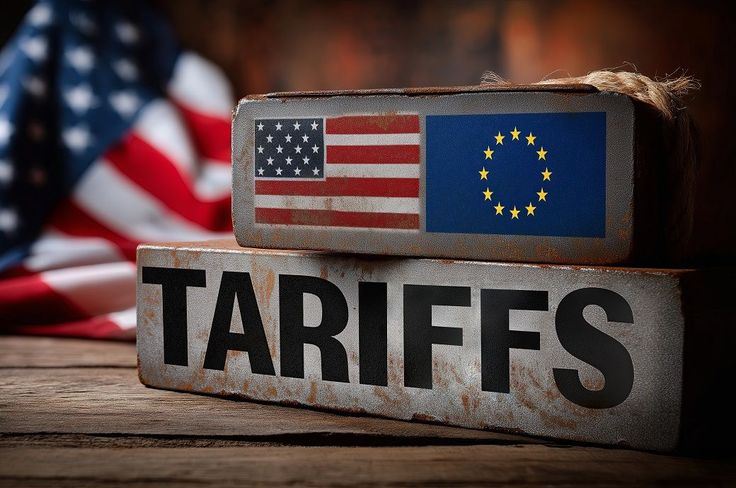
US Import Tariffs by Country 2025 Overview
The following table shows the average tariff ranges for major US trading partners in 2025.
| Country | Average Tariff Rate (%) | Key Imported Goods | Trade Relationship |
|---|---|---|---|
| China | 10–25% | Electronics, machinery, furniture | Partial tariff rollback under new policy |
| India | 5–15% | Pharmaceuticals, textiles, jewelry | Stable trade relations, moderate tariffs |
| Vietnam | 4–10% | Footwear, apparel, electronics | Growing trade, low duty brackets |
| Mexico | 0–3% | Auto parts, machinery, produce | Duty-free under USMCA |
| Canada | 0–2% | Metals, wood, chemicals | Duty-free under USMCA |
| EU (Germany, France, Italy) | 2–6% | Vehicles, cosmetics, machinery | Balanced trade under WTO terms |
| South Korea | 0–5% | Electronics, vehicles | Reduced duties under KORUS FTA |
| Japan | 1–4% | Automotive, electronics | Reduced tariffs under US–Japan agreement |
This distribution shows that FTA (Free Trade Agreement) members like Canada, Mexico, and South Korea enjoy minimal tariffs, while imports from China remain relatively higher due to trade adjustments.
👉 Find out how we can streamline your logistics today → Send Inquiry
What’s New in US Import Tariffs for 2025?
Compared with 2024, the 2025 tariff framework introduces several notable updates:
- Selective reductions for renewable energy components (solar panels, EV batteries).
- Higher rates on certain metals and strategic technology imports.
- Increased compliance checks for textile and electronics origin certificates.
- Simplified digital filing through ACE (Automated Commercial Environment).
These changes emphasize sustainability and stricter trade transparency.
How Do Tariffs Affect Shipping and Logistics Costs?
Tariffs directly affect your landed cost—the total price of getting goods to your warehouse. Duties, freight, insurance, and customs fees together define total cost.
| Cost Component | Description | Impact on Importers |
|---|---|---|
| Tariff Duty | Percentage applied on declared customs value | Increases overall cost if misclassified |
| Freight Charges | Shipping cost by sea or air | Affected by route and mode selection |
| Customs Fees | Inspection, paperwork, and brokerage | Essential for clearance |
| Insurance | Cargo protection | Reduces risk of loss or damage |
| Delivery Charges | Final inland transport | Adds to landed cost calculation |
By combining efficient routing and accurate tariff coding, importers can lower total logistics expenses by 10–20%.
Comparing Shipping Methods for High-Tariff Imports
| Shipping Method | Transit Time | Cost Efficiency | Best For | Pros | Cons |
|---|---|---|---|---|---|
| Sea Freight (FCL) | 25–40 days | ★★★★★ | Bulk and low-margin goods | Lowest cost per unit | Slower, longer clearance |
| LCL Sea Freight | 30–42 days | ★★★★☆ | Small or mixed cargo | Flexible volume | Slightly higher rate per CBM |
| Air Freight | 5–8 days | ★★★☆☆ | High-value goods | Fast delivery | High cost |
| Express Courier | 3–5 days | ★★☆☆☆ | Samples and small parcels | Door-to-door | Limited volume |
| Multimodal | 15–25 days | ★★★★☆ | Balanced cargo | Combines speed & cost control | More coordination needed |
For high-tariff goods, sea freight remains ideal to offset duty expenses, while air freight suits perishable or time-sensitive products.
For detailed route planning, check our Service page.
Case Study: How a US Importer Cut Tariff Impact
A California-based electronics importer faced 15% tariffs on smart devices from China. By rerouting part of its supply chain through Vietnam for component assembly, tariff exposure dropped to 7%. Combined with FCL sea freight consolidation, they reduced landed cost by 13%.
This example shows how logistics optimization directly complements tariff strategy.
👉 Find out how we can streamline your logistics today → Send Inquiry
Documents Required for US Import Tariff Compliance
| Document | Purpose | Submitted To |
|---|---|---|
| Commercial Invoice | Declares value and product details | US Customs |
| Packing List | Lists quantity and package types | Customs / Broker |
| Bill of Lading | Confirms shipment ownership | Shipping Line |
| Certificate of Origin | Validates country of production | Chamber of Commerce |
| Importer Security Filing (ISF) | Required for sea cargo | CBP (before loading) |
| Customs Bond | Ensures duty payment | US Customs Broker |
Using accurate and consistent documentation minimizes clearance delays and avoids unnecessary duty re-evaluations.
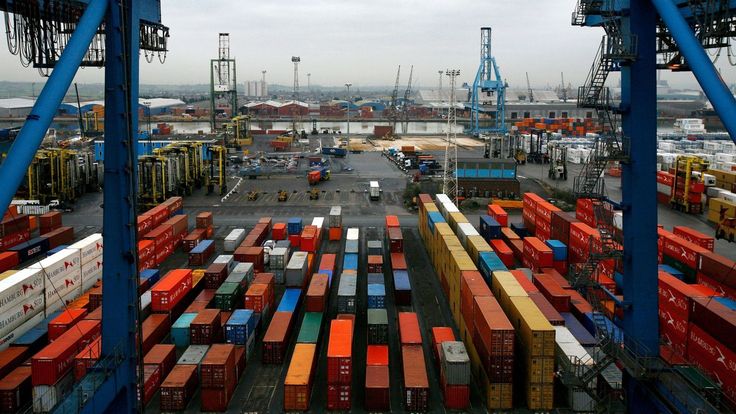
How to Manage Tariffs and Lower Costs in 2025
- Classify goods correctly using professional tariff tools or expert brokers.
- Use free trade agreements where applicable to reduce or eliminate duties.
- Consolidate shipments via LCL for smaller volumes.
- Negotiate Incoterms smartly with suppliers to control duty liability.
- Plan imports by quarter to balance tariff fluctuations and demand cycles.
For a custom cost breakdown, consult our Service experts today.
Customs and Duty Trends to Watch in 2025
- Digital clearance systems reduce manual paperwork and improve traceability.
- Green tariffs on carbon-intensive goods are under discussion.
- Cross-border transparency is increasing, limiting transshipment manipulation.
- AI-driven classification tools enhance accuracy and reduce misfiling penalties.
These developments make 2025 a transition year for smarter, more sustainable global trade.

Conclusion:
Understanding US import tariffs by country 2025 is essential for minimizing costs and maintaining competitive advantage. By mastering classification, documentation, and shipping strategies, importers can ensure compliance and profitability in an evolving trade landscape. Partnering with a trusted logistics provider like Velotactics ensures your cargo moves efficiently, no matter the tariff environment.
Get a Quote
d help navigating complex tariff rules and shipping costs? Get your personalized freight quote in less than 24 hours from Velotactics Logistics. Trusted by 5,000+ importers worldwide, we provide expert customs support and discounted freight rates. Space is limited—secure your booking now!
FAQ
China and certain steel-exporting nations face higher rates, mainly on electronics and industrial goods.
Use FTAs, reclassify items accurately, and plan shipping routes strategically.
Yes, stricter customs checks for high-duty goods may extend clearance time by 1–3 days.
Yes, Canada and Mexico under the USMCA enjoy duty-free access for most goods.
Yes, importers can file for a refund under customs protest with proper documentation.
Absolutely. Our team offers full customs and tariff advisory to ensure correct codes and compliance.