
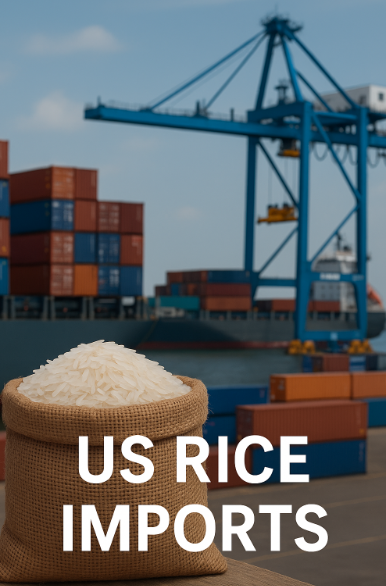
Rice remains one of the most essential agricultural commodities in global trade, and many US importers look beyond domestic suppliers to secure consistent volume, lower procurement costs, and specialty varieties. Therefore, understanding US rice imports—from freight choices to customs documents—is crucial for avoiding delays and ensuring stable supply-chain flow. Moreover, a structured import process helps businesses maintain predictable margins even when international logistics fluctuate.

What Makes US Rice Imports a Valuable Opportunity for Importers?
Although the United States produces a substantial amount of rice, demand continues to rise for specialty varieties such as jasmine, basmati, parboiled rice, and organic grains. Because of this demand, importers often turn to Asia, South America, and West Africa for competitive sourcing.
However, this process requires careful planning. Additionally, the agricultural category is sensitive to contamination, fumigation rules, and packaging integrity, meaning that logistics planning must remain very strict from origin to warehouse delivery. As a result, choosing the right freight partner plays a large role in cost, transit time, and risk control.
Velotactlcs Logistics supports importers through tailored agricultural freight solutions, temperature-controlled storage options, and correct documentation handling—helping prevent costly customs holds and FDA reviews.
How Does the US Rice Imports Supply Chain Flow from Origin to Final Delivery?
The journey of imported rice begins with supplier packing and ends at a distribution warehouse. Therefore, each stage must operate in sync to avoid moisture issues, contamination, or customs delays.
A typical supply-chain sequence includes:
- Supplier processing and moisture-level testing
- Bagging, palletizing, and labeling
- Container loading at origin
- Sea or air freight departure
- Arrival processing at US ports
- FDA, USDA, and CBP inspections
- Domestic drayage and warehouse transfer
Moreover, proper packing and stable container ventilation ensure the grain remains dry. Since rice is hygroscopic, it can absorb moisture during long voyages if the container is not lined, resulting in spoilage and heavy financial loss.

What Freight Options Are Most Common for US Rice Imports?
Most rice cargo moves by sea freight due to its high volume and low per-kilogram cost. However, air freight is occasionally used for urgent restocking or high-value supermarket brands.
Table 1: Freight Method Comparison for US Rice Imports
| Method | Average Cost | Transit Time | Best For | Pros | Cons |
|---|---|---|---|---|---|
| Sea Freight (FCL/LCL) | Lowest | 18–35 days | Bulk/wholesale rice | Cost-effective, stable schedules | Longer transit, port congestion |
| Air Freight | Highest | 3–7 days | Premium or urgent stock | Fast, reliable | High cost, limited volume |
| Multimodal (Sea + Truck) | Moderate | 20–40 days | Regional deliveries | Flexible inland distribution | Longer total lead times |
Therefore, importers typically use FCL shipments, especially for 20ft or 40ft containers packed with 25-50kg bags.
What Documents Are Required for US Rice Imports?
Accurate paperwork is the most important factor for fast customs release. Because agricultural imports undergo strict scrutiny, incomplete documentation often leads to holds, sampling, or even disposal orders.
Table 2: Essential Customs Documents for US Rice Imports
| Document | Purpose |
|---|---|
| Commercial Invoice | Declares product details, HTS code, price, and quantity |
| Packing List | Specifies packaging type, number of bags, and weight |
| Bill of Lading / Air Waybill | Shipment transport record |
| Phytosanitary Certificate | Confirms rice is free from pests and contaminants |
| FDA Prior Notice | Required for food shipments entering the US |
| USDA Import Permit (if applicable) | Needed for certain rice varieties |
| Certificate of Origin | Determines duty rates based on trade agreements |
Additionally, some countries require fumigation certificates, especially when exporting from tropical regions with higher pest exposure.
How Long Do US Rice Imports Usually Take?
Transit time varies depending on origin, carrier selection, and unloading port. Because rice demand often peaks around seasonal retail cycles, importers must plan schedules early.
Table 3: Average Transit Time by Origin Region
| Origin Country/Region | Sea Freight Transit Time | Air Freight Transit Time |
|---|---|---|
| Thailand / Vietnam | 22–32 days | 3–5 days |
| India / Pakistan | 26–36 days | 4–7 days |
| Brazil / Uruguay | 18–28 days | 3–6 days |
| West Africa | 20–35 days | 4–8 days |
Moreover, inland trucking within the United States may add an additional 2–6 days depending on distance and congestion at ports such as Los Angeles, Houston, or Savannah.
How Much Do US Rice Imports Cost Overall?
The cost structure includes freight, port fees, duties, drayage, and cargo insurance. Because rice is a heavy commodity, weight and CBM both influence rates.
Cost components include:
- Ocean freight (per container)
- Origin terminal fees
- THC at US port
- Import duties based on HTS code
- Trucking from port to warehouse
- Warehouse unloading and palletizing
- Insurance for damage, humidity, or contamination
Velotactlcs Logistics helps importers optimize costs by combining lane consolidation, advance booking strategies, and direct-to-port drayage to reduce storage fees.

What Are the Duty Rates for US Rice Imports?
Duty rates vary based on rice type (husked, polished, broken, parboiled, etc.). Although rates can range from 0% to over 20% for certain specialty categories, importers must verify the exact HTS classification.
Additionally, countries under certain trade agreements may qualify for preferential tariffs. Since tariff updates change frequently, working with a licensed customs broker ensures accuracy and prevents reclassification penalties.
How Should Importers Package and Protect Rice Cargo During Transit?
Proper packaging prevents mold, tearing, and moisture damage. Therefore, exporters must follow strict loading procedures.
Recommended practices include:
- Using woven PP bags with inner liners
- Heat-sealed packaging for premium rice
- Palletizing bags to avoid crushing
- Installing desiccants inside containers
- Choosing food-grade container liners
- Avoiding overstacking during loading
Moreover, regular pre-loading inspection helps avoid contamination by previous cargo residue.
Why Do US Rice Imports Get Delayed at Customs?
Common reasons include:
- Missing phytosanitary certificates
- Incorrect HTS codes
- Inconsistent invoice details
- Fumigation issues
- Suspected pest contamination
- FDA sampling for compliance checks
Because these issues are avoidable, many importers choose freight forwarders like Velotactlcs Logistics to manage compliance and coordinate communication with customs, FDA, and USDA officials.
How Can Importers Reduce Risk and Ensure Smooth US Rice Imports?
To reduce delay and cost, importers should:
- Plan shipments at least 45–60 days in advance
- Pre-check documents before vessel departure
- Use sealed, ventilated food-grade containers
- Buy cargo insurance tailored to agricultural goods
- Monitor port congestion and choose alternative gateways
- Consolidate rice shipments to lower per-unit freight costs
Moreover, Velotactlcs Logistics offers customizable import solutions—including customs clearance, agricultural shipment handling, container quality checks, and FDA pre-filing coordination—to improve reliability and reduce operational stress.

Conclusion
US rice imports continue to grow due to rising demand for premium international varieties and cost-competitive sourcing regions. Because of this growth, importers must understand freight choices, customs documents, duties, and packing requirements to maintain reliable inventory flow. Therefore, partnering with an experienced logistics provider like Velotactlcs Logistics ensures predictable transit, accurate compliance, and lower operational risk.
When you need seamless US rice imports, professional freight coordination helps protect your goods and your profit margins.
Need a quote?
Ready to get started? Contact us now to request a free shipping quote.
Frequently Asked Questions (FAQ)
HTS codes depend on grain type—husked, polished, broken, or parboiled. Proper classification ensures correct duty rates and prevents reinspection penalties.
Many exporting countries require fumigation before loading, especially in warmer climates. US inspectors may request proof if pests are suspected in the shipment.
Yes. Organic rice must include proper certification from accredited agencies, plus standard documents such as invoices, phytosanitary certificates, and packing lists.
Major gateways include Houston, Los Angeles, Long Beach, and Savannah. These ports offer strong agricultural inspection capacity and faster inland connectivity.
Yes. All food imports require FDA Prior Notice submission before arrival. Missing this step can cause holds and extended inspection procedures.