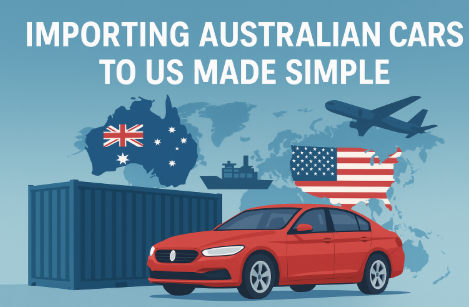
Buying a unique or high-performance car from Australia is exciting; however importing Australian cars to US requires more preparation than most buyers expect. Moreover, several Australian models follow different design standards, meaning importers must navigate compliance rules, customs requirements, and international shipping procedures carefully. Fortunately, when you understand the process clearly, the entire journey becomes manageable and even cost-effective.
Why Are People Importing Australian Cars to the US?
Many enthusiasts choose Australian vehicles because Australia offers rare models, different performance trims, and right-hand-drive variants unavailable in the U.S. market. Additionally, collectors look for Holden, HSV, FPV, and classic Australian muscle cars—many of which have strong historical value. However, the benefits only materialize when the import process stays organized, therefore planning each step early is essential.
What Documents Do You Need for Importing Australian Cars to the US?
Because vehicles coming from Australia are classified as non-North American imports, U.S. customs requires specific documentation to verify compliance with EPA and DOT standards.
Required Documents
Original vehicle title
Bill of sale or purchase receipt
Export certificate from Australia
VIN confirmation documents
EPA Form 3520-1
DOT Form HS-7
Ocean freight documents (BOL)
Insurance details
Compliance certificates (if applicable)
In addition, all documents must match the VIN exactly, otherwise customs may delay the entry.
Key Document Checklist for U.S. Entry
Document
Required
Purpose
Original Title
Yes
Proof of ownership
Bill of Sale
Yes
Confirms vehicle value
Australian Export Certificate
Yes
Required for legal export
EPA Form 3520-1
Yes
Emissions compliance
DOT HS-7
Yes
Safety compliance
Bill of Lading
Yes
Freight documentation
Insurance Certificate
Recommended
Protects vehicle during transit
Because international shipments involve strict verification, keeping every document organized prevents customs delays.
How Much Does It Cost to Import an Australian Car to the US?
Importing costs vary depending on shipping method, vehicle value, and customization needs. Additionally, Australian cars may require modification to meet U.S. standards, influencing total cost.
Common Cost Components
Ocean freight (RORO or container)
Import duties
Port fees
Delivery charges
Safety and emissions modifications
Compliance inspection fees
Storage or demurrage fees (if delayed)
Typical Cost Breakdown
Cost Item
Estimated Range (USD)
Notes
RORO Shipping
$1,200–$2,000
Cost-effective option
Container Shipping
$2,000–$4,000
Higher security
Import Duty
2.5%
Based on vehicle value
Port Handling
$150–$400
Depends on US port
Modifications
$300–$1,000
Lights, emissions, etc.
Customs Broker
$200–$500
Speeds up processing
Therefore, planning your import budget early helps you avoid unnecessary surprises.
Which Australian Cars Are Eligible for Import to the US?
Vehicle eligibility depends on age, safety compliance, and emissions standards.
Eligible Categories
25-Year Rule – Vehicles 25 years or older may enter without meeting modern EPA/DOT standards.
U.S.-Version Models – Some vehicles produced in Australia were built to U.S. standards.
Compliance-Ready Vehicles – Models that can be modified to meet U.S. safety rules.
However, some vehicles cannot be imported due to safety restrictions, therefore checking eligibility beforehand protects your investment.
How Long Does It Take to Ship a Car from Australia to the US?
Shipping time depends on vessel availability, transit route, and customs clearance. Australia is geographically distant, therefore planning is essential.
Typical Timeline
Ocean Transit: 20–40 days
Customs Clearance: 2–7 days
Domestic Delivery: 2–6 days
Shipping delays may happen during peak seasons or when documentation is incomplete, so submitting forms early is highly important.
Average Transit Time by Origin Port
Origin Port (Australia)
Destination Port (USA)
Estimated Transit Time
Sydney
Los Angeles
22–28 days
Brisbane
Seattle
25–32 days
Melbourne
Houston
28–40 days
Perth
San Francisco
24–34 days
Because ocean conditions and vessel schedules vary, choosing an experienced freight forwarder improves delivery predictability.
What Is the Best Shipping Method for Australian Vehicles?
Importers typically choose between RORO (Roll-On Roll-Off) and container shipping.
RORO Shipping
Pros: Affordable, faster loading, widely available Cons: Car remains exposed inside vessel parking decks
Container Shipping
Pros: Highest protection, ideal for luxury/classic cars Cons: More expensive, may require extra consolidation time
Velotactlcs Logistics provides both container and RORO arrangements, and our team compares reliability, cost, and seasonal vessel frequency to recommend the most suitable option for your vehicle and budget.
How Does U.S. Customs Clearance Work for Australian Vehicles?
Because Australia uses different standards than the U.S., customs officers follow strict protocols to ensure compliance.
Customs Clearance Steps
Submit vehicle documents
Provide EPA Form 3520-1
Provide DOT HS-7
Pay import duty
Complete physical inspection and VIN verification
Receive customs release
In addition, port officers may request evidence of compliance for headlights, speedometer units, and emission controls, so preparing these documents beforehand shortens processing time.
Do Australian Cars Require Modifications Before U.S. Registration?
Some vehicles need adjustments to meet U.S. standards. Although many modifications are minor, planning ahead prevents registration delays.
Common Modifications
Converting odometer to miles
Adjusting headlights for U.S. beam patterns
Updating child seat anchorage
Ensuring emissions compliance
Changing side indicators (if incompatible)
Because each model differs, consulting a compliance expert helps you understand required changes before shipping.
Should You Use a Logistics Company When Importing Australian Cars to the US?
Many importers handle documents themselves, however international transport involves multiple agencies, ports, and compliance checks. Therefore, professional support reduces errors and speeds up clearance.
Advantages of Using Velotactlcs Logistics
Professional coordination with Australian exporters
Accurate customs documentation
Flexible RORO and container shipping schedules
Faster communication with U.S. customs
Safe inland transportation after arrival
Transparent pricing with no surprise fees
Moreover, our team specializes in overseas auto imports, helping enthusiasts bring rare Australian vehicles into the U.S. efficiently and securely.
How to Avoid Delays When Importing Australian Cars to the US
Because international shipping has many variables, reducing delays requires strategic preparation.
Pro Tips
Submit EPA and DOT forms early
Avoid peak shipping months
Request vessel schedules in advance
Verify VIN accuracy on all documents
Prepare funds for duties and port fees
Use insured carriers for inland delivery
In addition, staying in close communication with your freight forwarder helps resolve issues before they impact your timeline.
Conclusion
Importing Australian cars to the US becomes simple when you understand the required documents, costs, shipping options, and compliance rules. Moreover, early planning ensures your vehicle arrives safely, passes inspection, and becomes road-ready without unexpected complications. If you want professional support throughout the journey, Velotactlcs Logistics is ready to guide you through every step of your international automotive import.
Need a quote?
Ready to get started? Contact us now to request a free shipping quote.