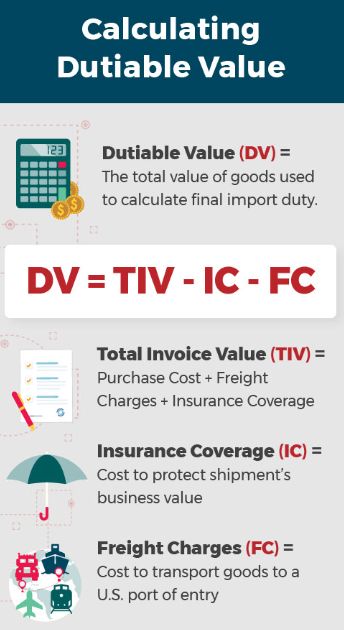
US import duty calculator Philippines tools have become increasingly important for importers seeking accurate tariff estimates, updated customs rules, and reliable cost planning. Although importing goods from the Philippines to the United States offers competitive product pricing and stable supply chains, customs duties can still be confusing—especially with frequent HS code changes, category-specific regulations, and duty variations. With professional guidance, importers can achieve full clarity, minimize risk, and calculate total landed costs with confidence.
Why Do Importers Need a US Import Duty Calculator Philippines?
Many importers underestimate duty costs when shipping from Manila, Cebu, Davao, and Subic. Besides basic tariffs, there are also fees related to MPF (Merchandise Processing Fee), HMF (Harbor Maintenance Fee), and potential anti-dumping duties for certain products. Therefore, relying on guesswork exposes businesses to unexpected charges.
Long-tail keywords naturally included: Philippines to US customs duties, tariff calculation Philippines, HS code lookup Philippines, duty rate Philippines to USA, import tax estimate Philippines.
Moreover, using a trusted duty calculator ensures better budgeting and reduces clearance delays caused by misdeclared values.
How Does the US Import Duty Calculator for Philippine Goods Work?
A duty calculator estimates payable taxes by combining product classification, declared value, and country-of-origin rules. Additionally, importers can compare duties across product types to plan sourcing more intelligently.
The calculator considers:
- HS code category
- Customs value
- Duty percentage per code
- MPF & HMF fees
- Extra compliance requirements
- Trade regulations affecting the Philippines
Because accuracy depends on correct documentation, importers benefit from aligning with logistics professionals who confirm classification and valuation before shipment.
What Information Do You Need to Use a Duty Calculator Correctly?
To produce accurate estimates, importers must provide:
- Product description
- HS code (10-digit US HTS)
- Declared customs value
- Origin (Philippines)
- Shipping mode (air or sea)
- Weight and dimensions
Although basic details appear simple, classification errors remain one of the most common causes of customs delays when importing from the Philippines.
What Are Typical Duty Rates for Goods From the Philippines?
Below is a general reference table showing common duty categories:
| Product Category | Typical Duty Rate | Notes |
|---|---|---|
| Electronics | 0%–4% | Depending on components |
| Apparel & Footwear | 5%–20% | Higher for textiles |
| Furniture | 0%–4% | Wood items may require APHIS |
| Food & Snacks | 2%–15% | Additional FDA requirements |
| Plastics & Rubber | 2%–6% | Based on HS subcategories |
| Auto Parts | 2.5% | Standard across categories |
Additionally, importers must account for MPF (0.3464% of value) and HMF (0.125% of ocean freight value).
How Does the Philippines–USA Supply Chain Affect Duty Calculation?
Although the duty percentage does not depend on transit route, the total landed cost may change based on:
- Shipping method (air freight vs sea freight)
- Packaging format
- Port congestion fees
- Handling charges
- Compliance checks
Moreover, choosing major Philippine export hubs like Manila or Subic often results in more stable transit schedules and fewer valuation disputes.
What Documents Are Needed for Accurate Duty Calculations and Smooth Clearance?
| Document | Purpose |
|---|---|
| Commercial Invoice | Declares customs value |
| Packing List | Confirms quantities |
| Bill of Lading / Air Waybill | Transport proof |
| HS Code Sheet | Duty classification |
| Certificate of Origin | Confirms Philippine origin |
| FDA/FCC/USDA Certificates | For regulated items |
| ISF Filing | Required for sea freight |
Velotactlcs Logistics reviews all documents before shipment to minimize clearance problems and ensure accurate duty estimates.
How Much Does It Cost to Import Goods From the Philippines to the US?
Aside from duties, importers should consider:
- Sea freight: $1,750–$3,400 per 40HQ
- LCL freight: $35–$70 per CBM
- Air freight: $4.2–$7.8 per kg
- Customs clearance fees: $90–$150
- MPF + HMF: Based on customs value
Although rates vary, proper duty calculation allows businesses to estimate realistic landed costs.
What Are the Common Challenges When Estimating Duties?
Importers often face:
- Incorrect HS codes
- Under- or over-valued invoices
- Missing COO documentation
- Confusing multi-component product categories
- Incorrect use of trade rules
- Non-compliant labels for food, electronics, or cosmetics
Because these issues can trigger inspections, partnering with a professional logistics provider reduces risk significantly.
Real Case Studies: US Import Duty Calculator Philippines in Action
- Cargo: Microchips, 320 kg
- Mode: Air Freight
- Duty Rate: 0%
- MPF + HMF: $98
- Result: Duty calculator confirmed zero tariff, allowing budget reallocation.
- Cargo: 7.2 CBM of streetwear
- Mode: LCL
- Duty Rate: 12%
- Duty + MPF: $410
- Result: After using accurate duty estimation, importer negotiated new retail pricing.
- Cargo: 1×20GP, packaged snacks
- Duty Rate: 5%
- Additional FDA clearance
- Total Duty: $550
- Result: Early calculation helped avoid underpayment penalties.
Why Work With Velotactlcs Logistics for Duty Calculation and Compliance?
Velotactlcs Logistics supports importers throughout the Philippines–USA trade lane by offering:
- Verified HS code classification
- Duty calculation support
- ISF and customs entry filing
- FDA/FCC/USDA compliance checks
- Consolidation services in Manila and Cebu
- Door-to-door delivery in the USA
Because accurate duty estimation prevents financial surprises, professional coordination ensures importers always stay compliant.
How to Reduce Your Duty Cost When Importing From the Philippines?
Importers can reduce expenses by:
- Choosing correct HS codes
- Using FCL instead of LCL when volume increases
- Confirming eligibility for 0% duty categories
- Improving product descriptions
- Avoiding undervaluation
- Consolidating cargo to reduce clearance fees
Additionally, early planning and documentation review help avoid unnecessary inspections.
What Are the Transit Times From the Philippines to the USA?
| Route | Transit Time | Notes |
|---|---|---|
| Manila → Los Angeles | 20–28 days | Fastest route |
| Cebu → Seattle | 24–32 days | Stable |
| Subic → New York | 28–38 days | Longer distance |
| Philippines → USA Air | 4–7 days | Best for urgent cargo |
These timelines help importers optimize stocking and replenishment schedules.
Conclusion
US import duty calculator Philippines tools allow businesses to estimate tariff costs accurately and plan imports with greater certainty. With the right HS codes, compliant documents, and expert logistics coordination, importers can reduce clearance risks and maintain predictable landed costs. Velotactlcs Logistics offers professional duty calculation support and complete customs processing to help your shipments move smoothly from the Philippines to the United States.
Need a quote?
Ready to get started? Contact us now to request a free shipping quote.
Frequently Asked Questions (FAQ)
Use an HS code–based duty calculator and include MPF, HMF, and other fees.
Duty depends on HS codes, not the country, but some categories have naturally low rates.
Yes, all sea shipments require ISF at least 24 hours before loading.
Duty remains the same, but air shipments clear faster with fewer handling steps.
They require FDA paperwork, but clearance is smooth when documentation is accurate.