
Exporting from the United States to the Philippines requires speed, precision, and full compliance. Because air freight moves fast and customs expectations continue to rise, shippers increasingly depend on a US export air cargo agent Philippines to manage bookings, paperwork checks, security screening, and cargo handover to airlines. With the right support, exporters avoid delays, reduce costs, and keep urgent shipments moving without disruption.

What Does a US Export Air Cargo Agent Do for Shipments to the Philippines?
Although many exporters believe air freight is straightforward, the export process involves multiple checkpoints. A specialized US export air cargo agent Philippines manages everything from airway bill (AWB) creation to cargo acceptance and export documentation.
Core responsibilities include:
- Air freight booking
- Export documentation review
- Commercial invoice & packing list verification
- HS code accuracy checks
- Security screening coordination
- Cargo weighing & dimension confirmation
- Proper labeling & palletizing
- AWB issuance
- Airline cargo terminal coordination
Moreover, air cargo agents ensure compliance with TSA, IATA, and Philippine Customs requirements, preventing avoidable export holds.
Why Do US Exporters Need a Reliable Air Cargo Agent for the Philippines?
Because the Philippines handles high volumes of e-commerce goods, electronics, medical supplies, and time-sensitive shipments, exporters must maintain strict accuracy. Even a minor documentation error can delay cargo at the U.S. terminal or during clearance in Manila, Cebu, or Clark.
Key reasons exporters rely on air cargo agents:
- Reduce export documentation errors
- Prevent costly airline storage fees
- Accelerate cargo acceptance
- Improve air freight scheduling
- Ensure correct screening and labeling
- Maintain shipment visibility
- Reduce customs red flags
Additionally, experienced agents know the quirks of Philippine airports and advise exporters on the best carriers, schedules, and cut-off times.
How Does the Air Freight Export Process Work for US-to-Philippines Shipments?
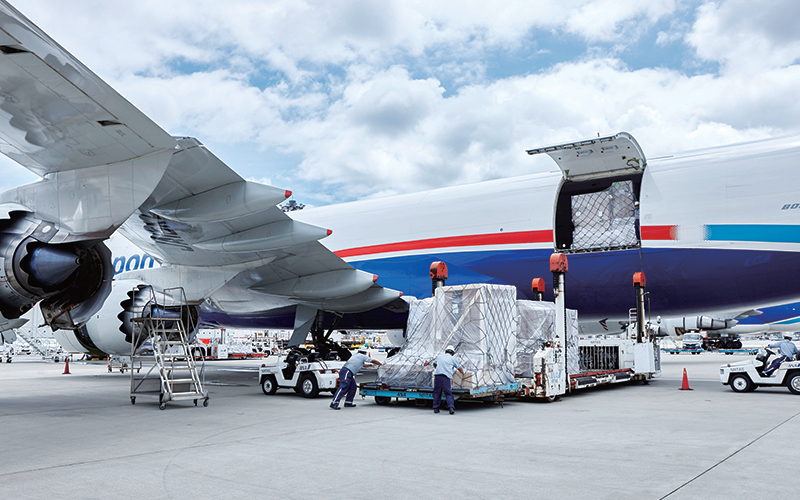
A smooth export process follows a structured timeline. Below is the typical workflow managed by an air cargo agent.
Standard Air Export Process:
- Booking request submitted
- Cargo dimensions & weight verified
- Export documents reviewed
- Cargo labeling & palletizing arranged
- Security screening scheduled
- Cargo delivered to airline terminal
- AWB issued and confirmed
- Flight departure + tracking update
- Shipment cleared in the Philippines
Because an air cargo agent supervises every stage, exporters significantly reduce errors and ensure faster departure schedules.
What Types of Shipments Benefit Most from Air Cargo Services?
Different industries require fast and secure export handling. Therefore, air freight is ideal for shipments where timing is critical.
| Commodity Type | Air Freight Advantages | Notes |
|---|---|---|
| Electronics | Fast movement, reduced theft risk | High value & sensitive |
| Apparel & fashion | Quick replenishment | Seasonal demand |
| Medical supplies | Priority handling | Temperature control sometimes required |
| Automotive parts | Urgent replacement | Just-in-time production |
| E-commerce parcels | Rapid delivery | Reduces customer wait times |
Because air cargo reduces transit time from weeks to hours, it supports supply chain continuity for urgent and high-value goods.
How Does a US Export Air Cargo Agent Help Prevent Documentation Errors?
Documentation issues cause most delays. Therefore, agents verify accuracy before cargo reaches the terminal.
Document checks include:
- Commercial invoice
- Packing list
- HS code validation
- EEI / AES filing status
- Consignee details in the Philippines
- Product descriptions (IATA compliant)
- Dangerous goods declarations (if needed)
Moreover, professional agents prevent discrepancies that may trigger Philippine Customs inspections or airline rejection.
What Are the Common Mistakes Exporters Make Without an Air Cargo Agent?
Without agent oversight, exporters often encounter avoidable disruptions.
Typical mistakes:
- Wrong cargo dimensions
- Missing EEI filing
- Incorrect consignee details
- Poor cargo labeling
- Improper palletization
- Weak packaging that fails drop tests
- Airline cut-off time missed
- Missing security screening documents
Furthermore, failing to follow airline-specific requirements may result in cargo offloading or rebooking fees.

How Much Does Air Freight from the U.S. to the Philippines Cost?
Shipping rates vary depending on airline, volume, weight, and route. Below is an approximate cost comparison.
Air Freight Cost Guide(Common Routes)
| Route | Estimated Transit Time | Cost Range (per kg) | Notes |
|---|---|---|---|
| LAX → MNL | 2–3 days | USD 2.60–4.90 | High volume route |
| JFK → MNL | 3–4 days | USD 3.20–5.50 | Longer distance |
| ORD → CEB | 3–5 days | USD 3.50–6.10 | Regional airport |
| HOU → CRK | 4–5 days | USD 3.80–6.20 | Additional handling |
Additionally, peak seasons (Nov–Jan) may increase rates 20–40%.
What Value-Added Services Improve Export Air Cargo Performance?
Air cargo agents support specialized requirements that enhance shipment safety and compliance.
Useful value-added services:
- Repacking for airline compliance
- Thermal lining and insulation
- Fragile cargo protection
- Barcode & label printing
- Shipment consolidation
- Real-time tracking updates
- Photo documentation
- Cargo insurance arrangement
Furthermore, agents ensure all shipments follow airline security mandates, reducing the chance of random inspections.
Real Case Study
- Cargo Type: High-value laptops
- Weight: 540 kg
- Mode: Air freight (priority)
- Transit Time: 48 hours
- Issue: Dimensions mismatch caused rate dispute
- Solution: Air cargo agent remeasured & corrected data before tender
- Outcome: Cargo accepted immediately; no rebooking fees
- Cargo Type: Sterile medical kits
- Weight: 220 kg
- Challenge: Compliance-required temperature stability
- Solution: Agent added thermal insulation + fast-track handling
- Outcome: Delivered in stable condition; cleared customs same day
- Cargo Type: Engine control modules
- Weight: 160 kg
- Problem: Late booking & tight cut-off time
- Solution: Agent secured emergency overnight booking
- Outcome: Shipment made flight without delay
How Does Velotactlcs Logistics Strengthen US-to-Philippines Air Freight?
Velotactlcs Logistics provides tailored solutions for U.S. exporters needing reliable, compliant, and fast air freight to the Philippines. Moreover, our experienced export specialists manage booking, preparation, inspection, and airline coordination with high accuracy and speed.
Our strengths include:
- Priority air freight handling
- Compliance-driven documentation checks
- Secure cargo packing & labeling
- Direct airline coordination
- End-to-end shipment monitoring
- Customized solutions for urgent cargo
Additionally, we support exporters with flexible schedules and competitive rates.
Conclusion
Choosing a trusted US export air cargo agent Philippines significantly improves shipment reliability, compliance accuracy, and overall supply chain performance. Although air freight is fast, the export process demands precise coordination and professional handling. Exporters benefit from fewer delays, smoother customs clearance, and stronger customer satisfaction. For shipments requiring urgency, accuracy, and strict compliance, partnering with an experienced air cargo agent is essential.
Need a quote?
Ready to get started? Contact us now to request a free shipping quote.
Frequently Asked Questions (FAQ)
Most U.S. exports above USD 2,500 require EEI filing through AES before cargo acceptance.
Proper cushioning, labeling, and agent-managed loading reduce the risk significantly.
Most terminals require cargo 4–6 hours before flight departure.
Many agents provide professional packing, labeling, and palletizing services.
Transit typically ranges from 2–5 days depending on route and airline schedules.