
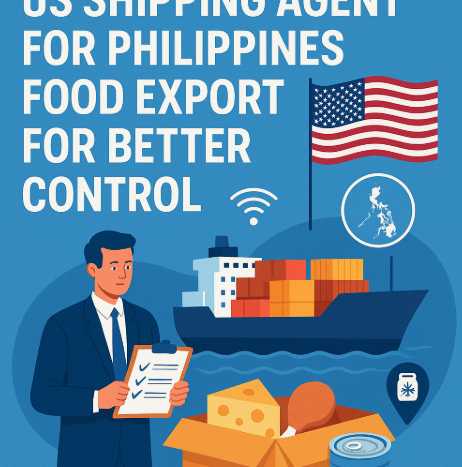
Food exporters in the Philippines face strict US regulations, cold-chain challenges, and frequent documentation errors that can delay shipments or cause spoilage. Therefore, choosing a dependable US shipping agent for Philippines food export becomes essential for better quality control, smoother customs clearance, and predictable delivery timelines. Moreover, the right partner safeguards sensitive food cargo and ensures every step—from pickup to final distribution—remains fully compliant.

What Makes a US Shipping Agent for Philippines Food Export So Essential?
Many Philippine exporters ship canned goods, frozen seafood, snacks, beverages, and processed foods to the US market. However, each category faces distinct customs risks, temperature requirements, and FDA regulations. Consequently, an experienced agent ensures compliance, accurate routing, and cold-chain integrity so exporters avoid costly delays or rejected shipments.
How Do Food Safety Standards Affect US-Bound Shipments?
Food shipments entering the US undergo strict checks under FDA Food Safety Modernization Act (FSMA). Additionally, US inspectors focus heavily on labeling accuracy, sanitation, and temperature consistency. Therefore, exporters must follow:
- Correct ingredient labeling
- Batch coding for traceability
- Cold-chain validation
- Clean packaging and pallets
- Approved preservatives or additives
Because small mistakes can lead to seizure or disposal, exporters rely on a specialized US shipping agent for Philippines food export to review documentation before cargo departs.
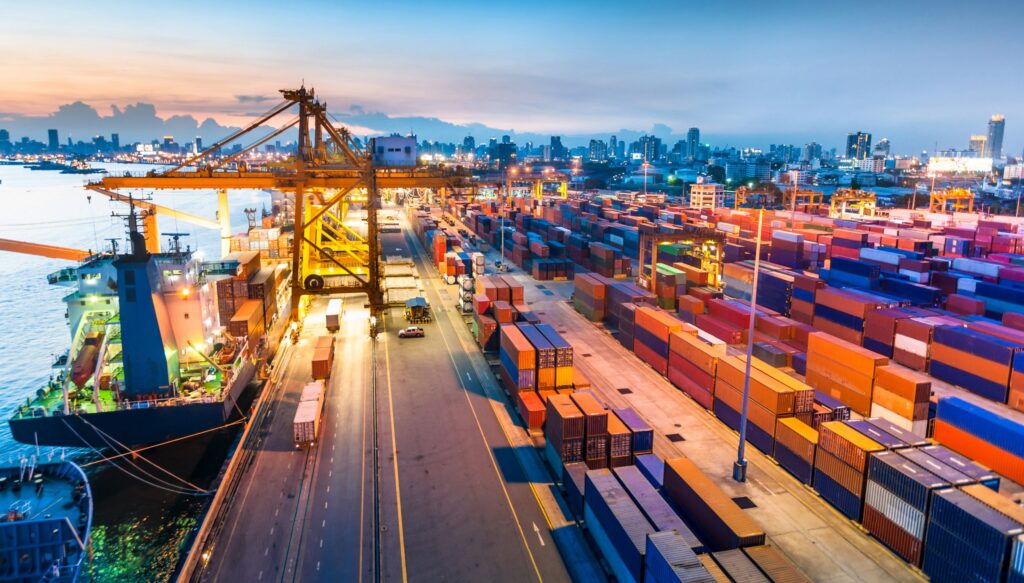
What Shipping Modes Are Best for Philippines–US Food Export?
Although food cargo varies widely, shippers must choose a mode that protects freshness and maintains cost efficiency.
Shipping Mode Comparison
| Mode | Cost Level | Transit Time | Best For | Limitations |
|---|---|---|---|---|
| Reefer FCL | Medium | 18–28 days | Frozen seafood, meat, beverages | Requires strict temperature monitoring |
| Dry FCL | Low | 18–30 days | Canned food, snacks, instant goods | No temperature control |
| Air Freight | High | 2–5 days | Perishables, urgent resupply | Expensive |
| LCL | Medium | 20–35 days | Small batches, diverse SKUs | Higher handling exposure |
This table helps exporters match cargo type with optimal mode based on urgency and sensitivity.
Why Is Cold-Chain Integrity Critical for Filipino Food Exporters?
Since frozen seafood, ice cream mixes, meat products, and dairy-based items deteriorate quickly, uninterrupted cold-chain is essential. Moreover, any temperature fluctuation—even by a few degrees—can cause spoilage or fail FDA quality checks.
Professional cold-chain handling includes:
- Pre-trip inspection (PTI) of reefer containers
- Temperature data logging
- Humidity and ventilation control
- Sealed transport from port yard to terminal
- Emergency power backup during delays
Velotactlcs Logistics supports exporters by coordinating reefer plug-ins, monitoring data logs, and ensuring carriers follow correct temperature profiles throughout the route.
How Do US Customs Requirements Affect Philippine Food Shipments?
US customs evaluates whether food shipments comply with FDA, USDA, and CBP requirements. Additionally, inspection frequency increases when labeling or ingredient declarations appear unclear.
US Import Documentation Checklist
| Document | Description |
|---|---|
| Commercial Invoice | Detailed food description, weight, origin |
| Packing List | Carton count, pallet count, SKU list |
| FDA Prior Notice | Mandatory for all food imports |
| Bill of Lading | Shipper, consignee, commodity |
| Certificate of Origin | “Product of the Philippines” |
| Health Certificates | For seafood, meat, dairy |
A US shipping agent for Philippines food export verifies these items prior to vessel departure, preventing holds and reinspection.
How Can Filipino Exporters Reduce Customs Delays?
Although delays often occur at US ports, exporters can prevent most issues by following several best practices. First, always submit FDA Prior Notice accurately before arrival. Second, ensure HS codes match food category classification. Third, avoid vague product descriptions that trigger manual inspection.
Additionally, exporters benefit from:
- Pre-alert documents
- Priority reefer unloading
- Port routing that avoids congestion
- Appointment-based drayage scheduling
With these steps, transit becomes faster and more predictable.

Why Does Drayage Efficiency Matter for Food Cargo?
Since food cargo often has temperature or freshness constraints, drayage delays threaten product quality. Moreover, reefer demurrage charges accumulate quickly if containers sit beyond free time.
Efficient agents coordinate:
- Same-day port pickup
- Quick drayage to cold storage
- Reefer plug-in docking
- Streamlined container return planning
These practices reduce both cost and spoilage risk.
What Cost Factors Influence US-Bound Food Export From the Philippines?
Food logistics pricing fluctuates due to cargo sensitivity, reefer demand, and fuel adjustments. Furthermore, exporters must account for:
- Seasonality (holiday food demand)
- Preferred US entry port (West Coast vs. East Coast)
- Reefer availability
- Container imbalance surcharges
- Inland trucking requirements
Because these variables shift often, exporters rely on Velotactlcs Logistics to negotiate competitive long-term rates while ensuring service reliability.
Real Case Studies
- Cargo Type: Reefer 40HQ
- Commodity: Frozen milkfish
- Mode: Reefer FCL
- Cost: USD 6,200
- Transit Time: 21 days
- Result: Stable –18°C temperature maintained, zero product loss.
- Cargo Type: 20GP dry
- Commodity: Canned tuna & sardines
- Mode: FCL Sea Freight
- Cost: USD 3,280
- Transit Time: 28 days
- Result: Accurate FDA Prior Notice avoided inspection delays.
- Cargo Type: LCL
- Commodity: Dried fruit
- Mode: LCL Sea Freight
- Cost: USD 520
- Transit Time: 35 days
- Result: Moisture-proof packing preserved product texture.
Should Exporters Use Value-Added Services for Food Cargo?
Yes. Because food shipments often need specialized care, using value-added services enhances quality control.
Common Value-Added Services:
- Temperature monitoring
- Pre-cooling verification
- Pallet wrapping and reinforcement
- Lot/batch labeling
- Repacking for broken cartons
- Return cargo consolidation
These services strengthen food safety and reduce warehouse labor in the US.
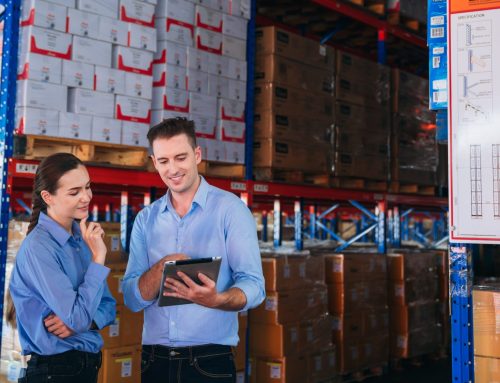
Which US Ports Are Best for Philippine Food Imports?
Choosing the right port improves delivery speed and reduces clearance time. The best ports include:
- Los Angeles/Long Beach: Fastest for West Coast supermarket supply
- Oakland: Strong for mixed Asian grocery distribution
- Houston: Balanced for Midwest retailers
- New York/New Jersey: Effective for East Coast Filipino and Asian markets
Velotactlcs Logistics evaluates importer distribution networks to match SKUs with the best entry port.
Conclusion
Reliable food export from the Philippines requires a professional US shipping agent for Philippines food export who understands cold-chain standards, documentation requirements, and US customs regulations. With proper planning, exporters protect product freshness, reduce delays, and strengthen their brand reputation. Therefore, partnering with a specialized logistics provider ensures safer, faster, and more compliant food shipments—every time.
Need a quote?
Ready to get started? Contact us now to request a free shipping quote.
Frequently Asked Questions (FAQ)
Frozen seafood, meat products, dairy mixes, and temperature-sensitive beverages require reefer containers.
Yes, every food shipment entering the US requires Prior Notice submission before arrival.
Yes, LCL is suitable for low-volume exports like dried goods or mixed food cartons.
Inspections verify labeling, sanitation, and ingredient compliance to meet FDA standards.
Los Angeles typically offers the quickest throughput for West Coast distribution.