
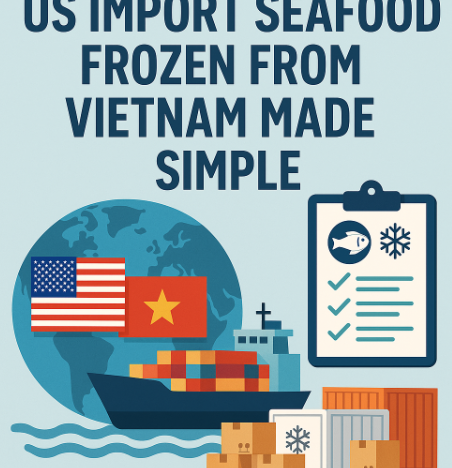
US import seafood frozen from Vietnam has grown rapidly as American retailers, food distributors, and restaurant groups increasingly depend on Vietnam for high-quality shrimp, pangasius (basa), tuna, squid, clams, and other seafood products. Because Vietnam operates one of the world’s most advanced aquaculture and seafood-processing industries, the country consistently supplies frozen seafood that meets strict US quality and safety standards. However, despite this strong manufacturing base, many importers still face challenges related to cold-chain consistency, FDA documentation, customs procedures, transit visibility, and product-quality variation. Therefore, gaining better control over the entire import process is essential for maintaining reliability and protecting profit margins.

Why Is Vietnam a Leading Supplier of Frozen Seafood to the United States?
Vietnam has established itself as a powerhouse in global seafood exports due to its advanced processing facilities, sustainable aquaculture practices, and robust quality-control systems. Additionally, Vietnam’s seafood industry benefits from:
- Large production volumes of shrimp, pangasius, and tuna
- HACCP-certified and EU-grade processing plants
- Strong value-added product lines (breaded shrimp, IQF fillets, seasoned seafood)
- Export-oriented supply chains in Ho Chi Minh City, Can Tho, Da Nang, Nha Trang, and Hai Phong
- Skilled labor and competitive pricing
Furthermore, Vietnam’s seafood exporters follow international standards such as SQF, BAP, ASC, and ISO, which helps US importers reduce compliance risks.
What Challenges Do US Importers Face When Bringing Frozen Seafood From Vietnam?
Although Vietnam offers exceptional seafood quality, importers still confront several operational challenges. These challenges arise from stringent import compliance requirements, product sensitivity, and cold-chain expectations.
Common pain points include:
- Maintaining –18°C or lower temperatures during transit
- Managing FDA registration, FCE, SIDs, and Prior Notice
- Ensuring correct HS codes and labeling for retail-ready products
- Dealing with long transit times and port congestion
- Verifying moisture content, glazing percentage, and net weight
- Navigating documentation inconsistencies from smaller suppliers
Because seafood can spoil quickly if mishandled, importers require precision, continuous monitoring, and consistent supplier coordination.
What Documentation Is Required for US Import Seafood Frozen From Vietnam?
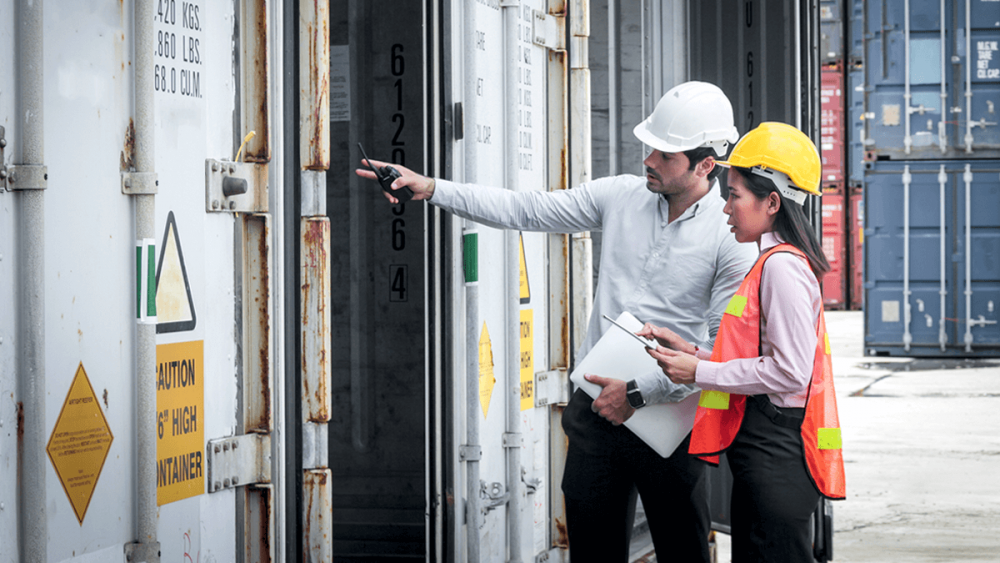
Frozen seafood is more regulated than many imported food items, requiring accurate and complete paperwork to prevent customs or FDA delays. The table below outlines key documents.
Frozen Seafood Import Documentation Table
| Document | Purpose | Important Notes |
|---|---|---|
| Commercial Invoice | Declares value, species, form | Must include Latin name & production method |
| Packing List | Confirms carton counts & weight | IQF vs block frozen must be stated clearly |
| Bill of Lading | Shipment record | Consignee must match FDA registration |
| Health Certificate | Confirms safe processing | Issued by Vietnam NAFIQAD |
| Certificate of Origin | Confirms Vietnam origin | Needed for tariffs & rules of origin |
| FDA Prior Notice | Required for all seafood | Must be filed before vessel arrival |
| Catch Certificate (for certain species) | Ensures sustainability compliance | Required for tuna and IUU-regulated species |
| Temperature Log | Confirms cold-chain integrity | Reefer must maintain –18°C or lower |
Additionally, many US buyers request production videos, plant certifications, and batch-level QC records to strengthen supplier transparency.
How Do Shipping Methods Compare for Frozen Seafood From Vietnam?
Frozen seafood requires strict temperature control during transportation. Choosing the right mode greatly influences cost, freshness, and compliance.
Shipping Mode Comparison Table
| Mode | Cost | Transit Time | Best For | Pros | Cons |
|---|---|---|---|---|---|
| Reefer Ocean FCL | Low | 22–32 days | Large frozen seafood volumes | Most economical; stable temperature | Long transit & port congestion risk |
| Reefer LCL | Medium | 26–40 days | Mixed or small shipments | Lower MOQ; flexible | More handling; higher temp-fluctuation risk |
| Air Freight (Frozen) | Very High | 2–5 days | High-value or urgent stock | Fast; low spoilage risk | Costs may be prohibitive |
| Cold-Chain Express | Highest | 1–3 days | Samples, niche seafood | Easiest documentation | Not viable for bulk shipping |
How Does Cold-Chain Integrity Influence US Seafood Imports?
Because seafood products are highly temperature-sensitive, maintaining a stable cold chain is crucial. Even short exposures above –18°C can degrade texture, increase drip loss, and trigger FDA rejection.
Key cold-chain requirements include:
- Continuous monitoring via reefer sensors
- Digital temperature logs accessible upon arrival
- Proper palletization to allow airflow
- Correct glazing and moisture control
- Ensuring no thawing during stuffing, transshipment, or unloading
- Choosing carriers with reliable reefer management systems
Velotactics Logistics applies strict temperature-tracking protocols and coordinates with carriers to ensure uninterrupted conditions from factory to destination port.
How Does Correct HTS Classification Improve Frozen Seafood Import Efficiency?
Frozen seafood classifications impact tariff rates, inspection priority, and regulatory documentation.
Common HTS codes include:
- 0306 – Shrimp & prawns (frozen)
- 0304 – Fish fillets & frozen fish meat
- 0307 – Mollusks (squid, cuttlefish, clams)
- 1605 – Prepared or preserved seafood products
Accurate classification helps importers:
- Reduce customs holds
- Prevent fines for misdeclaration
- Ensure correct duty calculation
- Maintain clean compliance records
Velotactics Logistics provides pre-shipment HS code audits to eliminate classification disputes.
How Can Importers Reduce Delays When Shipping Frozen Seafood From Vietnam?
Reducing delays requires coordinated planning and proactive communication. Fortunately, several strategies significantly improve reliability.
Effective delay-reduction methods include:
- Pre-verifying all supplier documents before loading
- Using carriers specialized in reefer cargo
- Booking early during peak shrimp-export seasons
- Ensuring pallet height matches US port equipment specifications
- Filing FDA Prior Notice well before vessel departure
- Requesting product-level QC photos and temperature logs
Moreover, Velotactics Logistics communicates with suppliers daily to confirm stuffing times, reefer settings, carrier schedules, and customs-entry readiness.
Why Is Velotactics Logistics a Strong Partner for US Import Seafood Frozen From Vietnam?
Velotactics Logistics specializes in cold-chain imports and provides complete visibility from origin to US distribution centers.
Key advantages include:
- Documentation support (Health Certificates, Prior Notice, SID/FCE)
- Reefer container booking and temperature monitoring
- Supplier coordination and pre-loading QC
- Customs-entry preparation and FDA compliance review
- Route optimization for the US West Coast & Gulf Coast
- Daily milestone tracking & real-time updates
- In-port cold-chain protection and drayage scheduling
Because frozen seafood requires precision and continuous oversight, Velotactics offers specialized workflow systems to support importer reliability.
Real Case Studies: Importing Frozen Seafood From Vietnam to the US
- Origin: Ho Chi Minh City
- Destination: Los Angeles
- Volume: 27 MT
- Transit Time: 24 days
- Cost: $6,200
- Result: Velotactics prevented a customs hold by correcting a minor HS code mismatch and verifying temperature logs.
- Origin: Da Nang
- Destination: Chicago (ORD)
- Volume: 1,250 kg
- Transit Time: 3 days
- Cost: $6.80/kg
- Result: Emergency replenishment for a restaurant chain met a critical weekend demand with zero thaw incidents.
- Origin: Can Tho
- Destination: Houston
- Volume: 8.2 CBM
- Transit Time: 33 days
- Cost: $960
- Result: Pre-loading carton inspection avoided potential moisture and glaze-percentage disputes on arrival.
How Does Better Control Improve Long-Term Frozen Seafood Supply Chains?
When importers strengthen cold-chain consistency, documentation workflows, and supplier communication, long-term benefits include:
- More predictable inventory cycles
- Lower spoilage and rejection rates
- Reduced customs inspection frequency
- Stronger supplier accountability
- Improved landed-cost control
- Faster replenishment for retail and food-service clients
Additionally, better control enables companies to expand product lines without increasing operational risk.

Conclusion
US import seafood frozen from Vietnam becomes significantly simpler when businesses enhance documentation accuracy, cold-chain management, and logistics coordination. By partnering with Velotactics Logistics, importers gain full visibility, proactive compliance support, optimized reefer routing, and reliable delivery schedules. With professional workflow management, companies reduce delays, improve quality assurance, and strengthen their long-term sourcing strategies from Vietnam’s seafood industry.
Need a quote?
Ready to get started? Contact us now to request a free shipping quote.
Frequently Asked Questions (FAQ)
Shrimp, pangasius, tuna, squid, clams, and value-added IQF seafood are major US imports.
–18°C or lower is required throughout the entire cold chain to avoid spoilage or FDA rejection.
Yes, all seafood entering the US requires Prior Notice filed before vessel arrival.
Incorrect HS codes, inconsistent documents, missing health certificates, or incomplete temperature logs.
Reefer FCL typically requires 22–32 days, depending on routing and port congestion.