
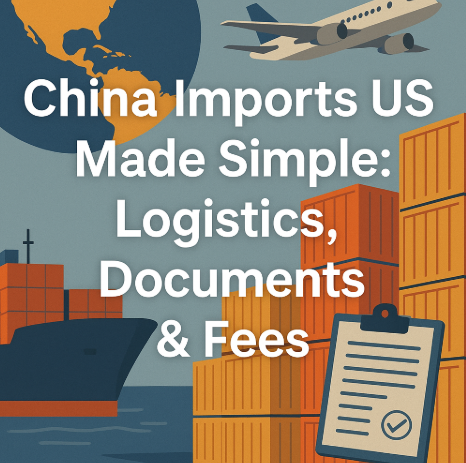
China remains a leading sourcing center for American businesses, and thousands of US companies rely on Chinese factories to supply everything from electronics and furniture to apparel and industrial components. Therefore, understanding how China imports US works—logistics, documentation, duty planning, and transit times—is essential for controlling cost and avoiding delays. Moreover, efficient planning helps importers maintain predictable inventory and stable supply-chain performance.
Although importing from China seems straightforward, the full process includes multiple technical steps such as HS classification, freight mode selection, customs compliance, tariff calculation, and warehouse coordination. Because each stage affects the final landed cost, importers must understand the best practices outlined in this complete guide.

What Makes China Imports US Essential for American Businesses?
China offers unmatched manufacturing scale, competitive pricing, strong technical capability, and product diversity. Additionally, Chinese factories support rapid product development, flexible MOQs, and consistent production quality.
However, rising tariffs, stricter customs procedures, and fluctuating shipping rates make it important for importers to understand the full logistics process. Therefore, businesses that understand China imports more deeply can negotiate better with suppliers, reduce risk, and improve profit margins.
Moreover, importers who partner with experienced logistics providers enjoy smoother operations, faster turnaround times, and reliable customs compliance.
How Does the China Imports US Shipping Flow Work Step by Step?
The journey from a Chinese factory to a US warehouse includes several phases. Although timelines vary by freight mode and destination, the process typically includes:
- Supplier production, QC, and packaging
- Export declaration and trucking to port or airport
- Freight space booking
- Ocean, air, or express transportation
- Arrival processing and customs clearance
- Duty and tariff assessment
- Final delivery to the importer’s warehouse
Because each stage requires accurate communication, importers should coordinate closely with suppliers and logistics partners to prevent mistakes that may cause delays. Additionally, importers should confirm production timelines early to avoid missing vessel cut-offs or air freight deadlines.
Velotactlcs Logistics manages these milestones to ensure a smoother flow, minimizing downtime caused by documentation issues or port congestion.

Which Shipping Methods Are Available for China Imports to the US?
Importers generally choose among four main options: FCL sea freight, LCL sea freight, air freight, and express courier. Therefore, it’s important to compare each method based on cost, transit time, and suitability for your SKU.
Table 1: Freight Method Comparison for China Imports US
| Method | Transit Time | Cost Level | Best For | Advantages | Limitations |
|---|---|---|---|---|---|
| FCL Sea Freight | 15–40 days | Low | Medium–large cargo | Lowest price per unit | Slow transit |
| LCL Sea Freight | 20–45 days | Medium | Small shipments | Flexible volume | Consolidation delays |
| Air Freight | 3–7 days | High | Urgent goods | Fast and reliable | Higher cost |
| Express Courier | 2–5 days | Very high | Samples & e-commerce | Door-to-door | Weight limits |
Because of its cost efficiency, FCL remains the preferred method for most bulk shipments. Meanwhile, air freight is ideal for urgent restocking or high-value items.
Which Documents Are Required for China Imports into the US?
Documentation accuracy directly impacts customs clearance speed. Missing or mismatched documents commonly trigger inspections or rejections. Therefore, importers must confirm all documents before cargo departs the origin country.
Table 2: Required Customs Documents for China Imports US
| Document | Purpose |
|---|---|
| Commercial Invoice | Product details, value, HS code |
| Packing List | Quantities, weights, measurements |
| Bill of Lading / Air Waybill | Transportation record |
| ISF Filing (Ocean Only) | Mandatory 10+2 filing |
| Arrival Notice | Confirms shipment arrival |
| Customs Bond | Required for all formal entries |
| Certificate of Origin | Proves manufacturing country |
| Compliance Certificates | For regulated categories (electronics, toys, apparel) |
Because document errors lead to the majority of customs delays, importers should double-check all fields and ensure HS codes match product characteristics.
What Are the Typical Transit Times for China Imports to the US?
Transit times vary due to lane selection, port congestion, weather, and carrier schedules. However, importers can use the following averages as a planning reference.
Table 3: Transit Time Comparison by Region
| Origin Port | US Destination | Sea Freight | Air Freight |
|---|---|---|---|
| Shanghai | Los Angeles | 14–18 days | 3–5 days |
| Shenzhen | Long Beach | 15–20 days | 3–6 days |
| Ningbo | Houston | 25–35 days | 4–7 days |
| Qingdao | New York | 28–40 days | 4–8 days |
| Xiamen | Savannah | 30–42 days | 4–7 days |
Because transit times vary significantly between West Coast and East Coast ports, importers should plan their schedules based on warehouse proximity and final delivery timelines.
Velotactlcs Logistics offers multi-carrier solutions and optimized routing strategies to ensure stable transit performance.
How Much Does It Cost to Import Goods from China to the US?
Importing from China involves multiple cost components beyond just freight rates. Moreover, duties, tariffs, warehouse fees, and US domestic delivery charges contribute to total landed cost.
Typical cost components include:
- Ocean or air freight
- Export and documentation fees
- Port charges and terminal fees
- Marine insurance
- Customs clearance fees
- Normal duty + Section 301 tariffs
- Carrier surcharges
- Domestic drayage or LTL delivery
Because tariffs significantly influence final cost, importers must calculate total landed cost, not just supplier FOB price.
Velotactlcs Logistics provides transparent cost breakdowns, tariff simulations, and customized quotes to help businesses maintain better financial control.
How Do Tariffs Impact China Imports US?
Tariffs on Chinese imports—especially Section 301 tariffs—affect thousands of HS codes and vary between 7.5%, 15%, and 25%. Therefore, importers must understand:
• Whether their product is listed
• Which tariff tier applies
• Whether exclusions exist
• How HS classification affects duty rates
Because tariff misclassification can result in fines or unexpected additional duties, importers should verify HS codes carefully with their customs broker.
What Challenges Do Importers Face When Bringing Goods from China?
Although China imports US continue to grow, importers face several common challenges:
• Wrong HS classification
• Late or inaccurate documents
• Poor packaging causing damage
• Unexpected tariffs
• Port congestion and delays
• ISF filing mistakes
• Supplier communication issues
However, most challenges are preventable with proper planning and professional logistics support.
Velotactlcs Logistics offers pre-shipment document checks, tariff guidance, packaging recommendations, and tracking assistance to help importers avoid costly delays.
How Can Importers Improve Efficiency When Managing China Imports to the US?
Importers can streamline their operations using the following strategies:
• Verify HS codes before issuing POs
• Submit ISF filings early
• Use proper labeling and packaging
• Track carrier schedules and rate trends
• Consolidate cargo to reduce cost
• Build delivery buffers during peak seasons
• Use trusted freight forwarders and customs brokers
Moreover, combining freight planning with tariff compliance significantly reduces overall risk.

Conclusion
China imports US continue to drive growth in retail, wholesale, and e-commerce industries. Because importing involves freight planning, documentation, customs coordination, tariff analysis, and careful supplier communication, businesses must stay informed and well-prepared. Moreover, partnering with an experienced logistics company helps importers reduce delays, avoid penalties, and optimize overall cost.
Velotactlcs Logistics provides complete China-to-US import solutions—including freight booking, customs clearance, tariff reviews, tracking support, and delivery management—to ensure a stable, efficient, and predictable supply chain.
For importers ready to streamline operations and improve cost efficiency, professional logistics support makes a measurable difference.
Need a quote?
Ready to get started? Contact us now to request a free shipping quote.
Frequently Asked Questions (FAQ)
Sea freight FCL is typically the most cost-effective option because it offers the lowest price per unit for medium-to-large shipments.
Yes. All formal US entries require a customs bond, which ensures proper compliance during the customs clearance process.
Tariff reduction may be possible through exclusion programs, FTZ strategies, tariff engineering, or correct HS reclassification.
Importers should book two to three weeks ahead, especially during peak seasons or when shipping popular trade lanes.
Samples may still be subject to duties or tariffs depending on declared value and classification, so documentation must be accurate.