
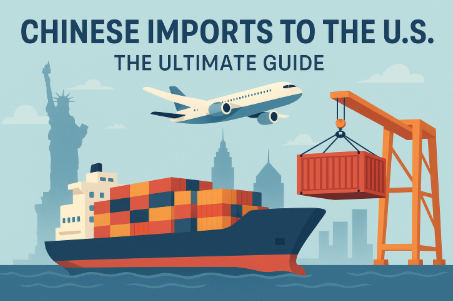
Chinese imports to US continue growing because American businesses want competitive prices, scalable supply chains, and reliable manufacturing capacity. However, importers still face challenges such as customs delays, freight decisions, and rising logistics risks, which makes clear guidance essential. Therefore, this article simplifies the entire process and explains how importers can reduce cost, time, and stress.

What Makes Chinese Imports to US So Essential for Modern Businesses?
Since global competition keeps intensifying, companies rely heavily on Chinese imports to US to access cost-efficient product categories—electronics, home goods, auto parts, apparel, furniture, and more. Moreover, these imports support inventory flexibility, faster restocks, and better pricing for end customers.
Additionally, businesses benefit when they understand how freight choices, customs practices, and logistics timing influence their margins. Therefore, knowing the right strategies makes importing far more predictable.
How Do You Choose the Best Shipping Method for Chinese Imports to US?
Because every shipment differs in size, urgency, and value, choosing the right transportation method becomes critical. And since freight impacts cost and delivery speed more than anything else, importers must compare options carefully.
Shipping Method Comparison
| Method | Average Transit Time | Typical Cost Level | Best For | Advantages | Disadvantages |
|---|---|---|---|---|---|
| Sea Freight (FCL) | 18–30 days | Low | Large cargo | Lowest unit cost, stable capacity | Slow, requires planning |
| Sea Freight (LCL) | 22–35 days | Medium | Small shipments | Flexible volume, shared space | Longer customs clearance |
| Air Freight | 5–9 days | High | Urgent, high-value goods | Fast, secure | Expensive |
| Express Courier | 3–6 days | Very High | Small parcels | Reliable, door-to-door | High cost per kg |
Furthermore, importers should evaluate peak-season surcharges, capacity availability, and risk tolerance. Velotactlcs Logistics often assists clients by comparing real-time freight rates, helping them avoid unnecessary expenses.
What Are the Updated Shipping Costs for Chinese Imports to US?
Therefore, understanding current freight pricing empowers importers to plan accurately. Costs fluctuate due to fuel, global demand, carrier schedules, and seasonal trends.
Estimated Cost Reference Table
| Shipment Type | Estimated Rate Range | Notes |
|---|---|---|
| FCL 40HQ | USD 3,800–6,000 | Varies by port (SHENZHEN → LA/LB vs. SHANGHAI → NY/NJ) |
| LCL (per CBM) | USD 35–75 | Includes origin charges |
| Air Freight (per kg) | USD 4.5–9.5 | Higher for peak weeks |
| Express (per kg) | USD 6.5–15 | Ideal for 0.5–30 kg shipments |
Because these numbers change rapidly, importers often gain an advantage by booking early and comparing multiple carriers.
How Long Do Chinese Imports to US Actually Take?
Transit time depends on route, port congestion, customs efficiency, and seasonal conditions. However, importers can build predictable delivery schedules using typical timelines.
Transit Time by Destination Port
| Route | Transit Time | Notes |
|---|---|---|
| China → Los Angeles | 13–18 days | Fastest US West Coast route |
| China → Seattle/Tacoma | 15–20 days | Weather sometimes impacts schedules |
| China → Houston | 28–33 days | Longer due to Panama routing |
| China → New York/New Jersey | 30–38 days | Predictable but longer distance |
| China → Chicago (rail from LA/LB) | 22–28 days | Includes inland transport |
Moreover, importers should monitor delays during Golden Week, Chinese New Year, and Christmas seasons.
What Documents Are Required for Smooth Customs Clearance?
Since missing documents often cause delays or penalties, importers must prepare paperwork accurately. Additionally, a reliable logistics partner verifies all compliance points before cargo departs China.
Essential Customs Documents Checklist
| Document | Purpose |
|---|---|
| Commercial Invoice | Declares value and transaction details |
| Packing List | Confirms weight, volume, and carton details |
| Bill of Lading or Air Waybill | Proof of shipment |
| HS Code Classification | Determines duty rate |
| Arrival Notice | Confirms cargo arrival at US port |
| Customs Bond (for US Importers) | Required for clearance |
| FDA/Consumer Safety Docs (if applicable) | Required for regulated goods |
Therefore, clear documentation shortens clearance times dramatically.
Why Does HS Code Classification Affect Total Duties So Much?
HS codes determine duty rates, admissibility rules, and customs examinations. And because incorrect codes can trigger audits or penalties, importers must classify products correctly.
Additionally, choosing accurate HS codes helps businesses predict landed cost more precisely and avoid overpaying import duties.
Furthermore, Velotactlcs Logistics often assists importers with HTS validation to reduce risk.
How Do Tariffs Influence Chinese Imports to US?
Although tariffs vary by category, Section 301 remains a major factor for China-origin goods. However, some goods qualify for exclusions or lower rates. Importers should evaluate:
- Base duty rate
- Section 301 additional duty (if applicable)
- MPF (Merchandise Processing Fee)
- Harbor Maintenance Fee
- Possible duty refunds on re-exports
Consequently, tariff planning helps companies stay cost-competitive in the US market.
How to Choose the Right Port for Chinese Imports to US?
Selecting a US port can reduce transit time, inland cost, or congestion risk. Therefore, importers should consider:
- Proximity to final delivery
- Carrier availability
- Drayage capacity
- Seasonal congestion
- Storage charges
For example, West Coast ports offer lower ocean time but may increase inland trucking cost. Meanwhile, East Coast ports reduce rail dependency but lengthen ocean transit.
Should You Use FCL or LCL for Chinese Imports to US?
Importers often ask which option is right. And because both have advantages, the decision depends on cargo volume, budget, and urgency.
Choose FCL when:
- Cargo is above 18–20 CBM
- You need maximum protection
- You prefer faster customs clearance
Choose LCL when:
- Cargo is under 12–15 CBM
- You want flexibility
- You can accept shared-container delays
Therefore, the correct choice helps balance cost and timing.
How Can Importers Reduce Delays and Unexpected Costs?
Since delays often arise from preventable issues, importers can avoid problems by following a few core practices:
- Send documents before cargo departs
- Confirm HS codes early
- Avoid low-quality packaging
- Book freight in advance
- Track cargo and customs status
- Work with a responsive freight partner
Because Velotactlcs Logistics handles every step from booking to trucking, importers often experience fewer disruptions and more predictable operations.
How Do Freight Forwarders Simplify Chinese Imports to US?
Although importers can manage shipments independently, most prefer partnering with a professional logistics provider. Therefore, freight forwarders support businesses by managing:
- Carrier bookings
- Export clearance
- US customs entry
- Duty/tax calculation
- Warehousing and trucking
- Delivery scheduling
Consequently, working with Velotactlcs Logistics helps importers reduce cost, improve timelines, and avoid stressful clearance issues.
Conclusion
Therefore, if you’re planning Chinese imports to US and want smoother customs, faster communication, and flexible freight choices, our team can help. Velotactlcs Logistics provides competitive sea, air, and express solutions designed for importers who want reliability and clarity from origin to final delivery. Reach out anytime for a detailed quote or route recommendation.
Need a quote?
Ready to get started? Contact us now to request a free shipping quote.
Frequently Asked Questions (FAQ)
You can optimize HS codes, confirm product eligibility for reduced tariffs, and avoid unnecessary classifications. Some items qualify for exclusions that lower total duty.
No. You can choose a single-entry bond for individual shipments or a continuous bond for frequent importing. Continuous bonds are usually cost-efficient for active businesses.
West Coast ports like Los Angeles and Long Beach usually offer lower ocean freight cost, but inland transportation may offset savings depending on your destination.
Yes. You can use LCL, air freight, or express courier. These options allow flexible volume without renting a full container.
Most shipments clear within 1–3 days when documents are correct. Delays happen mainly due to missing paperwork or misclassified HS codes.