

- By clara
- November 18, 2025
- Business, Compliance, Finance
Table of Contents
Importing goods from China offers great business opportunities, but understanding import from China to US taxes is key to avoiding unnecessary costs and delays. Many importers underestimate how customs duties, tariffs, and additional fees affect their bottom line. This guide from VELOTACTICS LOGISTICS breaks down how these taxes work — and how you can manage them efficiently and cost-effectively.
What Types of Taxes Apply to Imports From China?
When importing goods into the United States, multiple taxes and fees can apply. These depend on your product category, customs classification, and shipment method.
| Tax / Fee Type | Description | Typical Rate | Applies To |
|---|---|---|---|
| Import Duty | Basic tariff applied on all goods | 0%–37.5% (avg 5%) | Most imported goods |
| Merchandise Processing Fee (MPF) | Customs processing charge | 0.3464% (min $31.67, max $614.35) | All formal entries |
| Harbor Maintenance Fee (HMF) | Port infrastructure fee | 0.125% | Ocean freight only |
| Excise Tax | Specific industries (e.g., alcohol, vehicles) | Varies | Selected goods |
| Section 301 Tariff | Additional duty on China products | 7.5%–25% | Electronics, furniture, textiles |
👉 Get precise tax estimates for your cargo — Send Inquiry
How Are Import Duties From China Calculated?
To estimate import taxes, you must first know your HS Code — the Harmonized System code used worldwide to classify goods.
Duty Calculation Formula:
Import Duty = (Product Value + Freight + Insurance) × Duty Rate
Example:
If your shipment of $10,000 in goods with $1,000 shipping costs has a 5% duty rate:
→ Import Duty = (10,000 + 1,000) × 5% = $550
| Cost Component | Value (USD) |
|---|---|
| Product Value | 10,000 |
| Freight + Insurance | 1,000 |
| Import Duty (5%) | 550 |
| MPF | 38.10 |
| HMF | 13.75 |
| Total Taxes | $601.85 |
By preparing with accurate data, you can avoid unexpected expenses during customs clearance.

What Are Section 301 Tariffs on Chinese Imports?
Since 2018, the U.S. has imposed Section 301 tariffs on Chinese goods due to trade imbalances. These tariffs affect thousands of product categories.
| Tariff List | Product Category | Additional Rate |
|---|---|---|
| List 1–2 | Industrial equipment | 25% |
| List 3 | Furniture, electronics, plastics | 10–25% |
| List 4A | Apparel, footwear, handbags | 7.5% |
| List 4B | Suspended (not active) | — |
If your item falls into any of these lists, you’ll pay both the base import duty and the extra Section 301 tariff.
Can You Avoid Paying High Import Taxes From China?
Yes — there are several legitimate ways to reduce or defer taxes when importing from China to the U.S.
| Strategy | Description | Savings Potential |
|---|---|---|
| Section 321 De Minimis | Shipments under $800 are tax-free | Up to 100% for small parcels |
| Bonded Warehouse | Store goods duty-free until sold | Defers duty |
| Duty Drawback | Refund for re-exported goods | 99% refund on duties |
| Accurate HS Code Use | Avoid misclassification penalties | Reduces audit risk |
| FTA Country Routing | Sometimes re-export via non-tariff nation | Variable |
Working with a licensed customs broker ensures your goods are classified and filed properly.
👉 Learn more at Service
How Do Customs Clearance and Tax Payments Work?
Step-by-Step Process:
- Identify HS Code and duty rate.
- Submit ISF filing before departure (for sea shipments).
- Prepare customs documents (invoice, packing list, bill of lading).
- Pay duties and fees via customs broker.
- Clear goods for entry into the U.S.
| Document | Purpose |
|---|---|
| Commercial Invoice | Declares value and details |
| Packing List | Confirms contents and packaging |
| Bill of Lading / AWB | Proof of transport |
| CBP Form 7501 | Official entry summary |
| Customs Bond | Financial guarantee for duties |
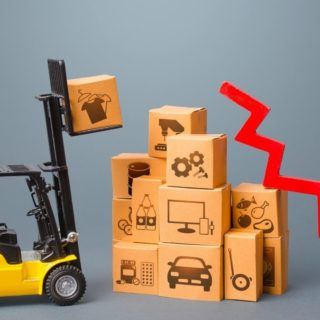
Which Products Have the Highest Import Taxes?
| Product Category | Duty Range | Extra Tariff |
|---|---|---|
| Apparel | 10%–32% | — |
| Footwear | 8%–37.5% | — |
| Furniture | 5%–10% | 25% |
| Tools & Machinery | 2%–5% | 25% |
| Toys | 0%–5% | None |
| Electronics | 0%–7% | Up to 25% |
By forecasting your product category costs, you can determine the most profitable sourcing strategy.
Shipping Methods and Their Tax Implications
| Mode | Duty Treatment | Transit Time | Cost Level | Ideal Cargo Type |
|---|---|---|---|---|
| Sea Freight (FCL/LCL) | HMF applies | 25–40 days | $$ | Heavy/bulk shipments |
| Air Freight | No HMF | 3–7 days | $$$ | Small, high-value items |
| Express Courier | Section 321 applicable | 3–5 days | $$ | Samples/e-commerce parcels |
Sea freight offers the best cost per unit, while air freight is ideal for high-value or urgent goods.
👉 Need help selecting the best mode? Send Inquiry
Real Case Example: Importing Lighting Fixtures from Shenzhen
A small importer shipped $20,000 worth of LED lights via sea freight.
- Duty rate: 4%
- Section 301 tariff: 25%
- Freight: $2,000
Calculation:
→ (20,000 + 2,000) × 29% = $6,380 total taxes
With Velotactics Logistics managing customs, filing, and warehousing, the importer saved 12% in administrative fees and cleared goods in 48 hours.

Why Partner With Velotactics Logistics
VELOTACTICS LOGISTICS provides:
- End-to-end import management from China to the U.S.
- Customs clearance and tax filing by licensed brokers.
- Door-to-door logistics across sea and air freight.
- Transparent landed-cost calculation before shipping.
We help importers save on taxes and clear shipments faster than traditional brokers.
Visit our Service page for full support.
How to Prepare for Import Tax Audits
- Keep all customs paperwork for 5 years.
- Maintain supplier invoices and payment proofs.
- Store digital HS code confirmations.
- Partner with experienced forwarders who track filings automatically.

Conclusion:
Handling import from China to US taxes doesn’t have to be overwhelming. By knowing your duty rates, using customs brokers, and applying exemptions like Section 321 or duty drawbacks, you can reduce costs and streamline every shipment. With Velotactics Logistics, import tax management becomes simple, predictable, and profitable.
Get a Quote
Ready to ship smarter? Get your custom tax and logistics quote within 24 hours.Enjoy simplified customs clearance and optimized shipping rates for China-to-US imports.
FAQ
They range from 0%–37.5%, depending on your product’s HS code and Section 301 status.
Yes, Section 321 exempts shipments under $800 from duties and taxes.
Ask your supplier or a customs broker; it defines your tariff rate.
Yes, we manage all paperwork, duty payments, and delivery logistics.
Use accurate HS codes, split shipments, and consider bonded warehousing.
Yes, Section 301 tariffs remain in place for many categories such as furniture and electronics.