
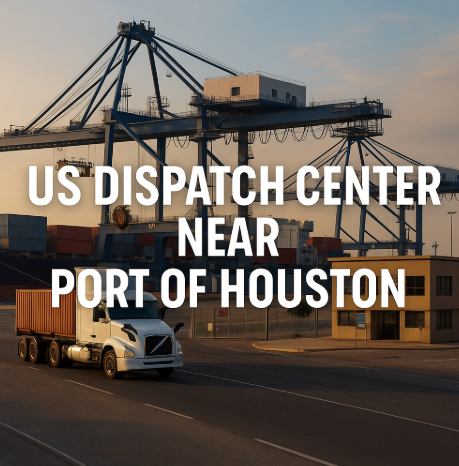
Located at one of the busiest trade gateways in America, the US dispatch center near the Port of Houston plays a crucial role in connecting ocean freight to inland transportation networks. With imports, exports, and intermodal freight moving daily, efficiency, speed, and coordination are vital. Shippers and carriers alike depend on dispatch centers here to minimize delays, manage drayage efficiently, and ensure smooth last-mile delivery.

What Makes the Port of Houston So Strategically Important?
The Port of Houston handles over 285 million tons of cargo annually and serves as the top container port in the Gulf of Mexico. It’s a primary hub for both importers and exporters dealing in petrochemicals, machinery, consumer goods, and raw materials.
Located just 25 miles inland from the Gulf, it links to extensive rail lines, interstate highways, and distribution zones — making it an ideal base for dispatch and freight coordination operations.
In addition, its proximity to major logistics hubs like Dallas, San Antonio, and Austin allows dispatch centers to manage both short-haul and long-haul operations efficiently.
Why Do Shippers Need a Dispatch Center Near Port of Houston?
A local dispatch center ensures that shipments are processed and moved without delay. The closer the dispatch facility is to the port, the faster it can handle:
- Container pickup scheduling
- Customs coordination
- Drayage and intermodal transfers
- Freight tracking and documentation
- Communication between carriers and warehouses
Therefore, having a US dispatch center near Port of Houston means quicker response times, reduced congestion fees, and better delivery accuracy.

Key Functions of a Dispatch Center Near Port Facilities
Dispatch centers around Houston’s port manage multiple logistics tasks simultaneously. These include:
- Load Coordination: Matching available trucks with arriving containers.
- Driver Scheduling: Assigning local or long-haul drivers based on destination.
- Freight Tracking: Providing real-time updates through GPS and digital dashboards.
- Compliance Checks: Ensuring paperwork meets federal and customs regulations.
- Route Optimization: Reducing mileage and fuel costs.
Because Houston’s freight environment is dynamic, dispatchers must make decisions within minutes to prevent congestion and missed slots.
Freight Movement Comparison – With vs. Without Local Dispatch
| Factor | With Local Dispatch | Without Local Dispatch |
|---|---|---|
| Average Container Dwell Time | 12–18 hours | 24–48 hours |
| Communication Delay | Minimal | High (intercity coordination) |
| Fuel Efficiency | Optimized routes | Higher idle time |
| Delivery Accuracy | 98% on-time | 82–85% on-time |
| Overall Cost Savings | 15–25% lower | Higher due to inefficiencies |
As shown above, having a dispatch facility within proximity of the port directly impacts delivery performance and operational cost.
How Does Dispatch Coordination Work in Houston?
Once a vessel unloads containers, the port’s electronic data interchange (EDI) system alerts dispatch centers. Dispatch teams then assign available drivers to retrieve containers and deliver them to nearby warehouses or freight yards.
Additionally, automated systems handle real-time tracking and verification to ensure each load meets customs clearance and schedule requirements.
In essence, dispatch coordination acts as the control tower of the logistics chain, synchronizing trucks, paperwork, and delivery schedules seamlessly.
What Technologies Power Modern Dispatch Centers?
Today’s dispatch centers near the Port of Houston rely heavily on automation and analytics. The following technologies are commonly integrated:
- AI-Based Route Planning for minimizing fuel costs and time.
- Real-Time GPS Tracking for live shipment visibility.
- Electronic Document Management (EDM) for faster customs and broker communication.
- IoT Sensors for container condition monitoring.
- Cloud Platforms for multi-party collaboration.
Consequently, dispatching has evolved from phone-based coordination to intelligent, data-driven management systems.
Technology Tools Used by Leading Dispatch Centers
| Tool Type | Function | Impact |
|---|---|---|
| AI Dispatch Algorithms | Optimize routes & assign loads | Cut fuel cost by 10–15% |
| ELD Integration | Monitor driver compliance | Ensure FMCSA readiness |
| Cloud-based TMS | Centralize dispatch operations | Real-time transparency |
| IoT-enabled Monitoring | Track container integrity | Reduce cargo damage |
| Predictive Analytics | Forecast congestion & weather | Prevent shipment delays |
By leveraging these tools, logistics providers at Houston’s port can handle large shipment volumes with remarkable speed and precision.
How Does the Port’s Infrastructure Support Efficient Dispatching?
The Port of Houston’s infrastructure directly complements dispatch operations. It offers:
- Multiple container terminals (Barbours Cut, Bayport) for faster drayage turnover.
- Proximity to I-10, I-45, and I-69 highways for immediate inland access.
- On-site customs facilities for rapid clearance.
- Ample yard storage for container staging.
- Intermodal connectivity to Union Pacific and BNSF rail networks.
Because of these assets, the region supports one of the most efficient freight ecosystems in the country, where local dispatchers can reroute or reschedule cargo within minutes.
How Do Dispatch Centers Improve Drayage Efficiency?
Drayage — the short-haul transport between port and warehouse — is one of the most time-sensitive segments of the logistics process.
Local dispatch centers streamline this process by:
- Monitoring container availability and appointment slots.
- Assigning drivers based on live updates.
- Managing chassis allocation.
- Minimizing gate congestion through scheduling systems.
This level of precision reduces empty miles, shortens turnaround times, and helps carriers avoid detention and demurrage charges.
Average Drayage Performance Near Port of Houston
| Metric | Typical Time | Optimized Time (With Dispatch Center) |
|---|---|---|
| Container Pickup | 4–6 hours | 2–3 hours |
| Gate Turnaround | 45–60 minutes | 25–35 minutes |
| Empty Return Coordination | 3–5 hours delay | Within 1 hour |
| Average Savings per Trip | – | $150–$300 |
Clearly, effective drayage management powered by dispatch centers near Houston improves both cost and operational performance.
Why Location Matters for Freight Dispatching
Proximity to the port directly influences how quickly shipments can be processed. A US dispatch center near Port of Houston eliminates the communication lag between vessel arrival, customs release, and trucking assignments.
Furthermore, it allows logistics teams to coordinate face-to-face with terminal operators, brokers, and customs officers. This synergy significantly reduces delays and enables same-day freight turnover for time-sensitive shipments.
Benefits of Partnering with a Local Dispatch Center
Choosing a dispatch partner located near the Port of Houston provides measurable business advantages:
- Speed: Faster response to cargo availability.
- Transparency: Real-time updates and accountability.
- Reduced Downtime: Elimination of cross-city coordination.
- Cost Efficiency: Lower deadhead miles and fuel usage.
- Better Compliance: Easy access to port and customs resources.
In addition, dispatchers with local expertise understand port regulations and can anticipate common bottlenecks — keeping freight flow uninterrupted.
Why Businesses Are Moving Toward Integrated Dispatch Solutions
The logistics trend is shifting toward integrated dispatch centers that manage drayage, FTL, and LTL under one digital system. In Houston, many dispatchers now provide combined services such as:
- Cross-docking for immediate load transfer.
- Intermodal logistics coordination.
- Real-time EDI reporting for clients.
- End-to-end visibility across the supply chain.
This integrated approach helps companies cut overall transit times while maintaining shipment accuracy and transparency.
Conclusion
Efficiency begins where the port ends. A US dispatch center near Port of Houston ensures seamless coordination between ocean carriers, truck fleets, and inland distribution points. From route planning to documentation and real-time load tracking, dispatch centers eliminate costly downtime and optimize every movement of freight.
Whether you’re an importer, exporter, or carrier, choosing a locally based dispatch partner near Houston’s port gives you a decisive edge in speed, reliability, and cost control.
Need a quote?
Ready to get started? Contact us now to request a free shipping quote.
Frequently Asked Questions (FAQ)
Because it’s the largest Gulf Coast port with strong intermodal links and direct highway access to major US markets.
They handle drayage scheduling, customs coordination, and load dispatching for both local and long-haul freight.
Most are within 10–15 miles of Barbours Cut or Bayport, ensuring rapid container turnaround.
Yes, many also handle import/export compliance and coordinate with freight forwarders and customs brokers.
Through optimized route planning, reduced idle time, and immediate load allocation to available drivers.