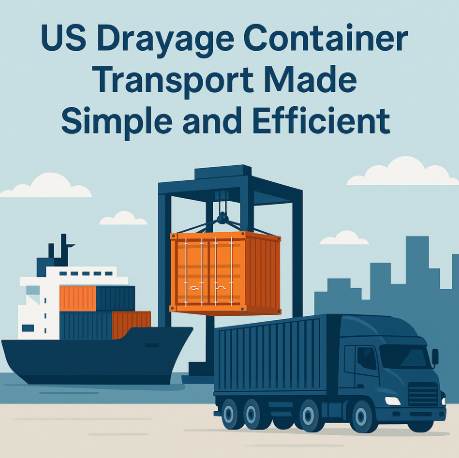
US drayage container transport plays a critical role in keeping port operations smooth, yet many importers struggle with congestion, delays, unexpected fees, and inefficient communication. Although the challenges are real, there are clear strategies to simplify the process and keep your cargo moving without disruption.
What Is US Drayage Container Transport and Why Does It Matter?
Because port operations involve tight timelines and strict procedures, drayage becomes the link that keeps the entire supply chain moving. US drayage container transport refers to short-distance container moves between ports, rail yards, warehouses, and distribution hubs. Moreover, it determines how quickly cargo leaves the port and how soon it enters the domestic logistics network. Therefore, choosing the right drayage partner ensures reliability, predictable delivery schedules, and reduced exposure to demurrage or detention fees.
How Does the US Drayage Container Transport Process Work?
Although drayage may seem straightforward, several checkpoints must align for smooth operations. Typically, the process includes:
Container availability confirmation
Scheduling pickup based on terminal appointment rules
Driver arrival during allowed time windows
Extraction of the container from the port
Delivery to the designated warehouse or transload facility
Return of the empty container to the approved depot
Additionally, each port operates with different appointment systems, gate rules, and yard layouts, so planning ahead is essential. Velotac Logistics manages these variables daily, allowing importers to stay focused on their core business while we handle the operational complexity.
What Problems Do Importers Face With Drayage—and How to Avoid Them?
Because US ports often face congestion, importers frequently run into issues like:
Missed appointments
Terminal delays
Chassis shortages
Unexpected demurrage and detention
Lack of real-time updates
Miscommunication between trucker and warehouse
However, these problems are preventable. When drayage partners provide transparent scheduling, accurate milestone tracking, and proactive communication, delays can be minimized and costs controlled.
How Much Does US Drayage Container Transport Cost?
Route / Location
Mileage
Cost Range
Los Angeles → Local Warehouse
≤15 miles
$325–$480
Long Beach → Inland Warehouse
15–30 miles
$380–$520
Savannah → Nearby Facility
≤20 miles
$350–$500
Newark → NJ Warehouse
≤15 miles
$450–$650
Houston Terminal → Local Warehouse
≤20 miles
$380–$560
Because rates change with fuel prices, chassis availability, and seasonal congestion, working with a drayage provider that updates pricing in real time is essential for budgeting.
Which Factors Affect Drayage Costs and Transit Time?
Because every port and city has unique operational conditions, factors that influence performance include:
Terminal congestion
Chassis supply
Appointment slot availability
Container type (20’ / 40’ / HQ / reefer)
Warehouse receiving hours
Traffic restrictions or road conditions
Steamship line rules for empty returns
Therefore, importers who coordinate early with their drayage partner experience fewer delays and avoid expensive overtime charges or storage fees.
Why Efficient Drayage Improves the Entire Supply Chain
Although drayage covers only a short distance, it directly affects:
Inventory flow
Distribution center planning
E-commerce fulfillment timelines
Production scheduling
Cross-docking and transloading efficiency
Consequently, fast and predictable drayage reduces warehouse idle time and helps importers maintain consistent delivery schedules.
How Does Drayage Support Transloading, Cross-Docking, and Long-Haul Freight?
Because drayage is the first domestic step after the vessel’s arrival, it connects seamlessly to:
Transloading into 53’ trailers
Direct-to-store replenishment
Rail intermodal services
Full-truckload (FTL) and less-than-truckload (LTL)
E-commerce fulfillment centers
Therefore, importers who integrate drayage with their broader trucking strategy reduce dwell times and accelerate the delivery cycle.
What Are the Typical US Drayage Transit Times?
Distance
Average Transit Time
0–15 miles
1–3 hours
15–30 miles
2–4 hours
30–60 miles
3–6 hours
60–100 miles
4–8 hours
100–150 miles
6–10 hours
Because port congestion and appointment rules vary, transit may extend, but professional coordination reduces variability significantly.
Which Documents Are Needed for Smooth Drayage Operations?
Document
Purpose
Arrival Notice
Confirms cargo readiness
Bill of Lading
Proof of shipment
Customs Release
Confirms clearance
Delivery Order
Authorizes pickup
Container/SCAC Details
Required for matching units
Chassis Agreement
Allows chassis assignment
Therefore, preparing documents early shortens waiting time at the terminal and prevents compliance issues.
What Makes a Reliable Drayage Partner—and How Velotac Logistics Helps
Although the market includes thousands of trucking providers, only a small percentage specialize in port drayage with true reliability. A strong partner should offer:
Accurate milestone tracking
Clear and transparent pricing
Real-time driver communication
Flexible scheduling
Fast transloading and cross-docking
Velotac Logistics provides integrated drayage, container transport, warehouse receiving, and last-mile trucking across major US ports. Moreover, our team manages all terminal appointment rules, monitors ETA updates, and coordinates with your warehouse to ensure timely unloading and container return.
How Importers Can Reduce Demurrage and Detention Fees
Because demurrage and detention can quickly become expensive, importers should:
Submit documents early
Confirm availability once the vessel berths
Schedule drayage ahead of peak congestion
Coordinate warehouse receiving hours
Return empty containers promptly
Therefore, early coordination with your drayage partner prevents unnecessary charges.
What Trends Are Shaping the Future of US Drayage?
Although traditional drayage relied heavily on manual processes, new trends are improving efficiency:
Digital port appointment systems
Real-time GPS tracking
EV and LNG drayage trucks
Automated routing
Enhanced cross-dock + drayage models
Data-driven supply chain planning
Because the industry continues evolving, importers benefit from drayage partners who invest in modern technology.
Conclusion
US drayage container transport is essential for keeping imports moving, reducing port delays, and optimizing warehouse operations. When handled correctly, it secures predictable timelines and supports every downstream logistics activity. Because Velotac Logistics integrates drayage, cross-docking, and last-mile delivery, importers gain a faster, more reliable supply chain.
Therefore, choosing the right drayage partner helps reduce costs, improve speed, and eliminate operational frustrations.
Need a quote?
Ready to get started? Contact us now to request a free shipping quote.