
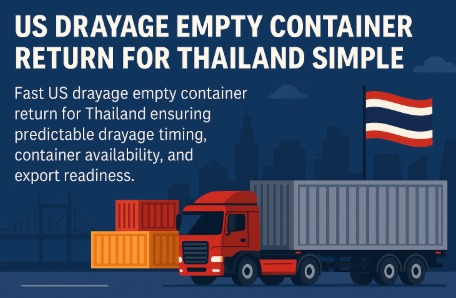
US exporters preparing shipments for Thailand must manage not only ocean freight booking and documentation but also the critical task of returning empty containers efficiently. Because mismanaged drayage scheduling leads to detention charges, chassis fees, and delivery delays, a structured approach to US drayage empty container return for Thailand becomes essential. Although container logistics appear straightforward, the return process often involves time-sensitive coordination, terminal restrictions, and carrier-specific rules.

What Does US Drayage Empty Container Return for Thailand Include?
Efficient empty container return involves more than dropping equipment at a terminal. Moreover, every step must align with the carrier’s rules and the exporter’s timeline to avoid costly fees. A complete US drayage empty container return for Thailand process includes:
- Confirming return location from carrier
- Scheduling drayage pickup and drop-off
- Checking terminal cutoff windows
- Coordinating chassis availability
- Verifying container condition
- Preventing detention and per-diem penalties
- Ensuring readiness for Thailand export loading
Additionally, strong communication with truckers ensures container turns move quickly without unnecessary downtime.
How Do Carriers Assign Empty Return Locations for Thailand Shipments?
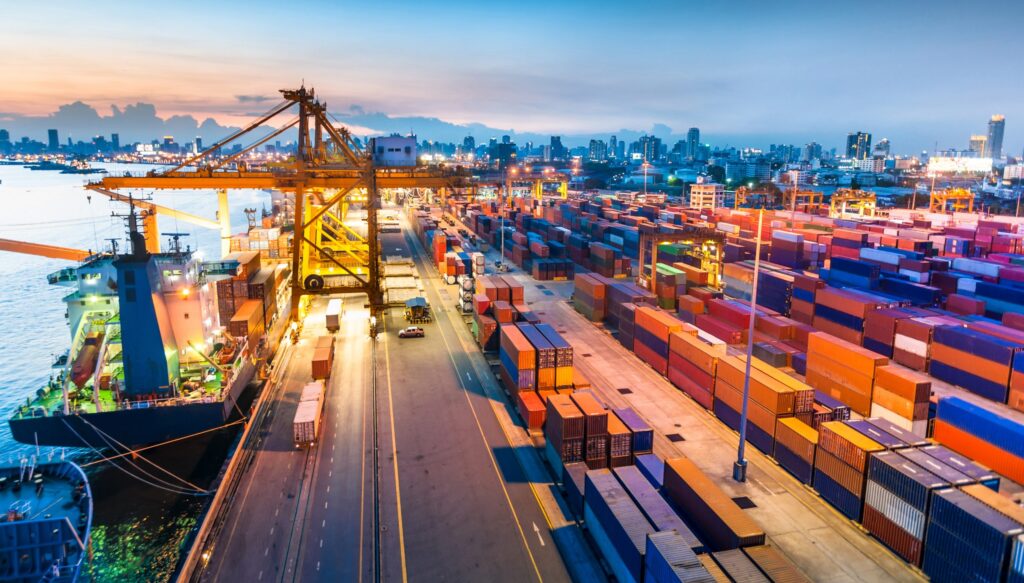
Carriers decide where empty containers must be returned, and the designated location can change daily. Because return depots differ by port, schedule, congestion status, and equipment needs, exporters must verify the return address before dispatching a truck.
Typical Empty Return Points
- Port terminals
- Off-dock depots
- Rail ramps
- Container yards (CY)
- Designated carrier partner depots
Velotactlcs Logistics checks return instructions in real time to prevent return attempts at closed or restricted facilities.
Why Is Empty Container Return Critical for Thailand Export Schedules?
Every exporter needs the next available container ready for loading. However, slow return cycles mean fewer empty units available, increasing the risk of missed cut-offs or late shipments. Efficient US drayage empty container return for Thailand ensures:
- Faster equipment availability
- Reduced export delays
- Lower drayage and per-diem costs
- Better terminal flow
- More predictable shipping timelines
Since Thailand-bound vessels often operate on weekly schedules, timing becomes crucial for on-time export readiness.
How Do Drayage Costs Vary by US Port When Returning Empty Containers?
Drayage pricing depends on pickup location, distance to the depot, congestion, and chassis availability. Furthermore, detention charges grow quickly if containers are not returned within the assigned free time.
Table 1 — Estimated Drayage Cost Ranges for Major US Ports
| US Port / Region | Cost Range | Key Factors |
|---|---|---|
| Los Angeles / Long Beach | $180–$350 | Heavy congestion, chassis shortages |
| Houston | $160–$290 | Moderate traffic levels |
| Chicago (Rail Ramp) | $150–$270 | Variable depot schedules |
| New York / NJ | $200–$380 | Peak-hour bottlenecks |
| Savannah | $140–$260 | Seasonal terminal overflow |
These ranges give exporters a starting point for budgeting drayage within the US–Thailand supply chain.
How Does Free Time Affect US Drayage Empty Container Return to Thailand?
Carriers assign detention-free time for their equipment. Additionally, failing to return the container on time triggers per-diem penalties.
Typical Free Time Rules
- 2–5 days for local pickup
- 5–7 days for long-distance inland moves
- Additional chassis rental fees may apply
Velotactlcs Logistics monitors free time windows, ensuring containers are returned quickly to avoid steep penalties.
What Documents Are Needed to Complete Empty Container Return?
Even though empty returns involve no cargo, proper documentation ensures the depot accepts the unit without dispute.
Table 2 — Documents for Empty Container Return
| Document | Purpose | Importance |
|---|---|---|
| Equipment Interchange Receipt (EIR) | Verifies handover | Prevents liability disputes |
| Release Order | Authorizes pickup | Needed for tracking |
| Return Location Notice | Carrier instruction | Ensures correct depot |
| Gate Ticket | Confirms entry at depot | Proof of return |
| Chassis Interchange | Tracks chassis usage | Prevents extra fees |
These documents support operational accuracy and ensure compliance with carrier rules for Thailand exports.

How Should Exporters Evaluate Drayage Options for Thailand-Bound Containers?
Drayage options vary, and exporters must compare speed, availability, and reliability. Moreover, choosing the wrong partner can create serious delays.
Key Evaluation Factors
- Real-time dispatch capability
- Availability of dedicated drivers
- Terminal familiarity
- Knowledge of carrier return rules
- Weekend and after-hours coverage
Velotactlcs Logistics offers vetted drayage networks across major US gateways, helping exporters avoid unpredictable delays.
How Velotactlcs Logistics Improves Empty Container Return Efficiency
Velotactlcs Logistics enhances container return planning with:
- Real-time depot status monitoring
- Automated driver dispatch
- Return location verification
- Schedule alerts
- Carrier rule compliance support
- Drayage performance tracking
- Export readiness alignment for Thailand shipments
Because exporters rely on fast container availability, Velotactlcs ensures predictable drayage timing and minimized penalties.
Real Case Studies: US Import Duty Calculator Philippines in Action
- Cargo: Microchips, 320 kg
- Mode: Air Freight
- Duty Rate: 0%
- MPF + HMF: $98
- Result: Duty calculator confirmed zero tariff, allowing budget reallocation.
- Cargo: 7.2 CBM of streetwear
- Mode: LCL
- Duty Rate: 12%
- Duty + MPF: $410
- Result: After using accurate duty estimation, importer negotiated new retail pricing.
- Cargo: 1×20GP, packaged snacks
- Duty Rate: 5%
- Additional FDA clearance
- Total Duty: $550
- Result: Early calculation helped avoid underpayment penalties.
How Exporters Can Coordinate Drayage Return With Thailand Shipping Cut-Offs
Exporters should align return timing with the vessel’s cut-off for Thailand shipments. Furthermore, early planning helps avoid traffic delays and terminal congestion.
Recommended practices:
- Return empties 24–48 hours before cut-off
- Avoid peak port hours
- Confirm depot schedule changes daily
- Monitor chassis availability
- Synchronize return with loading appointment
Velotactlcs Logistics helps exporters meet these cut-offs with steady communication and workflow automation.
Conclusion
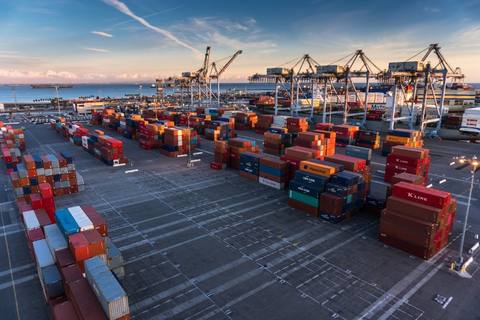
Efficient US drayage empty container return for Thailand keeps export operations on schedule, reduces detention costs, and ensures faster availability of equipment for loading. Since carriers adjust depot rules frequently, exporters benefit from strong coordination, transparent scheduling, and reliable drayage partners. Velotactlcs Logistics delivers streamlined drayage management, real-time updates, and predictable container turnarounds to support consistent Thailand-bound shipping.
Need a quote?
Ready to get started? Contact us now to request a free shipping quote.
Frequently Asked Questions (FAQ)
Carriers publish return locations daily, and logistics partners verify updates to avoid wrong attempts.
Early returns are allowed depending on depot capacity; checking schedules prevents wasted trips.
Late returns trigger detention fees, which increase daily until the unit is checked in at the correct depot.
Some depots close weekends; confirming operating hours avoids rollovers or delays.
Chassis use may be billed separately depending on provider and return location.