
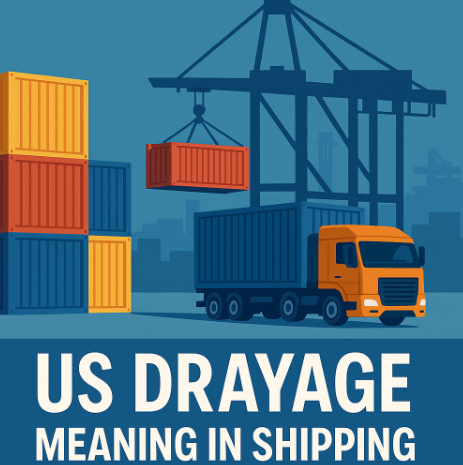
In global trade, a container’s journey doesn’t end when it reaches port. Between the ship’s arrival and a warehouse delivery lies one crucial step — drayage. Understanding the US drayage meaning in shipping helps importers, exporters, and freight forwarders optimize their supply chain costs and timelines.
Although it covers only a short distance, drayage directly affects cargo flow efficiency and port congestion. Companies such as Velotactlcs Logistics help bridge this gap by delivering fast, coordinated, and compliant port-to-warehouse movements that make global shipping seamless.

What Does Drayage Mean in Shipping?
Drayage is the short-haul movement of freight containers between intermodal points — ports, rail yards, warehouses, and distribution centers. It forms the physical link between ocean freight and inland logistics.
In the United States, drayage is a core part of intermodal shipping, connecting global imports to domestic trucking or rail networks. Without it, containers would pile up at ports, causing severe congestion and shipping delays.
Why Is Drayage Important in the Supply Chain?
Every international shipment passes through multiple transport modes. Drayage ensures smooth cargo hand-off between these stages. Its importance includes:
- Speeding up port operations by clearing containers quickly.
- Reducing demurrage and detention charges from storage delays.
- Maintaining supply chain visibility through coordinated trucking.
- Supporting just-in-time (JIT) inventory systems for manufacturers and e-commerce sellers.
Therefore, while often overlooked, drayage serves as the backbone of efficient intermodal freight flow.

Types of Drayage Services in US Shipping
Different logistics needs require different types of drayage. Here’s a simple breakdown:
| Drayage Type | Description | Typical Use Case |
|---|---|---|
| Port Drayage | Moves containers from seaport to warehouse | Import/export cargo handling |
| Inter-Carrier Drayage | Transfers freight between carriers or terminals | Ocean-to-rail or rail-to-truck links |
| Intra-Carrier Drayage | Within a single carrier’s network | Terminal repositioning |
| Door-to-Door Drayage | Direct pickup and delivery | E-commerce fulfillment |
| Expedited Drayage | Time-critical or perishable shipments | Food, medical, or urgent cargo |
Each mode contributes to different stages of domestic distribution, ensuring that containers move swiftly after port arrival.
How Does Drayage Work in the US Shipping Process?
Drayage usually begins when an ocean container is unloaded at port. The process follows these steps:
- Customs Clearance: The freight forwarder or broker completes import clearance.
- Container Pickup: A drayage carrier secures a chassis and collects the container.
- Transport to Destination: The container moves to a nearby warehouse, rail yard, or cross-dock facility.
- Unloading or Drop-Off: Goods are unloaded or transferred to another mode for long-haul delivery.
- Container Return: The empty container returns to the terminal to avoid detention fees.
This entire cycle can happen within hours if coordination is efficient — something Velotactlcs Logistics specializes in through real-time tracking and automated scheduling.
What Factors Affect Drayage Costs?
The US drayage meaning in shipping goes beyond definition — cost management is equally important. Drayage pricing depends on several key variables:
| Factor | Impact on Cost | Example |
|---|---|---|
| Distance | Longer hauls increase mileage charges | 10-mile vs. 60-mile haul |
| Port Congestion | Idle time raises labor costs | Delays at LA/Long Beach terminals |
| Fuel Prices | Higher diesel rates raise surcharges | Adjusted monthly |
| Chassis Availability | Shortages lead to rental fees | $25–$50 per day |
| Container Type | Specialized or oversized cargo costs more | Reefers, OOG |
| Appointment Scheduling | Missed slots cause storage fees | Tight port windows |
Therefore, managing scheduling, documentation, and equipment allocation directly reduces total logistics expenses.
How to Improve Drayage Efficiency
Drayage may seem simple, but poor coordination can cause major disruptions. To enhance performance:
- Pre-book appointments early to avoid congestion.
- Digitize dispatch operations for real-time route control.
- Partner with experienced drayage carriers familiar with local port procedures.
- Consolidate loads where possible to maximize truck utilization.
- Use GPS tracking to monitor movement and improve visibility.
Velotactlcs Logistics implements all these methods through its advanced dispatch technology, giving clients end-to-end transparency from port pickup to warehouse delivery.
What Challenges Do Drayage Providers Face?
The US drayage sector continues to evolve amid global trade pressures. Major challenges include:
- Port Congestion: Increased container volumes cause long wait times.
- Driver Shortages: Limited qualified drivers inflate costs.
- Environmental Regulations: California’s Clean Truck Program demands newer, compliant fleets.
- Chassis Imbalance: Shortages at major ports delay container pickup.
- Fuel Price Volatility: Rapid price swings affect budgeting accuracy.
Yet, with proactive route planning and fleet modernization, operators like Velotactlcs maintain cost-effective performance even under these constraints.
Drayage vs. Long-Haul Trucking — What’s the Difference?
Though both involve trucking, they serve different functions:
| Category | Drayage | Long-Haul Trucking |
|---|---|---|
| Distance | 10–100 miles | 300–2,000 miles |
| Purpose | Port or intermodal transfers | Cross-state or national transport |
| Duration | Hours | Days |
| Equipment | Chassis + container | Dry van or flatbed |
| Regulation Focus | Port and terminal access | Highway compliance |
Recognizing this distinction allows businesses to assign the right service to the right stage of transport.
Environmental Impact of Drayage in the US
Ports such as Los Angeles and Long Beach enforce strict emission standards to reduce pollution. Electric and LNG-powered trucks are gradually replacing diesel fleets, reshaping cost structures and sustainability metrics.
Velotactlcs Logistics invests in eco-compliant vehicles and route optimization software that minimizes idle time and fuel burn, helping clients meet ESG targets while maintaining delivery speed.
The Role of Technology in Modern Drayage
Technology has transformed how drayage works. Real-time communication, digital documentation, and predictive analytics now power every step. Key innovations include:
- Automated load assignment via dispatch software.
- Driver mobile apps for instant updates and signature capture.
- AI-based route optimization to reduce empty miles.
- IoT tracking sensors for real-time cargo monitoring.
Velotactlcs uses these digital tools to synchronize carrier capacity, port schedules, and warehouse inventory — improving turnaround times by up to 25 %.
How Velotactlcs Logistics Simplifies Drayage for Global Shippers
Velotactlcs Logistics provides integrated drayage services across all major US ports, including Los Angeles, Long Beach, Houston, and New York/New Jersey. With decades of intermodal experience, the company offers:
- Real-time visibility through connected dispatch systems.
- Certified, eco-compliant drayage fleets.
- Flexible scheduling to meet vessel and warehouse cut-offs.
- End-to-end service — from customs release to container return.
By combining technology with human expertise, Velotactlcs reduces both operational friction and total landed cost for its clients.

Conclusion
Understanding the US drayage meaning in shipping helps importers and exporters appreciate how crucial this short yet complex process is to global logistics. Though often measured in miles, drayage determines whether containers move efficiently or get stuck in costly delays.
With its advanced technology, compliance focus, and nationwide network, Velotactlcs Logistics ensures every container travels from port to warehouse with precision, transparency, and speed. Partnering with an expert provider not only simplifies drayage but transforms it into a competitive advantage within your supply chain.
Need a quote?
Ready to get started? Contact us now to request a free shipping quote.
Frequently Asked Questions (FAQ)
It’s the short-haul container transport between ports, rail yards, and warehouses.
Typically between 10 and 100 miles, depending on port and warehouse location.
Distance, fuel costs, chassis rental, and port congestion have the biggest impact.
Plan early, use local carriers, and partner with tech-driven providers like Velotactlcs.
No. Drayage is one segment within the broader intermodal network.