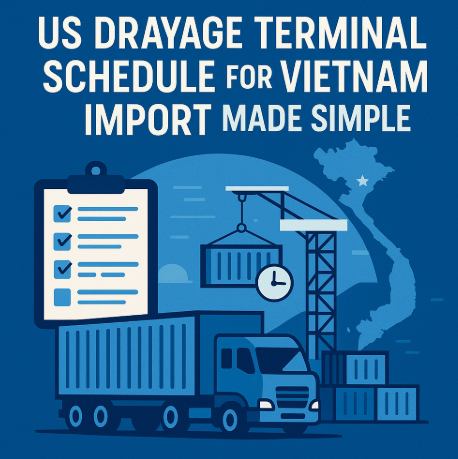
us drayage terminal schedule for vietnam import

US exporters supporting Vietnam’s fast-growing import market need precise drayage coordination, predictable terminal schedules, and reliable handoffs from warehouse to port. Because scheduling mistakes at the drayage stage can lead to missed vessel cut-offs, extra trucking fees, and delayed arrival in Vietnam, managing a clear and accurate US drayage terminal schedule for Vietnam import has become essential. Although many shippers still rely on outdated spreadsheets and manual communication, optimized planning can dramatically improve on-time cargo performance.

Why Is the US Drayage Terminal Schedule Important for Vietnam Imports?

Every shipment heading to Vietnam must follow strict timing across multiple US touchpoints. Additionally, terminals frequently adjust their hours, gate cut-offs, and empty-return rules based on congestion and import/export balance.

A well-managed US drayage terminal schedule for Vietnam import supports:

  • On-time terminal gate-in
  • Accurate export customs timing
  • Predictable equipment availability
  • Lower detention & demurrage
  • Stronger Vietnam ETA reliability
  • Fewer rescheduling or trucking cancellations

Because Vietnam importers operate on tight production cycles, exporters must deliver consistent timing from the US side.

What Factors Affect US Drayage Terminal Scheduling for Vietnam-Bound Cargo?

Several variables directly impact the drayage timeline. Moreover, failing to adjust for any one of them can trigger a missed sailing.

Key Variables

  • Terminal operating hours
  • Gate traffic volume
  • Appointment requirements
  • Chassis availability
  • Empty container return rules
  • Import/export imbalance
  • Vessel cut-off times
  • Yard congestion

Velotactlcs Logistics monitors these variables daily to support stable scheduling for Vietnam import cargo.

us drayage terminal schedule for vietnam import

How Do Vessel Cut-Offs Influence Drayage for Vietnam Shipments?

Because Vietnam routes often involve transshipment hubs like Singapore, Kaohsiung, or Hong Kong, vessel cut-offs are extremely tight. Exporters must align drayage timing with:

  • CY cutoff
  • Documentation cutoff
  • VGM submission deadline
  • Terminal appointment windows

Missing any of these deadlines leads to one-week delays or rollover penalties.

Typical Cut-Off Timeline for Vietnam-Bound Exports

RequirementDeadline Before Vessel DepartureImpact
CY Cutoff1–3 daysGate-in must be completed
VGM Deadline24–48 hoursContainer cannot load without VGM
Docs Cutoff24 hoursEnsures manifest accuracy
Empty ReturnBased on carrier rulesMust clear before pickup

Although every carrier uses different rules, exporters need early planning to remain compliant.

How Do US Ports Differ in Drayage Timing for Vietnam Import Cargo?

Port-by-port differences greatly affect timing. Therefore, exporters must evaluate which US port offers the most reliable service.

US Port Drayage Timing to Meet Vietnam Sailing Schedules

US PortTypical Gate-In WindowNotes
Los Angeles / Long BeachMediumTraffic congestion at peaks
OaklandMediumAppointment-based congestion
Seattle / TacomaFastSmoother weekend flow
HoustonMediumBalanced capacity
New York / NJSlowHeavy inbound traffic

Southeast Asia carriers often prioritize West Coast departures for shorter routes.

What Documents Affect Drayage Timing for Vietnam-Bound Freight?

Correct documentation supports faster terminal processing and fewer last-minute issues.

Drayage Documents Needed for Vietnam Import Logistics

DocumentPurposeWhy It Matters
Bill of LadingExport contractMust match cargo exactly
VGM CertificateVerified gross massRequired for vessel loading
Commercial InvoiceDeclares shipment valueNeeded for manifest
Packing ListIdentifies cargo detailsPrevents customs issues
Empty Return NoticeSpecifies depot locationAvoids return delays

Since documentation errors cause delays at US terminals, exporters should finalize paperwork early.

us drayage terminal schedule for vietnam import

How to Align Drayage Timing With Vietnam Import Requirements?

Vietnam importers rely on predictable ETAs for production planning. Therefore, US exporters must ensure drayage scheduling supports:

  • Proper vessel selection
  • Early gate-in
  • Pre-advise and pre-alert procedures
  • Accurate ETD communication
  • Avoidance of port congestion peaks

Velotactlcs Logistics builds Vietnam-specific scheduling templates for cargo moving through Ho Chi Minh City, Hai Phong, Danang, and Quy Nhon.

What Challenges Do Exporters Face When Managing Drayage Schedules?

Drayage scheduling becomes complex when exporters face any of the following:

  • Sudden terminal closures
  • Chassis shortages
  • Carrier depot changes
  • Transshipment delays
  • Traffic congestion
  • Weather-related shutdowns

Although exporters cannot control these issues, strong drayage planning helps reduce risk.

Real Case Studies: US Import Duty Calculator Philippines in Action

How Velotactlcs Logistics Supports Vietnam Import Scheduling

Velotactlcs Logistics helps exporters handle:

  • Terminal appointment booking
  • Real-time gate status tracking
  • Chassis coordination
  • Carrier-specific return rules
  • Pre-cutoff alerts
  • Vietnam route scheduling optimization

Because Vietnam’s import activity is time-sensitive, exporters gain strong benefits from optimized drayage timing.

us drayage terminal schedule for vietnam import

Conclusion

A well-managed US drayage terminal schedule for Vietnam import ensures your cargo moves smoothly from warehouse to port and reaches Vietnam on schedule. Because delays at US terminals create costly rollovers and missed connections, exporters must adopt precise drayage planning. Velotactlcs Logistics offers reliable scheduling, strong communication, and expert handling to keep Thailand, Vietnam, Malaysia, Singapore, and the Philippines-bound cargo moving efficiently.

Need a quote?

Ready to get started? Contact us now to request a free shipping quote.

Frequently Asked Questions (FAQ)

Scheduling 3–5 days before CY cutoff gives enough buffer for depot changes or traffic delays.

Yes. Many US ports now require appointments; missing a slot can delay gate-in by hours.

Absolutely. Late gate-ins often push containers to the next available sailing.

Seattle, Long Beach, and Oakland tend to have smoother drayage flows for Asia routes.

Yes, depending on yard capacity. Checking daily is essential.