
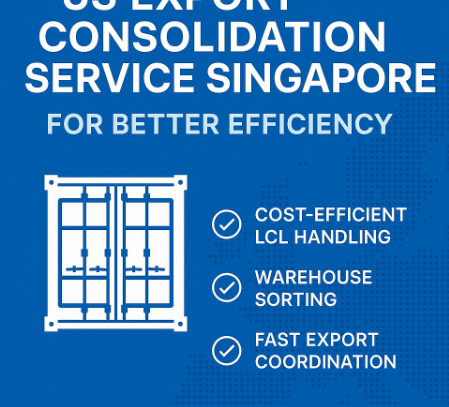
Exporting smaller shipments from the United States to Singapore often becomes costly when each supplier ships separately. Because freight rates rise, documentation accumulates, and cargo takes longer to coordinate, more exporters rely on us export consolidation service Singapore to combine multiple shipments into one optimized load. With the right consolidation partner, businesses reduce costs, strengthen delivery schedules, and improve overall supply chain efficiency.

What Is a US Export Consolidation Service for Singapore?
Export consolidation allows multiple shipments from different suppliers—or different purchase orders from the same exporter—to be combined into a single LCL or FCL container. Although the process seems simple, successful consolidation requires proper warehouse handling, documentation alignment, customs filing, and harmonized export coordination.
Typical consolidation tasks include:
- Multi-supplier cargo receiving
- Warehouse sorting and labeling
- LCL cargo combination
- Export documentation review
- Palletizing and shrink-wrapping
- Container loading and weight balancing
- Customs-ready paperwork preparation
- Freight forwarding and carrier booking
Moreover, consolidation helps exporters maintain efficiency even when order quantities fluctuate.
Why Do Companies Choose Export Consolidation for Singapore?
Many exporters choose consolidation to reduce costs and improve logistics control. Additionally, consolidation minimizes unnecessary shipments and streamlines customs processes.
Key benefits include:
- Lower freight cost per CBM
- Less documentation per shipment
- Faster coordination across suppliers
- Reduced risk of port delays
- Higher loading accuracy
- Better warehouse efficiency
- Enhanced transit-time predictability
Furthermore, Singapore’s strong port infrastructure makes consolidated shipments easy to distribute across Southeast Asia.
How Does Export Consolidation Improve Cost Efficiency?
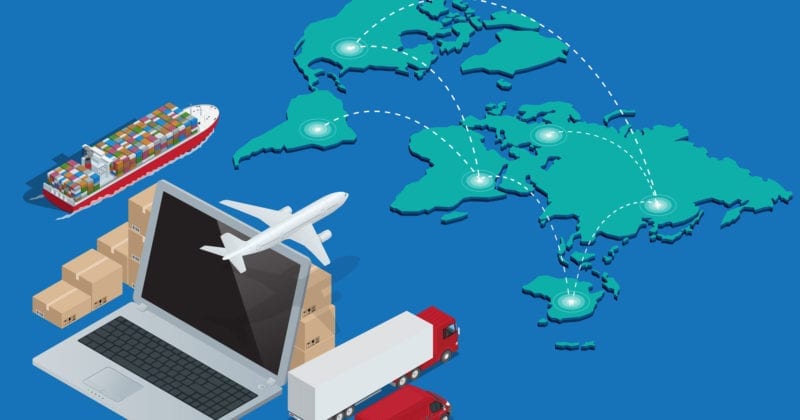
Consolidation transforms multiple small shipments into a single, organized load, significantly lowering logistics expenses. Because exporters only pay for the final consolidated shipment—not each individual supplier shipment—the savings add up quickly.
Cost Comparison Table
| Shipping Method | Typical Cost | Notes |
|---|---|---|
| Direct LCL (each supplier ships separately) | High | Multiple documentation + multiple handling fees |
| Consolidated LCL (combined shipment) | Medium | One documentation package + single handling |
| FCL after consolidation | Lowest per unit | Ideal when combined volume exceeds 18–22 CBM |
Additionally, fewer shipments reduce customs inspection fees and port charges.
What Does the Export Consolidation Workflow Look Like?
To ensure accuracy, the consolidation process follows a structured sequence.
Common workflow:
- Warehouse receives cargo from multiple U.S. suppliers
- Each item inspected for condition and quantity
- Cargo sorted by PO and destination
- Documentation checked for alignment
- Needed labels printed and applied
- Cargo palletized for safe loading
- LCL container filled according to weight plan
- Documentation finalized and filed
- Cargo handed to carrier for export
- Singapore consignee receives consolidated load
Because each step reduces errors, consolidation improves overall supply chain control.
Which Businesses Benefit Most from Consolidation?
Different industries rely heavily on consolidation due to volume variability and supplier diversity.
| Industry | Why They Use Consolidation | Details |
|---|---|---|
| E-commerce | High SKU variety, frequent small shipments | Best for Amazon, Shopee, Lazada sellers |
| Electronics | Multiple suppliers per order | Fragile goods require careful handling |
| Fashion & Apparel | Seasonal orders | Lightweight but bulky cargo |
| Industrial Parts | Distributed suppliers | Reduces partial shipment costs |
| Furniture | Mixed sizes, variable volume | Optimizes container filling |
Moreover, businesses expanding into Singapore often start with consolidation before upgrading to FCL once volumes grow.
How Do LCL and FCL Consolidation Compare?
Understanding which method fits your shipment helps avoid unnecessary cost.
LCL Consolidation (Less than Container Load)
- Ideal for 1–12 CBM shipments
- Shared container space
- Lower upfront cost
- More handling points
FCL Consolidation (Full Container Load)
- Ideal for 18 CBM+ combined shipments
- Greater cargo stability
- Lower damage risk
- Fixed container space
Furthermore, FCL consolidation becomes more cost-effective as volume increases.

What Documentation Is Required for Consolidated Exports?
Accurate paperwork ensures consolidated shipments meet both U.S. export and Singapore customs requirements.
Essential documents:
- Commercial invoice
- Packing list
- Consolidation manifest
- Master B/L + House B/L
- Export AES filing
- Supplier invoices & packing lists
- Certificate of Origin (if applicable)
Additionally, having a consolidation manifest allows Singapore importers to differentiate and distribute goods quickly.
How Long Does Export Consolidation Take?
Transit timing depends on warehouse efficiency, carrier schedule, and the number of suppliers involved.
Typical Timeline Table
| Process | Time Required | Notes |
|---|---|---|
| Supplier cargo receiving | 1–3 days | Depends on supplier accuracy |
| Sorting & labeling | 1–2 days | Larger volumes take longer |
| Palletizing & prepping | 1 day | Required for safe loading |
| Container loading | 1 day | Completed after inspection |
| Ocean transit (US → SG) | 22–35 days | Based on origin port |
Additionally, consolidation requires earlier planning but provides smoother overall logistics.
Real Case Study
- Suppliers: 6
- Volume: 7.8 CBM
- Mode: LCL consolidation
- Problem: High cost from individual shipments
- Solution: Combined all items into one consolidated load
- Outcome: Saved 47% in freight & documentation fees
- Cargo Type: PC components
- Volume: 14.2 CBM
- Mode: Consolidated → FCL 20GP
- Issue: Mismatched invoices from suppliers
- Solution: Velotactlcs Logistics corrected documentation
- Outcome: Smooth Singapore clearance in <24 hours
- Volume: 20–25 CBM / week
- Mode: Consolidated FCL
- Challenge: Inconsistent supplier delivery times
- Solution: Weekly consolidation window + warehouse buffering
- Outcome: Consistent sailing schedule every week
How Does Velotactlcs Logistics Improve Export Consolidation?
Velotactlcs Logistics provides professional us export consolidation service singapore solutions designed for businesses handling small or multi-supplier shipments. Moreover, our team ensures accuracy, cost savings, and reliable timing throughout the export workflow.
Our service advantages:
- Secure multi-supplier cargo receiving
- Detailed warehouse sorting
- Accurate palletizing & carton labeling
- Competitive LCL & FCL consolidation rates
- Route optimization for faster transit
- Documentation verification & AES filing
- End-to-end tracking and communication
Furthermore, exporters gain predictable freight planning and fewer delays.
Conclusion
Choosing a us export consolidation service singapore allows exporters to reduce costs, simplify documentation, and improve logistics efficiency across multiple suppliers. Although consolidation requires planning and professional handling, the benefits include lower freight expenses, stronger supply chain management, and faster transit coordination. For companies expanding international operations, consolidation remains one of the most effective ways to optimize ocean freight.
Need a quote?
Ready to get started? Contact us now to request a free shipping quote.
Frequently Asked Questions (FAQ)
Yes, LCL consolidation is ideal for smaller volumes under 12 CBM.
Yes, consolidation allows multiple suppliers to deliver to a single receiving center.
It requires coordination, but overall transit often becomes more predictable.
When volume exceeds 18–22 CBM, FCL offers lower cost per unit.
Proper packing and palletizing allow safe consolidation of fragile goods.