US Export Food Supplements to Singapore: A Complete Shipping Guide
Exporting food supplements from the US to Singapore presents a significant opportunity for businesses, yet it involves navigating complex regulations and logistics. Successfully managing this cross-border trade requires careful planning and a deep understanding of international shipping protocols. This comprehensive guide, brought to you by VeloTactics Logistics, aims to demystify the process, ensuring your products reach Singapore efficiently and compliantly.
Understanding Singapore’s Import Regulations for Food Supplements
Before initiating any shipment, it is crucial to understand Singapore’s specific import regulations for food supplements. The Health Sciences Authority (HSA) primarily governs these products, distinguishing between ‘health products’ and ‘food products’ with health claims. Therefore, proper classification is the first vital step.
Furthermore, specific ingredients may be restricted or require prior approval, which can significantly impact your export strategy. Importers must ensure that all products comply with ingredient lists, labeling requirements, and quality standards set by the HSA. Consequently, thorough due diligence at this stage prevents costly delays or rejections.
Additionally, certain health supplements, especially those containing controlled substances or high-risk ingredients, might require an import license or product registration. Neglecting these requirements could lead to severe penalties. Businesses should consult the HSA website or engage a local regulatory expert to ensure full compliance.
Key Documentation for US Export Food Supplements to Singapore
Accurate and complete documentation is paramount for a smooth customs clearance process when you export food supplements to Singapore. Missing or incorrect paperwork is a common cause of delays and increased shipping costs. Therefore, preparing all necessary documents in advance is highly recommended.
Moreover, beyond standard commercial invoices and packing lists, specific certificates are often required for food supplements. These may include a Certificate of Free Sale, a Certificate of Analysis, or a Manufacturer’s Declaration. Each document verifies the product’s quality, safety, and regulatory status in the country of origin.
Ultimately, working with experienced freight forwarders or customs brokers, like those offering expert customs brokerage, can greatly simplify this complex process. They can advise on the exact documentation needed for your specific product category. This proactive approach minimizes risks and ensures seamless entry into the Singaporean market.
| Document Type | Purpose | Issuing Authority | Notes |
|---|---|---|---|
| Commercial Invoice | Details of goods, value, terms of sale | Exporter | Essential for customs valuation |
| Packing List | Itemized list of contents per package | Exporter | Aids in cargo inspection |
| Bill of Lading/Air Waybill | Contract of carriage, title to goods | Carrier | Proof of shipment |
| Certificate of Free Sale (CFS) | Confirms product is sold freely in US | FDA/State Health Dept. | Often required for supplements |
| Certificate of Analysis (CoA) | Details product composition, testing results | Manufacturer/Lab | Verifies ingredient purity/potency |
| Manufacturer’s Declaration | Statement of ingredients and manufacturing process | Manufacturer | May be requested by HSA |
Shipping Methods and Transit Times from the US to Singapore
When planning your US export food supplements to Singapore, selecting the right shipping method is critical for balancing speed, cost, and cargo integrity. The primary options include sea freight, air freight, and express courier services. Each method offers distinct advantages depending on your shipment’s urgency and volume.
Indeed, understanding the typical transit times and associated costs for each option helps in making informed decisions for your supply chain. Factors like port congestion, weather conditions, and customs processing can also influence overall delivery schedules. Therefore, always factor in potential contingencies.
Furthermore, for businesses requiring a comprehensive logistics partner, comprehensive logistics services can streamline your entire shipping operation. They manage everything from pickup to final delivery, offering end-to-end solutions tailored to your needs. This integrated approach ensures efficiency and reduces administrative burden.
| Shipping Method | Cost Range (per kg/CBM) | Transit Time (approx.) | Best For | Limitations |
|---|---|---|---|---|
| Ocean Freight (FCL) | USD 60-120/CBM | 25-40 days | Large volumes, non-urgent, cost-effective | Slowest, longer lead times |
| Ocean Freight (LCL) | USD 80-150/CBM | 30-45 days | Smaller volumes, cost-effective, flexible | Slower than FCL, potential for delays |
| Air Freight | USD 4-8/kg | 3-7 days | Urgent, high-value, perishable goods | Most expensive, volume/weight restrictions |
| Express Courier | USD 10-20+/kg | 2-4 days | Very urgent, small parcels, samples | Highest cost, strict weight/size limits |
How Does Sea Freight Compare to Other Shipping Options for Food Supplements?
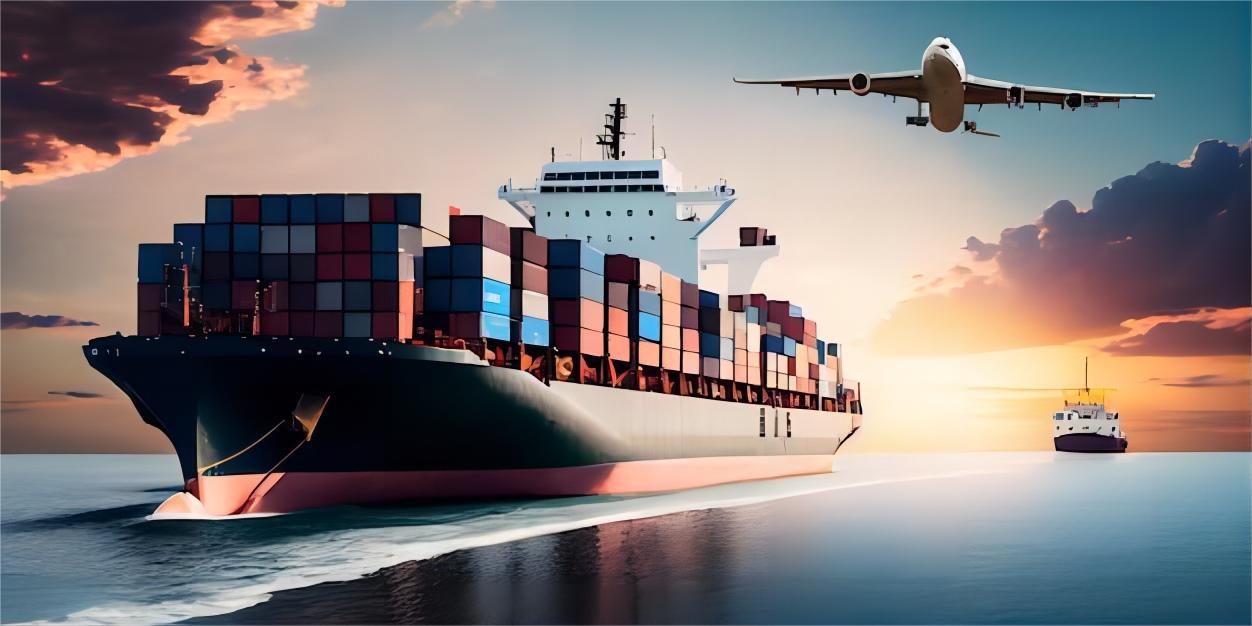
Sea freight typically serves as the backbone for international trade, offering the most cost-effective solution for shipping bulk quantities of food supplements. While it has the longest transit times, its capacity and affordability make it ideal for businesses focused on budget management and large-scale distribution. Consider sea freight solutions for your non-time-sensitive inventory.
In contrast, air freight provides unparalleled speed, cutting transit times from weeks to mere days. For high-value, temperature-sensitive, or urgently needed food supplements, expedited air freight is often the preferred choice despite its higher cost. This method is crucial for maintaining product efficacy and meeting tight market demands.
Express courier services, moreover, sit at the premium end, offering door-to-door convenience and rapid delivery for smaller, critical shipments. They are typically used for samples, emergency stock, or very small orders where speed and minimal handling are paramount. Each method thus caters to different business priorities and product characteristics.
Which Option Should You Choose?
Your ideal shipping method depends on a careful assessment of several factors. If budget is your primary concern and you have ample lead time, sea freight is undoubtedly the most economical choice for US export food supplements to Singapore. This method is perfect for large, regular shipments.
Conversely, if speed is paramount, perhaps for new product launches or to avoid stockouts, air freight offers the necessary agility. It is particularly suitable for products with shorter shelf lives or high market demand volatility. For very small, urgent packages, express courier services are unmatched.
Ultimately, cargo type also plays a significant role. Non-perishable, stable supplements can withstand longer transit times via sea. However, delicate or temperature-sensitive products might necessitate the controlled environments and faster transit of air freight. Consider volume thresholds as well; LCL (Less than Container Load) for sea freight is suitable for smaller shipments, while FCL (Full Container Load) becomes more economical for larger volumes.
Cost-Saving Strategies and Optimizing Your Supply Chain
Minimizing shipping costs without compromising service quality is a continuous challenge for businesses involved in US export food supplements to Singapore. Implementing strategic approaches can lead to significant savings and improved efficiency. One effective strategy involves optimizing packaging to reduce volumetric weight, which directly impacts freight rates.
Furthermore, consolidating multiple smaller shipments into larger, less frequent consignments can leverage economies of scale, particularly with LCL sea freight. This reduces per-unit shipping costs and streamlines customs clearance processes. Planning your shipments around peak seasons can also help avoid surge pricing.
Collaborating with a reliable logistics partner, such as warehousing and distribution services, can provide access to better freight rates and optimized routing. They can offer insights into market trends, helping you anticipate cost fluctuations. Moreover, exploring hybrid solutions, like sea-air combinations for certain routes, can offer a balance between cost and speed for specific scenarios.
Case Study 1: Optimizing LCL for Cost-Efficiency
| Detail | Description |
|---|---|
| Route | Los Angeles, USA -> Singapore |
| Cargo | Protein powders and vitamin capsules, 12 CBM, 2,500 kg |
| Container | LCL 12 CBM |
| Shipping Details | |
| – Carrier/Service | Major NVOCC (Non-Vessel Operating Common Carrier) |
| – Port of Loading | Los Angeles, CA |
| – Port of Discharge | Singapore |
| – Route Type | Direct |
| Cost Breakdown | |
| – Ocean Freight | USD 1,440 (USD 120/CBM) |
| – Origin Charges (THC, documentation) | USD 350 |
| – Destination Charges | USD 280 |
| – Customs & Duties (estimated) | USD 600 |
| – Total Landed Cost | USD 2,670 |
| Timeline | |
| – Booking to Loading | 5 days |
| – Sea Transit | 28 days |
| – Customs Clearance | 3 days |
| – Total Door-to-Door | 36 days |
| Key Insight | Consolidating smaller orders into a single LCL shipment significantly reduced per-unit costs compared to multiple express parcels. Booking in advance and flexible delivery timing allowed for optimal vessel selection, avoiding premium rates. Based on Q3 2024 market rates. |
Case Study 2: Expedited Air Freight for Market Entry
| Detail | Description |
|---|---|
| Route | Chicago, USA -> Singapore |
| Cargo | New probiotic supplements, 1.5 CBM, 300 kg (temperature-controlled) |
| Container | Air Freight (palletized) |
| Shipping Details | |
| – Carrier/Service | Major Airline Cargo |
| – Airport of Loading | ORD (Chicago O’Hare) |
| – Airport of Discharge | SIN (Changi Airport) |
| – Route Type | Direct |
| Cost Breakdown | |
| – Air Freight | USD 2,100 (USD 7.00/kg) |
| – Origin Charges (handling, documentation) | USD 200 |
| – Destination Charges | USD 150 |
| – Customs & Duties (estimated) | USD 450 |
| – Total Landed Cost | USD 2,900 |
| Timeline | |
| – Booking to Loading | 2 days |
| – Air Transit | 4 days |
| – Customs Clearance | 1 day |
| – Total Door-to-Door | 7 days |
| Key Insight | For a time-sensitive product launch requiring strict temperature control, air freight was chosen despite higher costs. The quick transit ensured product integrity and enabled rapid market entry. Typical rates as of early 2025. |
Case Study 3: FCL for Established Supply Chain
| Detail | Description |
|---|---|
| Route | Savannah, USA -> Singapore |
| Cargo | Various nutritional supplements, 40 HQ (full container load) |
| Container | 40HQ |
| Shipping Details | |
| – Carrier/Service | Maersk |
| – Port of Loading | Savannah, GA |
| – Port of Discharge | Singapore |
| – Route Type | Transshipment via Tanjung Pelepas |
| Cost Breakdown | |
| – Ocean Freight | USD 4,800 |
| – Origin Charges (THC, documentation) | USD 600 |
| – Destination Charges | USD 500 |
| – Customs & Duties (estimated) | USD 1,200 |
| – Total Landed Cost | USD 7,100 |
| Timeline | |
| – Booking to Loading | 7 days |
| – Sea Transit | 35 days |
| – Customs Clearance | 4 days |
| – Total Door-to-Door | 46 days |
| Key Insight | This established supply chain leverages FCL for maximum cost-efficiency on a regular basis. While transshipment added a few days, it offered a more competitive rate during a period of high demand. Based on Q4 2024 market rates. Note: Freight rates are subject to change based on fuel costs, carrier capacity, and seasonal demand. Contact us for a current quote tailored to your specific shipment. |
Navigating the Complexities of US Export Food Supplements to Singapore
Successfully navigating the intricate landscape of US export food supplements to Singapore demands meticulous planning, adherence to regulations, and strategic logistics. From understanding HSA requirements to selecting the most appropriate shipping method, every step is crucial for compliance and efficiency. By focusing on accurate documentation and exploring cost-saving strategies, businesses can significantly enhance their market reach.
Ultimately, partnering with a knowledgeable logistics provider can alleviate much of the complexity, ensuring your food supplements reach the Singaporean market smoothly. This collaboration helps in optimizing transit times and managing overall shipping costs effectively. Consequently, your business can thrive in this dynamic international market.
Get Your Shipping Quote Today
Ready to streamline your US export food supplements to Singapore? Partner with a logistics expert who understands the nuances of international trade and regulatory compliance. Contact us today for a personalized quote and discover how we can optimize your supply chain for success.