
Fast-growing trade between the United States and Singapore has pushed exporters to search for clearer pricing, faster routing, and more predictable transit times. Although shipping options are diverse, many exporters still struggle to compare costs and choose the right freight method. Consequently, understanding a US export freight comparison Singapore becomes essential for cost control and reliable supply chain performance.

What Defines an Accurate US Export Freight Comparison to Singapore?
Accurate freight comparison depends on multiple variables. Moreover, exporters must fully understand the cost breakdown to avoid unexpected charges. A precise US export freight comparison Singapore considers cargo dimensions, mode of transport, customs procedures, fuel surcharges, and routing differences.
Additional factors such as carrier reliability, peak-season surcharges, and equipment availability also influence the final cost. Therefore, complete shipment details help forwarders provide the most accurate comparison.
How Do Ocean, Air, and Express Freight Compare for US-to-Singapore Export?
Because each mode serves different business needs, exporters should evaluate pricing, speed, reliability, and volume capacity before choosing.
Table 1 — Freight Mode Comparison (Cost, Transit Time, Key Pros/Cons)
| Mode | Avg. Cost | Transit Time | Best For | Pros | Cons |
|---|---|---|---|---|---|
| Ocean FCL | Low–Medium | 22–32 days | High volume | Economical, stable capacity | Slow |
| Ocean LCL | Medium | 28–40 days | Small shipments | Flexible volume | Longer consolidation |
| Air Freight | High | 3–6 days | Urgent cargo | Fast & reliable | Expensive |
| Express Courier | Highest | 2–4 days | Small parcels | Fastest | Size & weight limits |
Because export frequency and cargo type vary, exporters benefit from comparing all modes before choosing the best option.
Why Is Ocean Freight Still the Most Cost-Effective Option?
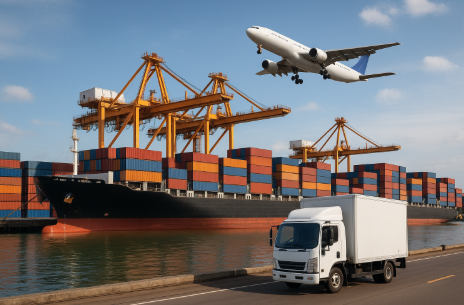
Although air freight provides speed, ocean freight continues to dominate because it offers the lowest cost per CBM. More importantly, containerized transport ensures safe loading, predictable schedules, and scalable capacity for both SMEs and large manufacturers.
Common ocean freight choices for US export freight comparison Singapore include:
- FCL (20GP / 40GP / 40HQ containers)
- LCL for low-volume cargo
- Special equipment (Open Top, Flat Rack)
Since ocean freight suits most cargo types, exporters rely on it to reduce logistics expenses while maintaining stable delivery timelines.
How Do Container Prices Affect US Export Freight Comparison?
Container pricing depends on equipment type, routing, port selection, and carrier availability. Additionally, freight rates fluctuate weekly due to market demand.
Table 2 — Estimated FCL Container Pricing (US → Singapore)
| Container Type | West Coast | Gulf Coast | East Coast |
|---|---|---|---|
| 20GP | $1,350–$1,850 | $1,550–$2,050 | $1,900–$2,500 |
| 40GP | $1,850–$2,350 | $2,100–$2,650 | $2,450–$3,050 |
| 40HQ | $1,950–$2,450 | $2,250–$2,750 | $2,550–$3,150 |
These figures provide exporters a realistic baseline when comparing freight prices and selecting the optimal shipping lane.
What Role Does Transit Time Play in US Export Freight Comparison?
Since exporters value speed as much as cost, transit times must be evaluated alongside rates. Additionally, routing differences—Panama Canal, Suez Canal, or trans-Pacific paths—directly impact delivery speed.
Table 3 — Transit Time Comparison (US → Singapore)
| Origin Port | Avg. Transit Time | Notes |
|---|---|---|
| Los Angeles / Long Beach | 22–28 days | Fastest ocean route |
| Houston | 28–34 days | Gulf routing |
| Savannah | 32–40 days | East Coast via Suez |
| New York | 34–42 days | Longest distance |
This transit time analysis helps exporters predict lead time, optimize inventory cycles, and avoid delays.
Which Documents Are Required for Exporting From the US to Singapore?
Even though Singapore customs are efficient, exporters must still prepare compliance documents. Proper documentation ensures faster clearance, fewer inspections, and smoother port handling.
Required export documents include:
- Commercial Invoice
- Packing List
- Bill of Lading
- Export Declaration (AES filing)
- Certificate of Origin (if required)
- MSDS for hazardous cargo
Velotactlcs Logistics assists exporters with document verification and filing accuracy to avoid penalties and potential shipment delays.

How Should Exporters Compare FCL and LCL for Singapore Shipments?
Exporters often question whether full container load or consolidated LCL makes more sense. However, choosing the right option depends on volume, urgency, and cost objectives.
FCL Advantage Highlights
- Lower cost per unit
- Faster loading & discharge
- Less cargo handling risk
- More predictable schedules
LCL Advantage Highlights
- Perfect for 1–12 CBM shipments
- No need to fill a full container
- Flexible for irregular volumes
Since most Singapore-bound shipments include electronics, machinery, plastics, and retail goods, FCL remains the most reliable mode.
Why Do Freight Rates Shift Weekly for US-to-Singapore Shipping?
Exporters frequently face price fluctuations due to:
- Carrier capacity changes
- Port congestion
- Bunker fuel adjustments
- Seasonal trends
- Global demand shifts
Although exporters cannot control these variables, they improve predictability by requesting updated quotes weekly. Velotactlcs Logistics monitors rate movements daily to help shippers stay informed.
Real Case Studies: US Import Duty Calculator Philippines in Action
- Origin: Los Angeles
- Destination: Singapore
- Cargo: Industrial pumps, 19 tons
- Mode: 40GP FCL
- Cost: USD 2,180
- Transit Time: 26 days
The customer wanted both cost and speed. Thus, Velotactlcs Logistics optimized routing to avoid west coast congestion.
- Origin: Chicago
- Destination: Singapore
- Cargo: 8.5 CBM supplements
- Mode: LCL
- Cost: USD 920
- Transit Time: 32 days
The shipper preferred budget options. Therefore, LCL consolidation reduced freight cost while keeping reliable schedules.
- Origin: New York
- Destination: Singapore
- Cargo: 1,200 kg electronics
- Mode: Air Freight
- Cost: USD 7,900
- Transit Time: 4 days
The importer needed urgent delivery. As a result, air freight ensured fast customs release and secure handling.
How Velotactlcs Logistics Supports US Export Freight Comparison to Singapore
Velotactlcs Logistics provides:
- Multi-mode freight comparison tools
- Weekly FCL & LCL market rate updates
- Air vs. ocean cost evaluation
- Route optimization
- AES filing & documentation support
- Dedicated Singapore trade-lane experts
Although exporters may feel overwhelmed by varying costs, Velotactlcs simplifies decision-making with transparent comparisons and personalized freight solutions.

Conclusion
Choosing the right mode of transport requires accurate data, realistic transit times, and reliable carrier selection. Since exporters must balance cost and speed, completing a professional US export freight comparison Singapore ensures stronger planning and higher delivery reliability. Velotactlcs Logistics is ready to support your U.S.–Singapore shipments with clear pricing, optimized routing, and dependable documentation services.
Need a quote?
Ready to get started? Contact us now to request a free shipping quote.
Frequently Asked Questions (FAQ)
Rates shift weekly, so exporters benefit from updating comparisons every 5–7 days to maintain accuracy.
Rates change based on fuel and carrier space, but air freight remains reliable for urgent and high-value cargo.
Yes, hazardous cargo is allowed with proper IMDG packaging and complete MSDS documentation.
Ocean FCL usually provides the lowest cost per cubic meter for medium-to-high volume shipments.
Insurance is optional yet recommended to protect cargo from damage, loss, or delays during transit.