
Pharmaceutical exports from the United States to the Philippines require precision, regulatory compliance, and reliable cold-chain control. Because the products are highly sensitive and tightly regulated, businesses must follow strict processes to ensure safe handling and timely delivery. With the right strategy, exporters can simplify us export pharmaceuticals to Philippines operations while reducing delays and compliance risks.

What Makes Us Export Pharmaceuticals to Philippines So Complex?
Although the Philippines is a high-growth market for medical and pharmaceutical products, exporting from the U.S. involves strict FDA, Philippine FDA, and customs requirements. Moreover, most pharmaceutical products require controlled temperature handling, validated packaging, and accurate documentation.
Additionally, the Philippines’ demand for specialized medicines, vaccines, supplements, and medical supplies is rising, so importers rely on U.S. exporters who can deliver compliant, stable, and reliable supply chains.
What Documents Are Required for Pharmaceutical Exports to the Philippines?
Since pharmaceuticals are highly regulated, exporters must prepare a complete and consistent document package. Moreover, missing or incorrect paperwork may lead to customs holds, extended clearance times, or even product rejection.
Required Export Documentation
| Document | Purpose | Notes |
|---|---|---|
| Commercial Invoice | Product description & value | Must match HS code & FDA data |
| Packing List | Weight, packaging type, cartons | Needed for cold-chain mapping |
| Certificate of Analysis (COA) | Validates product quality | Often mandatory for medicines |
| Export Declaration | Compliance record | Required for U.S. customs |
| Air Waybill / Bill of Lading | Transport document | Must reflect temperature controls |
| Temperature Mapping Records | Cold-chain proof | Critical for biologics & vaccines |
| FDA Facility Registration | Verifies exporter | Required for U.S. operations |
Furthermore, certain pharmaceuticals may require controlled-substance permits, depending on formulation and classification.
How Should Exporters Prepare Pharmaceuticals for a Philippines Shipment?
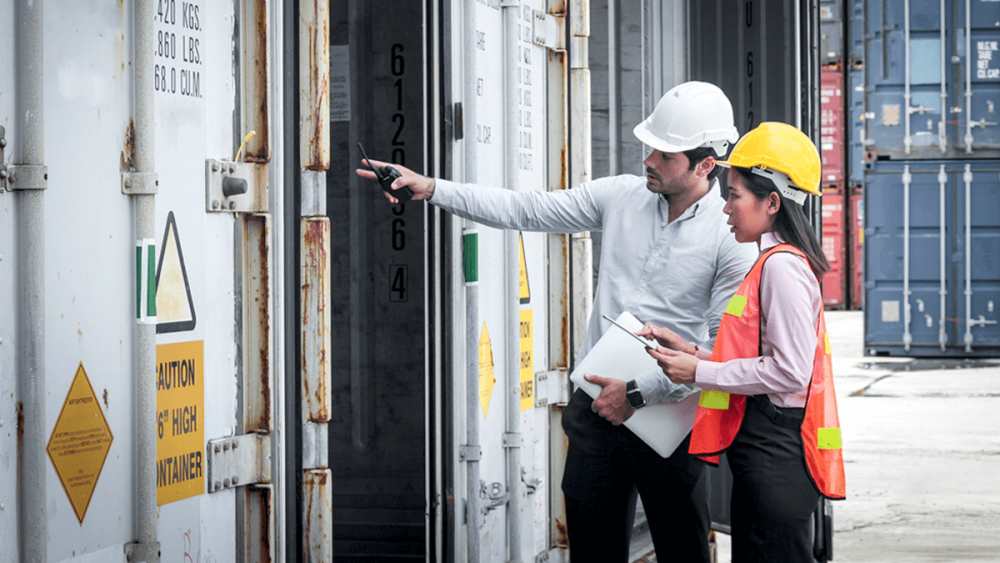
Because pharmaceuticals are sensitive to temperature variations, exporters must guarantee product stability from warehouse to final delivery. Additionally, packaging validation is essential to maintain efficacy.
Preparation Steps
- Use validated insulated packaging
- Attach time-temperature indicators (TTI)
- Pre-condition gel packs according to product SOP
- Secure documentation inside waterproof pouches
- Verify carton labels follow FDA and Philippine FDA rules
Moreover, suppliers should confirm the receiver in the Philippines holds the proper import license for these specific pharmaceutical products.
Which Shipping Method Is Best for Pharmaceutical Exports?
The choice of logistics method significantly impacts product stability. Therefore, exporters must use routes with predictable transit times, minimal handling, and consistent temperature control.
Shipping Method Comparison
| Method | Best For | Pros | Cons |
|---|---|---|---|
| Air Freight | Vaccines, biologics, urgent meds | Fastest, strong cold-chain | Highest cost |
| Express Courier | Samples, small-volume items | Quick, reliable | Limited volume |
| Ocean Reefer | Non-urgent temperature-controlled goods | Cost-effective | Longer transit time |
| Air + Local Reefer Delivery | Most U.S.–Philippines shipments | Stable cold-chain | Requires coordination |
Most exporters choose air freight for pharmaceuticals because it offers speed, predictability, and controlled environments.
Why Is Cold-Chain Management Critical for Us Export Pharmaceuticals to Philippines?
Since most pharmaceutical products degrade when exposed to heat, exporters must maintain precise temperature ranges. Additionally, Manila, Cebu, and Davao all have tropical climates, making stable cold-chain handling essential upon arrival.
Cold-Chain Risks
- Breaks in temperature mapping
- Delayed unloading at Manila ports
- Improper handling at airport storage facilities
- Inconsistent reefer truck scheduling
Therefore, partnering with logistics providers experienced in pharmaceutical transport is crucial for maintaining product integrity.
How Does Velotactics Logistics Support Pharmaceutical Exports?
Velotactics Logistics provides specialized handling for U.S.–Philippines pharmaceutical shipments, ensuring compliance, documentation accuracy, and temperature integrity. Moreover, our team coordinates with air carriers, FDA-certified facilities, and local Philippine importers to streamline the process.
Our Support Includes:
- Cold-chain route design & monitoring
- Verified pharmaceutical-grade storage
- FDA documentation preparation
- Temperature-controlled pickup & delivery
- Real-time visibility and compliance management
Consequently, exporters gain confidence that their pharmaceuticals remain effective through every logistics milestone.
What Regulations Must Exporters Follow for the Philippines Market?
Because both U.S. and Philippine authorities impose strict pharmaceutical controls, exporters must meet multiple regulatory requirements.
Key Regulatory Requirements
| Authority | Requirement | Applies To |
|---|---|---|
| U.S. FDA | Facility registration + labeling compliance | All pharmaceuticals |
| Philippine FDA | License to Operate (LTO) | Importer/receiver in Philippines |
| Bureau of Customs (BOC) | Proper valuation & product data | All imports |
| IATA | Temperature-controlled handling rules | Air freight shipments |
Furthermore, exporters should confirm if the importer holds a CPR (Certificate of Product Registration) for each product type.
How Can Exporters Reduce Delays When Shipping Pharmaceuticals?
Although delays can occur due to temperature excursions, customs checks, or missing documentation, strong preparation can minimize disruptions.
Delay Prevention Tips
- Always verify importer’s LTO and CPR status
- Pre-alert airline handling teams
- Submit paperwork 48 hours before departure
- Track temperature logs daily
- Use direct flights when possible
- Pre-book reefer trucks at destination
Additionally, exporters should coordinate weekly shipment windows to avoid peak congestion in Manila and Cebu airports.
Real Case Examples of Pharmaceutical Exports
- Cargo: 800 kg vaccines stored at 2–8°C
- Method: Air freight + reefer delivery
- Cost: USD 13,500
- Transit Time: 4 days
- Result: Continuous temperature logs ensured 100% cold-chain compliance, clearing customs within 24 hours.
- Cargo: 4 pallets general OTC meds
- Method: Express air freight
- Cost: USD 7,900
- Transit Time: 3 days
- Result: Philippine FDA documents pre-verified, eliminating release delays.
- Cargo: 300 kg controlled trial supplies
- Method: Air freight with specialized packing
- Cost: USD 10,800
- Transit Time: 5 days
- Result: Controlled-substance permits coordinated by Velotactics reduced clearance time significantly.
Conclusion
Ultimately, successful us export pharmaceuticals to Philippines operations depend on strict regulatory compliance, stable cold-chain control, and accurate documentation from the start. Moreover, choosing reliable logistics support reduces clearance delays and protects product integrity throughout the journey. With a well-designed export workflow and experienced partners, U.S. exporters can deliver safer, faster, and more predictable pharmaceutical shipments to the Philippines.
Need a quote?
Ready to get started? Contact us now to request a free shipping quote.
Frequently Asked Questions (FAQ)
Not all, but many biologics, injectables, and vaccines require strict temperature control to maintain efficacy.
Most shipments clear within 1–3 days when documentation and importer permits are complete.
OTC items may still require CPR and importer licensing. Always verify with Philippine FDA.
Air freight offers faster transit and better temperature control, making it the preferred method.
Use validated packaging, temperature loggers, pre-conditioned gel packs, and airline-certified cold-chain services.