
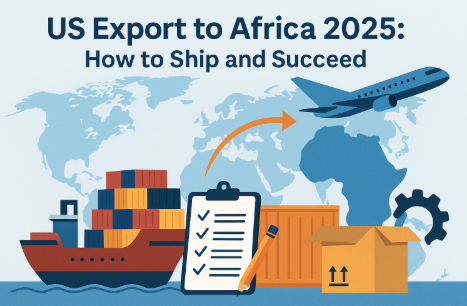
US export to Africa is expanding rapidly as trade relations strengthen across the continent. From agricultural machinery and medical supplies to consumer goods and construction equipment, Africa’s growing economies are fueling demand for American products. With expert logistics support from Velotac, exporters can simplify shipping, handle customs efficiently, and deliver goods safely to every major African port.

How Big Is the US Export Market to Africa in 2025?
The United States remains one of Africa’s top trade partners, with exports valued at over $30 billion annually. Key destinations include South Africa, Nigeria, Kenya, Egypt, and Ghana. African economies are diversifying, driving import demand for machinery, vehicles, fertilizers, and processed foods. Therefore, exporters who establish early partnerships can gain long-term advantages in growing markets.
What Are the Top Commodities in US Export to Africa?
Exports from the US to Africa cover a wide range of sectors. The following table summarizes some of the most common categories and trade examples:
| Category | Top Products | Key Importers |
|---|---|---|
| Machinery & Equipment | Tractors, engines, generators | South Africa, Kenya |
| Vehicles & Parts | Trucks, spare parts, construction gear | Nigeria, Egypt |
| Agriculture | Wheat, corn, fertilizers, pesticides | Ghana, Ethiopia |
| Pharmaceuticals | Vaccines, supplements, medical devices | Nigeria, Tanzania |
| Electronics | Computers, telecom devices, accessories | Kenya, Morocco |
Such diversity shows how broad the African demand is. For US exporters, understanding each country’s import priorities is crucial to designing an efficient logistics plan.
How to Choose the Right Shipping Method for Africa
Selecting a shipping mode depends on cost, urgency, and cargo type. Below is a quick comparison of the three main freight options for US exporters:
| Shipping Mode | Average Cost (per kg) | Transit Time | Best For |
|---|---|---|---|
| Air Freight | $4–$8 | 5–10 days | Electronics, urgent cargo |
| Sea Freight | $1–$2 | 25–40 days | Heavy goods, machinery, bulk |
| Express | $6–$12 | 3–6 days | Samples, high-value small goods |
In most cases, exporters combine methods. For example, machinery may ship by sea while spare parts are sent by air for faster delivery.
Why Sea Freight Dominates US Export to Africa
Sea freight remains the most cost-effective method for bulky or non-urgent shipments. Major routes connect US ports such as Houston, New York, and Los Angeles to African hubs like Durban, Lagos, and Mombasa. Containerized shipping (FCL/LCL) offers flexibility for businesses of all sizes. Moreover, Velotac provides competitive rates and end-to-end coordination—from pick-up to customs clearance—to simplify the export journey.
How Customs Regulations Affect US Export to Africa
Each African country has unique customs rules and documentation requirements. Missing even one certificate can delay clearance. Exporters must prepare the following essential documents:
| Required Document | Purpose / Description |
|---|---|
| Commercial Invoice | Declares the value and description of goods |
| Packing List | Specifies package details for inspection |
| Certificate of Origin | Confirms goods are made in the USA |
| Bill of Lading / Air Waybill | Transport document issued by carrier |
| Export License (if required) | Authorizes restricted goods |
Working with an experienced freight forwarder like Velotac ensures all paperwork aligns with both US and destination-country standards, minimizing risks of detention or fines.
What Are the Main US–Africa Shipping Routes?
Shipping routes typically follow established global lanes:
- East Coast ports (New York, Savannah) to West Africa (Nigeria, Ghana, Senegal)
- Gulf ports (Houston, New Orleans) to Central Africa (Cameroon, Congo)
- West Coast ports (Los Angeles, Oakland) to East Africa (Kenya, Tanzania)
Transit times average between 25 and 45 days, depending on port congestion, vessel schedule, and customs procedures. Velotac continuously monitors shipping updates to adjust routes and reduce delays for clients.
What Challenges Do Exporters Face and How to Overcome Them?
Exporting to Africa offers high potential but comes with logistical hurdles: inconsistent customs systems, limited infrastructure, and unpredictable schedules. However, exporters can mitigate these challenges by:
- Partnering with local agents or distributors for smoother delivery.
- Using Velotac’s consolidated services to reduce container costs.
- Ensuring pre-shipment inspection compliance.
- Selecting reliable insurance coverage for high-value cargo.
By proactively managing these aspects, companies maintain delivery reliability and customer trust.

Case Examples of Successful US Exports to Africa
- Agricultural Machinery to Kenya: A US supplier shipped tractors via sea freight to Mombasa. Velotac managed door-to-port delivery and documentation. Despite a tight schedule, customs clearance was completed in 3 days, helping the distributor start operations on time.
- Medical Equipment to Nigeria: A Texas-based exporter used air freight for time-sensitive hospital equipment. Velotac arranged export licensing and airway bill coordination, ensuring safe, compliant delivery within a week.
- Food Products to Ghana: A US agribusiness exported processed foods using temperature-controlled containers. Through Velotac’s network, the shipment maintained cold chain integrity and reached Accra without quality loss.
These examples highlight how professional logistics planning directly affects trade success.
How Much Does It Cost to Export from the US to Africa?
Export costs vary widely based on cargo type, weight, and delivery urgency. On average:
- Sea Freight (FCL 20ft): $2,000–$3,500 per container
- Sea Freight (LCL): $80–$120 per cubic meter
- Air Freight: $4–$8 per kilogram
- Customs & Handling Fees: 5–10% of declared value
In addition, insurance, inland trucking, and port surcharges must be included. Therefore, Velotac always provides transparent, all-inclusive quotes to help clients calculate accurate landed costs.
How to Ensure Compliance with African Import Standards
Certain products require pre-shipment verification or conformity certificates. For instance:
- Kenya and Nigeria mandate SONCAP or PVOC certificates.
- Egypt requires importers to register under GOEIC.
- South Africa uses SABS standards for electrical and mechanical items.
Velotac assists exporters in meeting these standards by connecting them with accredited testing agencies, reducing clearance delays and potential rejections.
How Digital Solutions Streamline US Export to Africa
Technology is transforming cross-border logistics. Exporters now use online platforms to track shipments, manage documents, and calculate duties. Velotac integrates digital tools for:
- Real-time shipment visibility
- Automated documentation templates
- Predictive transit time analytics
By adopting these systems, exporters can improve accuracy, reduce manual errors, and strengthen supply chain efficiency.
Why Partner with Velotac for US Export to Africa
Velotac offers a complete logistics solution tailored to US exporters targeting African markets. With years of experience in freight forwarding, the company manages every stage—from factory pick-up and consolidation to customs clearance and delivery. Moreover, Velotac’s multilingual support and local partnerships across Africa ensure each shipment moves smoothly, even in challenging environments.
Conclusion
In conclusion, US export to Africa is poised for strong growth in 2025. With strategic logistics planning, proper documentation, and reliable partners like Velotac, exporters can reach emerging African markets faster, safer, and more efficiently.
Need a quote?
Ready to get started? Contact us now to request a free shipping quote.
Frequently Asked Questions (FAQ)
Sea freight is generally the cheapest option for heavy or non-urgent shipments. It offers significant savings compared to air or express delivery.
Transit time ranges between 25 and 45 days by sea and about 5–10 days by air, depending on routes and customs efficiency.
Yes. Products like firearms, chemicals, or dual-use technologies require export licenses and must follow both US and African regulations.
Exporters need a commercial invoice, packing list, certificate of origin, and bill of lading. Some countries may require additional conformity certificates.
Absolutely. With Velotac’s LCL and air freight solutions, small and medium exporters can start shipping without committing to full containers.