
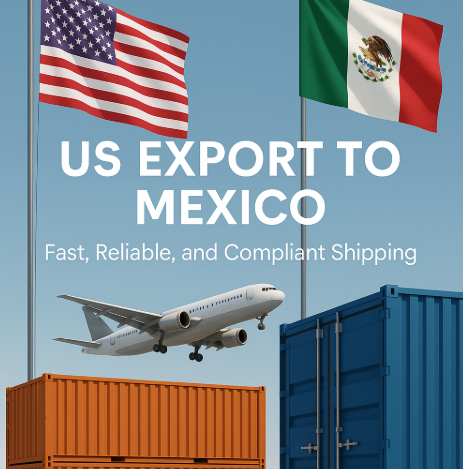
Mexico stands as one of the United States’ most important trading partners. With billions of dollars in goods moving across the border every month, opportunities for American exporters have never been stronger. However, understanding customs, compliance, and logistics processes is essential for smooth operations. This guide explores how US export to Mexico works, from documentation to delivery, helping your business expand confidently with Velotac Logistics.
Why Is Mexico a Top Export Destination for the US?
Mexico is America’s second-largest export market, thanks to its proximity, trade agreements, and growing demand for U.S. goods. Under the United States-Mexico-Canada Agreement (USMCA), over 80% of U.S. exports enter Mexico tariff-free.
Top exported goods include machinery, automotive parts, agricultural products, electronics, and medical equipment. For small and medium-sized enterprises, exporting to Mexico provides a gateway to Latin America’s broader markets and strengthens regional supply chains.
Moreover, reduced shipping times and cross-border infrastructure make Mexico a preferred trade destination compared to overseas markets.
How Does the US Export Process to Mexico Work?
Exporting goods from the US to Mexico involves coordinated steps between exporters, freight forwarders, and customs agencies. Understanding the sequence ensures compliance and avoids costly delays.
1. Product Classification:
Determine the correct HS (Harmonized System) code for your product to apply the right duty and documentation.
2. Export Documentation:
Prepare required paperwork such as invoices, packing lists, certificates of origin, and export declarations.
3. Carrier Booking and Shipping:
Choose transport mode—air, sea, or land freight—based on urgency and cargo type.
4. Customs Clearance (US and Mexico):
Both sides require accurate documentation and proper tax filing for release.
5. Delivery and Final Distribution:
Once cleared, goods are delivered to warehouses, distributors, or directly to customers in Mexico.
Each stage demands precision, especially during customs declaration, where data errors can cause major delays. Therefore, partnering with experts like Velotac Logistics can help manage both U.S. and Mexican procedures efficiently.
What Documents Are Needed for US Export to Mexico?
Export documents are essential for customs processing, financial tracking, and proof of origin under USMCA benefits.
| Document | Purpose | Issued By |
|---|---|---|
| Commercial Invoice | Declares shipment value and transaction details | Exporter |
| Packing List | Describes package contents and dimensions | Exporter |
| Bill of Lading | Serves as transport and ownership record | Carrier |
| Certificate of Origin (USMCA) | Certifies U.S. origin for duty exemption | Exporter or Chamber |
| Shipper’s Export Declaration (SED) | Reports exports over $2,500 | Exporter |
| Insurance Certificate | Protects against damage or loss | Insurance Provider |
Properly completed documents minimize customs scrutiny and reduce delays at the border.
What Are the Shipping Options from the US to Mexico?
Choosing the right shipping method is crucial for balancing cost, delivery time, and cargo type.
| Mode | Average Transit Time | Cost Level | Ideal Cargo Type | Main Advantage |
|---|---|---|---|---|
| Land Freight (Truck) | 1–5 days | Low | General goods, retail items | Fast cross-border movement |
| Air Freight | 1–2 days | High | High-value, urgent shipments | Fastest and most secure |
| Sea Freight | 7–12 days | Lowest | Bulk cargo, heavy machinery | Cost-effective for large volumes |
| Express Courier | 1–3 days | Medium | Small parcels or samples | Door-to-door convenience |
Most exports to Mexico move by truck freight, thanks to over 40 major crossing points and developed highways linking both countries. However, air freight remains ideal for high-value goods that demand speed and tracking accuracy.
How Does the USMCA Benefit Exporters?
The USMCA (United States-Mexico-Canada Agreement) replaced NAFTA in 2020, modernizing trade rules to favor small businesses and digital trade. Key benefits include:
- Zero tariffs on most U.S. exports that meet origin criteria.
- Simplified rules of origin for automotive, textile, and electronics industries.
- Streamlined customs processes with digital data sharing.
- Better protection for intellectual property and e-commerce transactions.
Therefore, companies can expand to Mexico more easily while maintaining competitive pricing and lower supply chain costs.
How Are Export Duties and Taxes Applied in Mexico?
While USMCA removes most tariffs, some goods may still be taxed if they don’t qualify under its origin rules. Mexico applies taxes like:
- IVA (Value Added Tax): 16% standard rate, though exports may qualify for exemptions.
- Customs Processing Fee (DTA): Applied to certain imports into Mexico.
- Excise Duties: On specific goods like alcohol, fuel, or tobacco.
Therefore, confirming your product’s eligibility for preferential treatment under USMCA ensures cost savings and smoother entry into Mexico.
How Long Does It Take to Export Goods to Mexico?
Transit time depends on shipment type, border crossing point, and documentation accuracy.
| Route | Mode | Average Delivery Time |
|---|---|---|
| Texas (Laredo) to Monterrey | Truck | 2–3 days |
| California (San Diego) to Tijuana | Truck | 1–2 days |
| Florida to Veracruz Port | Sea Freight | 7–10 days |
| New York to Mexico City | Air Freight | 1–2 days |
With Velotac Logistics’ experienced coordination, your shipments can clear customs swiftly and reach clients on time, even during high trade volume periods.
What Are the Common Challenges in US Export to Mexico?
Although cross-border trade is efficient, certain challenges remain.
- Regulatory Differences: Each country has unique labeling and import standards.
- Border Congestion: High traffic can delay customs clearance.
- Incomplete Documents: Errors in invoices or origin certificates often cause delays.
- Tax Calculation Issues: Misunderstanding VAT or DTA rules can increase costs.
- Language and Communication Barriers: Local representation helps with documentation and coordination.
To overcome these, Velotac Logistics offers bilingual support teams and local partners across key Mexican ports and cities, ensuring that every export process remains compliant and efficient.
How to Choose the Right Logistics Partner for Mexico Exports
A reliable logistics partner simplifies every step, from documentation to delivery. When selecting a provider, consider these key criteria:
- Proven experience in cross-border operations between the US and Mexico.
- Access to bonded warehouses and customs brokers.
- Transparent cost structures with tracking tools.
- Strong partnerships with air, sea, and land carriers.
Velotac Logistics meets all these criteria, combining expertise with end-to-end visibility and cost-efficient solutions. We handle customs paperwork, cargo tracking, and delivery coordination, ensuring your goods cross borders seamlessly.
How to Reduce Export Costs to Mexico
Reducing export costs is essential for maintaining profit margins. Consider these practical methods:
- Optimize Packaging: Use custom-sized packaging to lower dimensional weight.
- Consolidate Shipments: Combine multiple orders to save on freight rates.
- Select the Right Port or Border Point: Choose crossings with shorter wait times.
- Leverage USMCA Benefits: Ensure products meet origin rules to avoid duties.
- Work with Expert Forwarders: Velotac’s network ensures competitive rates and minimal delays.
Efficient planning not only cuts shipping expenses but also improves delivery reliability.
Conclusion
US export to Mexico continues to thrive under favorable trade conditions and growing regional demand. With the right strategy, clear documentation, and professional logistics support, exporters can expand their business confidently. Velotac Logistics ensures your shipments are handled with precision, compliance, and speed — helping you strengthen cross-border trade and achieve sustainable growth in the Mexican market.
Need a quote?
Ready to get started? Contact us now to request a free shipping quote.
Frequently Asked Questions (FAQ)
Most products don’t require a license. However, restricted items like firearms or technology may need BIS approval.
Yes, small businesses benefit greatly from reduced tariffs and simplified documentation under USMCA.
A commercial invoice, bill of lading, certificate of origin, and packing list are essential.
Velotac Logistics provides real-time tracking through integrated digital systems.
Machinery, agricultural products, automotive parts, electronics, and medical supplies.