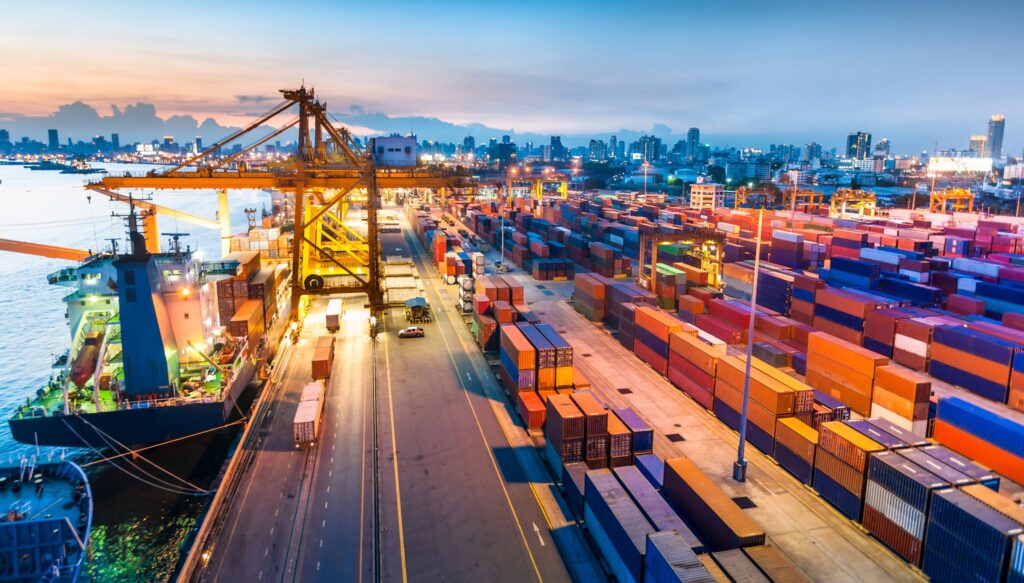
Managing US export to Singapore presents opportunities but also challenges for exporters who need fast shipping, accurate documents, and predictable logistics. Many businesses experience delays due to filing issues or poor coordination. However, with proper preparation and reliable freight planning, exporters can enjoy smooth, efficient, and cost-effective cargo movement to Singapore.
Why Is US Export to Singapore Increasing Each Year?
Trade between the United States and Singapore continues growing as both markets strengthen their economic ties. Moreover, the U.S.–Singapore Free Trade Agreement supports faster processing and simplified tariff structures. Because of this, exporters receive competitive access to one of Asia’s most efficient import destinations.
Additionally, Singapore’s world-class logistics infrastructure attracts US manufacturers who export electronics, machinery, pharmaceuticals, and agricultural products.
What Documents Are Needed for US Export to Singapore?
Documentation accuracy plays a crucial role in the export process. Therefore, exporters must ensure all details match across every form. Inconsistent information often causes delays or customs rechecks.
US–Singapore Export Documentation Checklist
| Document Type | Purpose | Notes |
|---|---|---|
| Commercial Invoice | Confirms product value | Must be consistent with HS code |
| Packing List | Details cargo size & weight | Accuracy ensures faster clearance |
| Bill of Lading / AWB | Carrier release | Shipper & consignee must be correct |
| Export Declaration (EEI) | Required for US exports | Filed electronically via AES |
| Certificate of Origin | Tariff validation | Needed for specific products |
| SDS (If applicable) | Safety documents | Required for chemicals & batteries |
Because Singapore customs operates efficiently, complete documentation allows shipments to clear in hours rather than days.
How Does the US Export to Singapore Process Work?
Exporters begin by preparing documents, booking transport, and filing the EEI. After that, the cargo undergoes export clearance before being loaded onto planes or vessels.
Once arriving in Singapore, import officers check classification, permits, and invoice values. Most compliant goods clear quickly due to Singapore’s streamlined clearance system.
Furthermore, strong coordination between US exporters, freight forwarders, and Singapore import agents ensures every stage moves without interruption.
Which Transport Method Is Best for US Export to Singapore?
Choosing the right shipping method depends on budget, urgency, and cargo size. Because each mode offers different benefits, exporters should review options carefully.
Transport Mode Comparison for US → Singapore
| Method | Transit Time | Cost Level | Best For | Strengths |
|---|---|---|---|---|
| Air Freight | 2–5 days | High | Time-sensitive cargo | Fast, reliable |
| Ocean FCL | 20–30 days | Low | Bulk goods | Stable, economical |
| Ocean LCL | 25–35 days | Low–Medium | Small shipments | Flexible, affordable |
| Express Courier | 2–4 days | Medium–High | Samples & small parcels | Door-to-door speed |
Although air freight moves faster, many exporters choose FCL for larger shipments due to favorable costs.
How Can Exporters Reduce Shipping Delays to Singapore?
Exporters can significantly reduce delays by:
- Confirming accurate HS codes
- Preparing EEI filings early
- Ensuring carton labels match packing lists
- Coordinating pickup and warehouse cut-off times
- Verifying Singapore import permits for restricted goods
Additionally, proper packaging prevents damage that may trigger inspections.
Therefore, exporters who plan ahead save time and reduce overall cost.
Why Work With a Professional Forwarder for US Export to Singapore?
A knowledgeable freight forwarder helps exporters avoid mistakes and keep shipments moving smoothly. Velotactlcs Logistics supports US exporters with:
- Document alignment and early compliance checks
- AES filing and export declaration support
- Route planning for air and ocean shipments
- Real-time milestone updates
- Cost optimization based on volume and urgency
- Support from both US and Singapore logistics teams
Because of these advantages, exporters experience smooth, predictable shipments across the entire supply chain.
What Costs Should Exporters Expect for Shipping to Singapore?
Export costs depend on shipping method, port of loading, and cargo type. Although rates vary, the table below provides a practical reference.
Estimated Shipping Costs: US → Singapore
| Cost Type | Typical Range | Notes |
|---|---|---|
| Air Freight | USD 4.5–9.0/kg | Depends on season and routing |
| FCL (20GP/40GP) | USD 1,250–2,600 | Market-driven |
| LCL Freight | USD 40–75/CBM | Warehouse charges may apply |
| Export Documents | USD 50–100 | Forwarder service fee |
| Insurance | 0.3–0.6% cargo value | Recommended |
Export planning improves cost control, especially when forecasting peak seasons.
Real Case Study
- Cargo: 1 × 40GP machinery parts
- Weight: 9 tons
- Mode: Ocean FCL
- Cost: USD 2,180
- Transit: 28 days
Outcome: Early EEI filing ensured smooth export clearance and fast release in Singapore.
- Cargo: 6 CBM electronics
- Mode: LCL
- Cost: USD 510
- Transit: 33 days
Outcome: HS code verification prevented customs reclassification delays.
- Cargo: 220 kg medical devices
- Mode: Air Freight
- Cost: USD 1,580
- Transit: 3 days
Outcome: Time-critical shipment delivered ahead of schedule due to optimized routing.

How Should Exporters Package Cargo for Safe Transport?
Every exporter should focus on durable export-grade packaging, especially for long-distance routes. Moreover, proper labeling ensures easy identification during customs scanning.
Recommended practices include:
- Double-walled cartons
- Waterproof wrap for humidity protection
- Clear carton markings and barcodes
- Shock-proof internal padding
Additionally, wooden pallets should comply with ISPM-15 treatment rules.
What Products Do US Exporters Commonly Ship to Singapore?
Singapore imports a wide range of US goods, including:
- Semiconductors and electronics
- Aerospace components
- Agricultural commodities
- Industrial machines
- Pharmaceuticals
- Medical devices
- IT hardware
- Food & beverages
Because many of these goods are regulated, exporters must follow classification and permit rules closely.
Do Exporters Need Insurance for US Export to Singapore?
Conclusion
In summary, successful US export to Singapore requires accurate documentation, the right shipping method, and strong coordination across all logistics stages. Exporters who work with a professional forwarder enjoy smoother lead times, fewer errors, and better cost control. If your business is expanding shipments to Singapore and needs reliable planning, Velotactlcs Logistics is ready to support every step with expert guidance.
Need a quote?
Ready to get started? Contact us now to request a free shipping quote.
Frequently Asked Questions (FAQ)
Air freight takes 2–5 days, while ocean freight takes 20–35 days depending on routing.
EEI is required when cargo value exceeds USD 2,500 per HS code or when specific controls apply.
Certain items such as chemicals, food, telecom equipment, and batteries may require permits.
Yes. LCL is cost-effective for shipments under 10 CBM.
Inspections occur but are typically quick due to Singapore’s efficient customs system.