
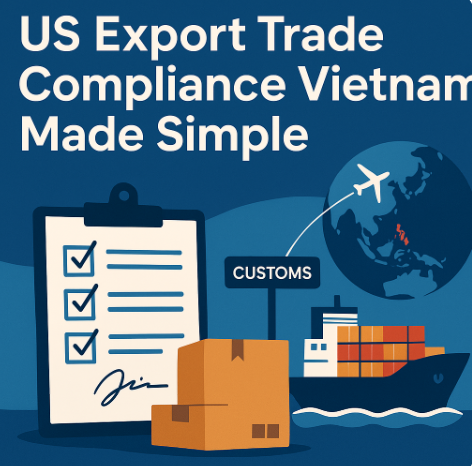
Successfully exporting goods from the United States to Vietnam requires strict adherence to export control rules, documentation standards, and destination-country customs expectations. Because even small errors can trigger shipment delays or regulatory penalties, exporters must understand how US export trade compliance Vietnam works, how to classify products correctly, and how to coordinate with logistics and compliance experts to ensure smooth cargo movement.
Why Is US Export Trade Compliance Critical for Vietnam-Bound Shipments?
Compliance affects every stage of international shipping. Moreover, the U.S. government imposes strict controls to prevent sensitive technologies, dual-use items, and restricted materials from entering unauthorized markets. Therefore, exporters must verify that products are properly licensed, documented, and screened before shipment.
Additionally, Vietnam’s growing import regulations emphasize transparency and product accuracy. When exporters maintain consistent documentation, shipments clear customs faster and avoid costly re-inspections upon arrival.
What Are the Core Components of US Export Trade Compliance for Vietnam?
Export compliance involves multiple obligations under U.S. law. Because different agencies regulate different categories, businesses must evaluate their products, customers, and destinations carefully.
Key Components Include:
- Product classification under ECCN or EAR99
- Restricted party screening
- Destination country assessment
- Export license determination
- Accurate AES/EEI filing
- Recordkeeping requirements
- Strict documentation accuracy
Furthermore, exporters must confirm whether U.S. military or dual-use technologies require special government authorization.
How Do Export Control Classifications (ECCN) Affect Vietnam Shipments?
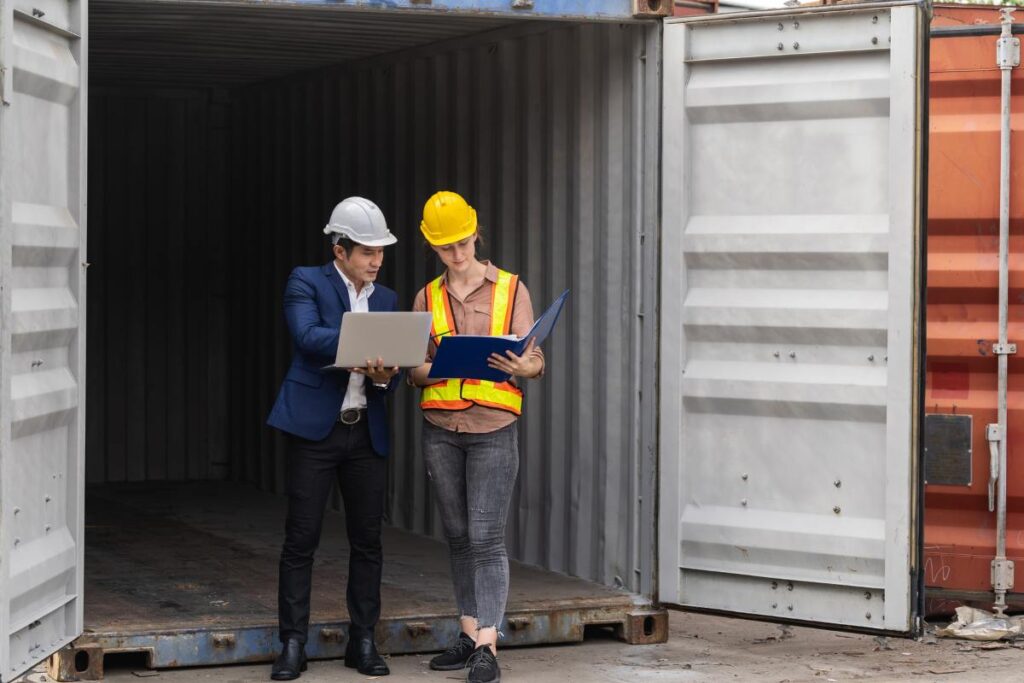
Correctly identifying whether an item falls under EAR99 (no license required) or an ECCN category is the first major compliance step. Because many industries—especially electronics, aerospace, IT hardware, chemicals, and medical equipment—contain controlled components, exporters must conduct classification checks before arranging transportation.
ECCN/EAR Summary Table
| Category | Description | License Requirement |
|---|---|---|
| EAR99 | Low-risk commercial goods | Usually no license |
| Dual-use ECCN | Electronics, sensors, telecom, lasers | License may be required |
| Military ECCN | Defense, navigation, aerospace parts | Almost always requires license |
| Chemical ECCN | Lab chemicals, solvents | May require license depending on type |
Additionally, exporters may need manufacturer specifications to classify items accurately.
What Documentation Is Required for US Export Compliance to Vietnam?
Because documentation supports both export control and customs clearance, exporters must maintain consistency across all forms.
US–Vietnam Export Compliance Documentation Checklist
| Document | Purpose | Compliance Notes |
|---|---|---|
| Commercial Invoice | Declares value & product details | Must match ECCN & HS code |
| Packing List | Itemized packaging details | Required for AES filing |
| EEI (AES Filing) | Mandatory for exports over $2,500 | Must include ECCN |
| Bill of Lading / AWB | Transport contract | Must reflect shipper & consignee |
| End-User Statement | Confirms intended use | Needed for controlled goods |
| Export License | Authorization for restricted items | Required for sensitive goods |
Because Vietnam uses modern electronic customs systems, accurate documentation reduces clearance time significantly.
How Does the AES/EEI Filing Process Affect Vietnam-Bound Shipments?
Filing the Electronic Export Information (EEI) through the Automated Export System (AES) ensures that U.S. authorities receive export data before shipment departure. Additionally, AES filing allows U.S. agencies to enforce export controls and monitor sensitive technologies.
Exporters must include:
- ECCN
- Value per HS code
- End-user information
- License type or license exception
- Country of destination
Furthermore, inaccurate data may trigger internal audits, warnings, or holds by U.S. Customs.
What Vietnamese Import Rules Should US Exporters Consider?
Vietnam enforces its own import requirements, especially for technical products, chemicals, medical devices, and electronics. Therefore, exporters should confirm whether the consignee requires:
- Import permits
- Product registrations
- Safety certificates
- Labeling compliance
- Specialized packaging
Additionally, full alignment between U.S. export documents and Vietnam customs requirements prevents reclassification or inspection delays.

How Do Freight Forwarders Support US Export Trade Compliance for Vietnam?
A professional logistics partner provides essential support by reviewing documentation, checking compliance risks, and coordinating secure movement. Velotactlcs Logistics, for example, helps exporters handle paperwork and ensure consistency from filing to final delivery.
Freight Forwarder Compliance Support Includes:
- Reviewing ECCN classifications
- Conducting restricted-party screening
- Preparing documentation for AES
- Ensuring labels and descriptions align across forms
- Advising on license requirements
- Coordinating with Vietnam customs brokers
- Managing secure transportation
Consequently, exporters reduce risk while maintaining efficient supply-chain operations.
What Are the Most Common Compliance Mistakes Exporters Make?
Compliance issues often arise from simple oversights. However, understanding them helps exporters avoid major disruptions.
Frequent mistakes include:
- Misclassifying ECCN categories
- Using incomplete product descriptions
- Failing to file EEI correctly
- Shipping controlled goods without an export license
- Incorrect consignee or end-use information
- Lack of screening against denied parties
- Inconsistent documentation across forms
Additionally, many exporters underestimate the importance of recordkeeping, which U.S. regulations require for at least five years.
Real Case Study
- Cargo: 260 kg telecom modules
- ECCN: 5A991
- Mode: Air Freight
- Cost: USD 1,740
- Result: Early ECCN validation avoided a license requirement, enabling rapid export approval and 24-hour clearance in Vietnam.
- Cargo: 2.4 CBM industrial sensors
- ECCN: 7A994
- Mode: LCL
- Cost: USD 490
- Result: Correct classification prevented reinspection, saving three days of customs delay.
- Cargo: 1×20ft container
- Requirements: SDS + Import Permit
- Mode: FCL
- Cost: USD 2,290
- Result: Proactive compliance review avoided Vietnamese import rejections and reduced local clearance to just 48 hours.
What Transport Modes Support the Best Compliance Outcomes?
Although compliance applies to all freight modes, certain transport options offer better tracking, documentation visibility, or sitting for specific cargo types.
Transport Mode Comparison: US → Vietnam
| Mode | Transit Time | Compliance Strengths | Best For |
|---|---|---|---|
| Air Freight | 3–6 days | Faster checks & visibility | High-value goods |
| FCL Sea Freight | 22–32 days | Secure, sealed containers | Machinery, bulk goods |
| LCL Sea Freight | 25–40 days | Cost-effective | SMEs & mixed cargo |
| Express Courier | 2–5 days | Automated documentation | Small parcels & samples |
Moreover, exporters of controlled goods often prefer FCL or air freight due to better security and handling.

What Compliance Tools Should Exporters Use?
Exporters benefit from using specialized tools that support accuracy, documentation, and secure handling. Because technology improves compliance reliability, exporters should rely on:
- ECCN lookup databases
- Denied-party screening systems
- AES filing platforms
- Digital document management
- Secure tracking tools
- Product specification repositories
Additionally, automated systems reduce human error and improve audit readiness.
How Can Exporters Stay Updated With Changing Regulations?
Compliance rules evolve frequently. Therefore, exporters should implement a continuous improvement strategy:
- Monitor BIS Export Administration Regulations updates
- Subscribe to agency newsletters
- Consult with freight forwarders
- Attend trade compliance workshops
- Conduct annual internal audits
Furthermore, exporters with complex product portfolios should maintain a compliance partner for ongoing support.
Conclusion
In conclusion, mastering US export trade compliance Vietnam ensures safer, smoother, and more predictable export operations. Exporters who classify items correctly, verify end-use details, screen partners, and manage documentation accurately avoid delays and regulatory risks. If your company needs expert help navigating export laws or managing logistics operations, Velotactlcs Logistics is ready to support every step—from compliance assessment to secure shipping.
Need a quote?
Ready to get started? Contact us now to request a free shipping quote.
Frequently Asked Questions (FAQ)
Yes. Every item must be classified as EAR99 or under a specific ECCN before filing.
Only controlled goods require a license; most EAR99 items move without one.
It ensures the buyer and end-user are not listed on U.S. denied or flagged lists.
ECCN, consignee details, values, licenses, and shipment details.
No. They are required mainly for sensitive or dual-use items.