
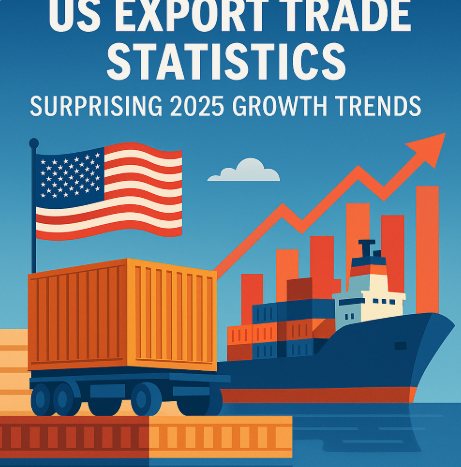
In 2025, the United States continues to strengthen its position as one of the world’s leading exporters. Despite global economic uncertainty, U.S. export volumes have reached new highs, driven by manufacturing innovation, nearshoring, and improved logistics infrastructure. This in-depth analysis examines the latest US export trade statistics, identifying top markets, growth trends, and how logistics solutions like Velotac Logistics are helping exporters stay competitive in a rapidly changing global environment.

What Are the Key Highlights of US Export Trade in 2025?
According to the U.S. Census Bureau and International Trade Administration (ITA), total U.S. exports surpassed $2.9 trillion in early 2025, marking a 6% increase year-over-year. The growth is mainly fueled by strong demand from Mexico, Canada, and Asia, alongside recovery in the industrial machinery and semiconductor sectors.
Energy products remain dominant, with LNG and petroleum exports setting record volumes due to high global demand. Meanwhile, the export of services — such as digital solutions, engineering, and financial services — now accounts for nearly 35% of total trade value.
Which Countries Are the Top US Export Destinations?
Mexico overtook Canada as the largest export market for the United States in 2025, largely due to nearshoring and regional supply chain integration under the USMCA agreement.
| Rank | Destination Country | Export Value (USD Billion) | Year-on-Year Growth |
|---|---|---|---|
| 1 | Mexico | 385 | +8.4% |
| 2 | Canada | 370 | +5.1% |
| 3 | China | 155 | +4.6% |
| 4 | Japan | 92 | +3.2% |
| 5 | Germany | 81 | +2.9% |
| 6 | South Korea | 74 | +4.5% |
| 7 | United Kingdom | 69 | +3.7% |
| 8 | Netherlands | 58 | +2.1% |
| 9 | Brazil | 49 | +6.0% |
| 10 | Australia | 46 | +2.8% |
The data highlights how North American trade has rebounded strongly post-pandemic, while Asian markets continue to show moderate but consistent demand growth.
What Are the Top Product Categories in US Exports?
Manufactured goods continue to dominate U.S. exports, accounting for over 75% of total outbound trade. Energy, automotive, aerospace, and electronics lead the way, supported by advanced logistics networks and port modernization initiatives.
| Product Category | 2025 Export Value (USD Billion) | Share of Total Exports | Annual Growth |
|---|---|---|---|
| Industrial Machinery | 410 | 14% | +6.5% |
| Automotive Parts & Vehicles | 355 | 12% | +7.8% |
| Mineral Fuels & Petroleum | 310 | 10.7% | +9.2% |
| Electronics & Semiconductors | 280 | 9.6% | +8.1% |
| Agricultural Products | 200 | 7% | +4.0% |
| Medical Instruments | 175 | 6% | +3.8% |
| Aerospace Equipment | 150 | 5.1% | +5.4% |
The expansion of semiconductor exports, particularly to Asia and Europe, shows the U.S. regaining technological competitiveness. Additionally, agricultural exports to Asia have surged thanks to trade agreements and lower freight rates.
How Have Export Logistics and Freight Trends Evolved?
Export logistics in 2025 emphasize speed, reliability, and sustainability. Businesses now use digital freight platforms, AI-driven routing, and predictive customs clearance to minimize delays.
Velotac Logistics, for instance, integrates multimodal shipping options — combining air, sea, and land transport — to optimize delivery schedules and reduce costs.
| Mode of Transport | Share of Total Exports | Average Transit Time | Key Advantage |
|---|---|---|---|
| Sea Freight | 67% | 20–35 days | Economical for bulk cargo |
| Air Freight | 21% | 2–6 days | Ideal for high-value goods |
| Truck Freight | 10% | 1–5 days | Preferred for USMCA trade |
| Rail Freight | 2% | 3–10 days | Sustainable for inland routes |
Therefore, exporters increasingly favor hybrid logistics solutions, combining trucking and short-sea shipping for faster cross-border trade within North America.
What Factors Are Driving Export Growth in 2025?
Several key factors contribute to this export boom:
- USMCA Trade Integration: Simplified rules of origin and lower tariffs stimulate manufacturing exports.
- Energy Expansion: LNG and oil exports to Europe and Asia continue to grow due to supply diversification.
- Technological Resilience: The U.S. semiconductor and AI hardware sectors are rebounding strongly.
- Government Incentives: Export financing programs from the EXIM Bank support small business exporters.
- Sustainability Goals: Demand for renewable energy components and electric vehicle parts boosts trade volumes.
Therefore, the combined effects of innovation and regional cooperation position the U.S. as a key global supplier in both traditional and emerging industries.
How Does Customs Clearance Affect Export Performance?
Efficient customs clearance remains a vital element of export success. Digital documentation systems have significantly reduced delays, but compliance errors can still disrupt operations.
Key compliance points include:
- Correct Harmonized System (HS) classification
- Valid Certificates of Origin for USMCA eligibility
- Proper documentation for controlled or dual-use goods
Velotac Logistics provides end-to-end customs assistance, ensuring documents meet both U.S. and destination country regulations, helping clients maintain full compliance and avoid costly penalties.
What Role Do Ports and Infrastructure Play in Export Success?
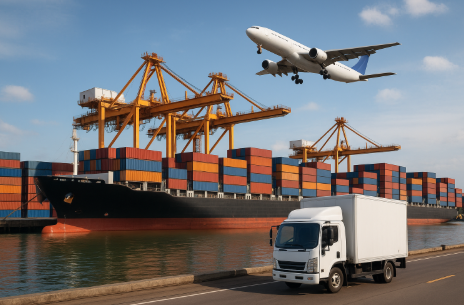
Modern ports are crucial for handling record-high export volumes. In 2025, major U.S. ports like Houston, Los Angeles, Savannah, and New York/New Jersey have expanded capacity and introduced automation for faster turnaround times.
The Gulf ports, in particular, now handle a larger share of energy and agricultural exports. Meanwhile, intermodal connectivity between rail, truck, and sea has reduced inland transport bottlenecks.
Consequently, exporters benefit from more predictable delivery schedules and lower demurrage costs.

Which Regions Are Seeing the Most Export Growth?
While North America remains dominant, Latin America and Asia are showing the fastest expansion in 2025.
- Latin America: Demand for U.S. industrial equipment and vehicles has surged.
- Asia-Pacific: Strong import demand for agricultural and semiconductor products.
- Europe: Steady growth for energy exports and medical devices.
This diversification helps balance trade risks and supports long-term growth resilience.
How Can Small Businesses Benefit from Export Opportunities?
Small and medium enterprises (SMEs) now account for nearly 30% of total export growth, largely due to easier access to logistics and financing solutions.
Velotac Logistics assists SMEs with:
- Simplified export documentation and customs support
- Affordable consolidated freight options
- Real-time tracking and supply chain visibility
Therefore, even smaller exporters can compete globally with the right logistics partner and strategic guidance.
What Are the Future Trends in US Export Trade?
The outlook for 2026 and beyond shows continued growth in several areas:
- Green Logistics: Increased use of electric trucks and carbon-neutral shipping routes.
- Digital Trade Platforms: AI-driven freight marketplaces will further automate bookings.
- E-commerce Exports: Direct-to-consumer global shipping is expected to double.
- Regional Integration: Stronger US-Mexico supply chain ties will drive more truck freight exports.
As global trade evolves, exporters who adapt to new technology and compliance systems will gain the most advantage.
Conclusion
The 2025 US export trade statistics reveal a strong and diversified export economy, backed by innovation, digital logistics, and strategic regional partnerships. As global trade evolves, agility and compliance will remain the cornerstones of success.
By partnering with Velotac Logistics, exporters gain a trusted ally for customs clearance, multimodal freight, and supply chain visibility — ensuring fast, reliable, and compliant global trade operations.
Need a quote?
Ready to get started? Contact us now to request a free shipping quote.
Frequently Asked Questions (FAQ)
U.S. exports reached about $2.9 trillion in 2025, marking steady 6% annual growth.
Mexico is now the top destination for U.S. exports, followed closely by Canada and China.
Machinery, vehicles, energy products, electronics, and agricultural goods dominate exports.
Sea freight remains the leading mode, accounting for nearly two-thirds of shipments.
USMCA simplifies trade procedures, reduces tariffs, and enhances competitiveness in North America.