
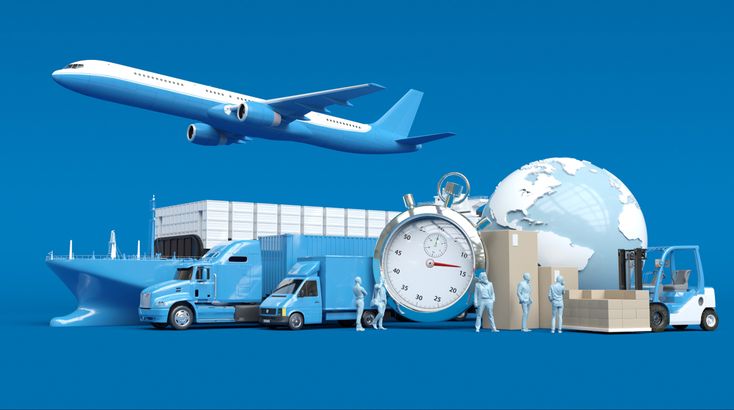
US import container tracking Thailand has become one of the most essential tools for importers seeking predictable deliveries, lower risk, and full end-to-end oversight of their international shipments. As supply chains grow more complex and global disruptions occur more frequently, businesses need more than basic tracking—they need dynamic visibility, real-time milestones, and proactive alerts that help resolve issues before they escalate. With the right tracking systems and a reliable logistics partner, importers can gain greater control over delivery schedules, customs processes, and last-mile distribution.
Why Is US Import Container Tracking Thailand So Important for Modern Supply Chains?
Many importers struggle with late arrivals, unexpected detentions, incorrect ETAs, or last-minute customs updates. However, with proper tracking, businesses gain clarity and control. Moreover, consistent visibility improves planning accuracy, reduces safety stock, and helps buyers coordinate warehouse labor more efficiently.
Therefore, US import container tracking Thailand gives businesses confidence by delivering:
- Real-time container position updates
- Port congestion alerts
- Customs status tracking
- Accurate ETA forecasts
- Vessel schedule changes
- Delay notifications
- Transshipment milestones
Additionally, Velotactics Logistics provides enhanced visibility dashboards that integrate multiple carriers into one simple interface.
How Does US Import Container Tracking Thailand Work Step-by-Step?
Although international transportation involves many moving parts, the tracking workflow is structured and predictable.
- Container pickup from Thai suppliers
Exporters load and seal containers in Bangkok, Laem Chabang, or other Thai ports. - Data integration from ocean carriers
Container numbers, booking references, and vessel details sync automatically into tracking platforms. - Vessel departure scanning
Tracking updates begin once containers pass port validation. - Real-time ocean tracking
GPS, AIS signals, and carrier systems provide frequent location updates. - Arrival notifications at US ports
Systems notify importers when the container reaches Los Angeles, Houston, New York, Seattle, etc. - Customs clearance milestone tracking
CBP updates are integrated, informing if exams, holds, or releases occur. - Final-mile visibility
After unloading, truckers provide delivery status to warehouses or distribution centers.
Furthermore, Velotactics Logistics automates this entire process, minimizing manual checks.
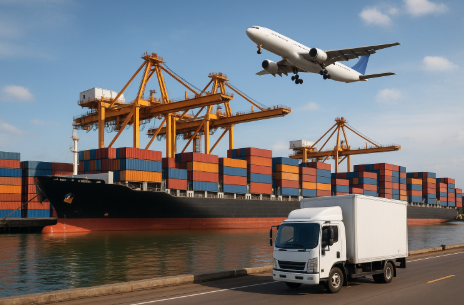
What Are the Main Tracking Milestones for US Imports From Thailand?
Importers should monitor several key milestones to maintain supply chain control.
Container Tracking Milestone Table
| Milestone | Description |
|---|---|
| Gate Out Empty | Truck collects empty container |
| Gate In Full | Supplier returns loaded container to port |
| Loaded on Vessel (L/V) | Container officially departs Thailand |
| Transshipment | If applicable, container switches vessels |
| Discharge | Cargo unloaded at US port |
| Customs Clearance | CBP review, inspection, release |
| Last-Mile Delivery | Final transport to warehouse |
Because every milestone affects the final ETA, accurate tracking ensures smoother operations.
Which Ports in Thailand Are Most Important for US-Bound Containers?
Thailand offers several strategic export gateways:
- Laem Chabang Port (LCB) — Thailand’s largest and most efficient container port
- Bangkok Port (PAT) — Good for central Thailand factories
- Map Ta Phut Port — Industrial and chemical goods
- Songkhla Port — Southern region exports
These ports provide strong connectivity to major US gateways, including Los Angeles, Long Beach, Oakland, Savannah, Houston, and New York.
How Long Does Shipping From Thailand to the USA Take?
Transit times vary based on routing, destination, and season. Nevertheless, most routes follow stable timelines.
Transit Time Table (Thailand → USA)
| US Destination | FCL Transit Time | LCL Transit Time |
|---|---|---|
| Los Angeles | 21–28 days | 25–32 days |
| Houston | 27–34 days | 30–38 days |
| New York | 32–42 days | 35–45 days |
| Seattle | 24–31 days | 26–35 days |
Because e-commerce and retail demand fluctuates, accurate ETAs remain critical for inventory planning.
How Can Real-Time Tracking Improve Customs Clearance?
With real-time container tracking, businesses receive early warnings for:
- ISF discrepancies
- Potential Customs holds
- VACIS or CET exam risks
- Documentation mismatches
- Delayed D/O release
- Port congestion impacts
Additionally, Velotactics Logistics integrates customs data with container tracking so users can monitor clearance status without switching systems.

What Tools Are Commonly Used for US Import Container Tracking Thailand?
Several systems help importers maintain visibility:
- Carrier websites
- Third-party tracking platforms
- AIS / GPS vessel tracking tools
- EDI-integrated dashboards
- Freight forwarder tracking portals
- Mobile apps for automated alerts
Velotactics Logistics offers a central tracking dashboard that aggregates all carriers, ocean schedules, and customs data into one simplified view.
Real Case Studies
- Cargo: 1×40HQ
- Volume: 68 CBM
- Transit Time: 27 days
- Tracking Result:
Velotactics provided automated alerts for a vessel delay, enabling the importer to adjust warehouse staffing and avoid late delivery penalties.
- Cargo: 1×20GP
- Volume: 28 CBM
- Transit Time: 32 days
- Tracking Result:
A Customs hold was identified early through the tracking portal, and documentation was corrected immediately, reducing exam delays by 4 days.
- Cargo: LCL (7.5 CBM)
- Transit Time: 36 days
- Tracking Result:
Real-time updates helped an Amazon seller plan stock availability, preventing an out-of-stock listing and preserving sales rank.
How Can Importers Reduce Delays With Better Tracking?
To minimize risks, importers should:
- Confirm HS codes before shipping
- Ensure ISF filing accuracy
- Book space at least 2 weeks ahead
- Monitor vessel schedule changes
- Avoid peak-season congestion when possible
- Use digital documents to speed up customs
- Maintain proactive communication with suppliers
Furthermore, Velotactics Logistics provides early-warning notifications and supply chain analysis to reduce uncertainty.
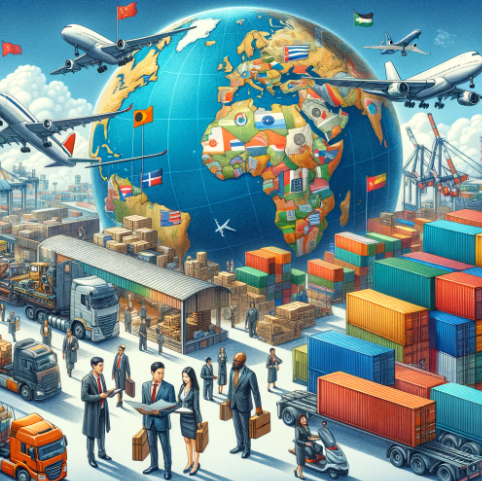
Why Is Thailand a Strong Partner for US Importers?
Thailand continues to expand its manufacturing base across:
- Electronics
- Automotive parts
- Furniture
- Processed foods
- Apparel
- Consumer goods
Because of this variety, importers rely heavily on accurate container tracking to manage diverse SKUs and high-volume shipments.
Should Importers Use a Logistics Partner for Tracking Support?
Although carriers and platforms provide basic tracking, only logistics companies deliver:
- Multi-carrier visibility
- Customs integration
- Automated milestones
- Exception alerts
- Professional documentation review
- Cross-border coordination
- Door-to-door tracking continuity
Velotactics Logistics ensures every milestone—from Thailand to final US delivery—remains visible, predictable, and under control.
Conclusion
US import container tracking Thailand empowers businesses to operate with higher accuracy, less risk, and more proactive supply chain management. With real-time visibility, smooth customs integration, and centralized tracking tools, importers gain valuable control over timelines and inventory planning. Velotactics Logistics enhances this process by offering advanced tracking technology, professional documentation support, and end-to-end shipping management that ensures every container moves with clarity and confidence.
Need a quote?
Ready to get started? Contact us now to request a free shipping quote.
Frequently Asked Questions (FAQ)
You can track using container numbers, booking IDs, or carrier portals, but logistics platforms give faster, consolidated updates.
Vessels may temporarily lose AIS signal, but updates resume once coverage returns or when carriers refresh their systems.
Documentation may require correction; responding quickly helps minimize delays and extra charges.
Yes, though LCL tracking includes additional milestones like consolidation and deconsolidation.
Use platforms that combine AIS data, carrier schedules, and historical transit patterns.