
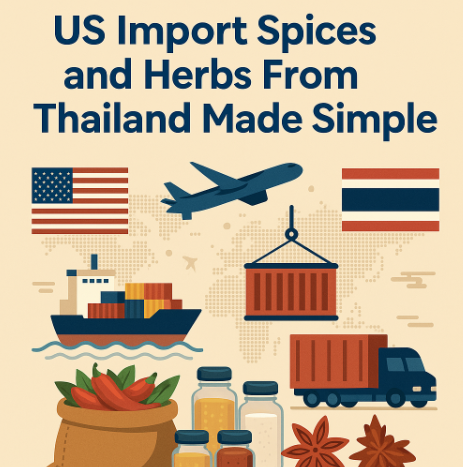
US import spices and herbs from Thailand continues to grow rapidly as American food brands, retailers, and manufacturers rely on Thailand for high-quality chili, turmeric, lemongrass, kaffir lime, galangal, basil, and other aromatic ingredients. However, despite Thailand’s strong agricultural ecosystem, US importers still struggle with customs preparation, inconsistent supplier documentation, product-quality variation, fumigation requirements, and unpredictable transit schedules. With a structured import strategy and the right logistics partner, the process becomes far simpler, faster, and more predictable.

What Makes Thailand a Leading Supplier of Spices and Herbs to the United States?
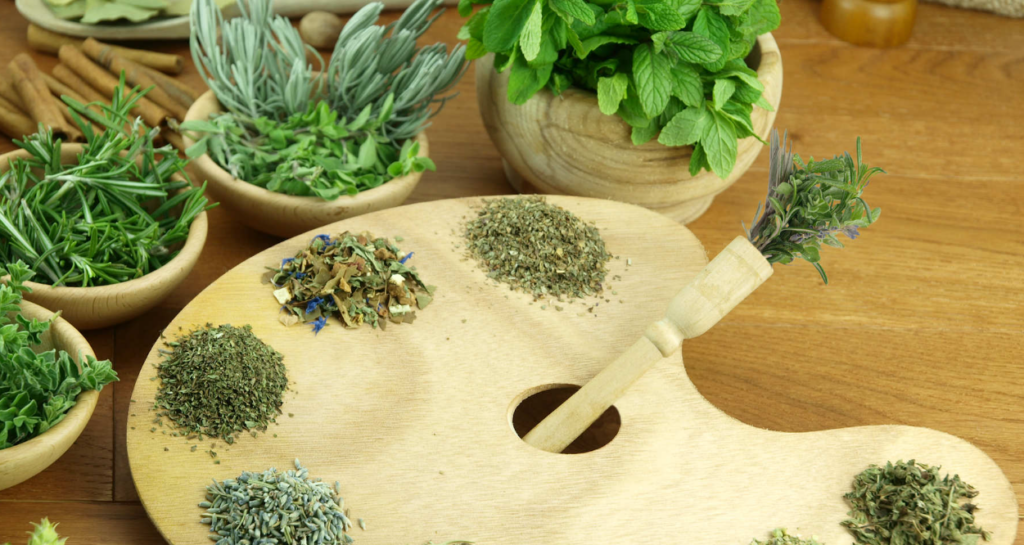
Thailand is globally recognized for its rich agricultural diversity, producing bold and aromatic spices such as dried chili, turmeric powder, ginger, kaffir lime leaves, holy basil, cinnamon, and blended curry mixes. Because Thai farmers follow export-oriented processing standards, US buyers benefit from strong flavor consistency and certification availability.
Moreover, Thailand’s major export hubs—Bangkok, Chiang Mai, Nakhon Pathom, and Ubon Ratchathani—have well-built supply chains that support drying, grinding, packaging, and global distribution. Additionally, Thailand’s port infrastructure (Laem Chabang and Bangkok) provides reliable schedules for both FCL and LCL shipments headed to the US West Coast and East Coast.
Long-tail keywords integrated: import Thai chili powder to US, wholesale spices Thailand to USA, Thai herb sourcing for American buyers, Asian dried herbs US supply chain, Thailand food export logistics.
Why Do US Importers Need Better Control Over Spices and Herbs Shipments?
Although spices and herbs are non-perishable compared to fresh produce, they still require regulatory oversight. USDA and FDA inspections focus on pesticide residues, moisture levels, mold contamination, and packaging integrity. Moreover, improper documentation may lead to customs delays, especially during agricultural inspections.
Common challenges include:
- Incorrect HS codes for blended or processed spices
- Missing phytosanitary certificates
- Inconsistent moisture or particle-size specifications
- Incomplete fumigation certificates for certain herbs
- Mislabeling on retail-ready packaging
- Supplier-quality variation due to drying methods
Therefore, importers must streamline communication with suppliers, verify certification accuracy, and ensure all documents match the shipment contents.
What Documentation Is Required for US Import Spices and Herbs From Thailand?
Accurate documentation prevents customs holds and ensures smooth clearance. Below is a practical checklist:
Documentation Table for Spices & Herbs Import
| Document | Purpose | Key Requirements |
|---|---|---|
| Commercial Invoice | Declares value & exact product details | Must include botanical name and processing type |
| Packing List | Confirms packaging & weight | Carton, bag, or drum counts must match invoice |
| Bill of Lading | Transport record | Consignee name must align with FDA registration |
| Phytosanitary Certificate | Ensures product is pest-free | Required for many dried herbs |
| Certificate of Origin | Confirms Thai origin | Supports duty classification |
| Fumigation Certificate | Ensures pest treatment | Needed for certain spice varieties |
| FDA Prior Notice | Required for all food imports | Must be filed before arrival |
In addition, importers should obtain COA test results (moisture content, microbial count, particle size) from suppliers for quality verification.
How Do Shipping Methods Compare for Importing Thai Spices and Herbs?
Since spices vary from high-volume chili powder to delicate dried leaves, importers must select appropriate shipping modes.
Shipping Mode Comparison Table
| Mode | Cost | Transit Time | Ideal For | Pros | Cons |
|---|---|---|---|---|---|
| Ocean FCL | Low | 22–35 days | Large spice volumes | Best cost efficiency; stable | Longer lead time |
| Ocean LCL | Medium | 28–40 days | Mixed small shipments | Flexible; consolidations | Extra handling risk |
| Air Freight | High | 3–7 days | Premium herbs; urgent orders | Fast; quality preserved | High cost per kg |
| Express Courier | Highest | 2–5 days | Samples, R&D needs | Simple clearance | Limited for bulk |
Because dried spices have high volume-to-value ratios, FCL remains the preferred method for US importers. However, high-end herbs (e.g., premium kaffir lime leaves) may require air freight for freshness and aroma retention.
Long-tail keywords integrated: air freight Thai herbs USA, FCL spice shipping Thailand, LCL dried herb logistics, temperature-controlled spice transit.
How Does Correct Tariff Classification Help Spices and Herbs Importers?
HTS classification determines duties, inspection procedures, and customs documentation requirements. Because spices differ by species and processing method (whole, crushed, ground), classification accuracy is essential.
Common HTS categories include:
- 0904 – Pepper and capsicum
- 0910 – Ginger, saffron, turmeric, thyme, bay leaves
- 0908 – Nutmeg, mace, cardamom
- 0906 – Cinnamon
- 0910.40 – Thyme, saffron blends
Correct classification helps importers:
- Prevent misfiling penalties
- Reduce inspection rates
- Improve landed-cost forecasting
- Maintain compliance consistency
Velotactics Logistics provides tariff reviews and helps importers determine precise HTS codes before shipping.
How Can Importers Reduce Delays When Shipping Spices and Herbs From Thailand?
Delays affect profitability and disrupt inventory planning. Fortunately, importers can reduce risk through proactive measures:
Effective strategies include:
- Coordinating early with Thai suppliers about drying standards
- Ensuring all phytosanitary and fumigation documents are pre-verified
- Reviewing labels to match FDA requirements
- Booking carriers with reliable Thailand–US schedules
- Using moisture-resistant packaging for ground spices
- Filing FDA Prior Notice in advance
- Conducting pre-shipment inspections for quality consistency
Additionally, Velotactics Logistics communicates directly with suppliers to verify carton integrity, palletization, and document accuracy—preventing surprises during customs inspection.
Why Is Velotactics Logistics a Strong Partner for US Import Spices and Herbs From Thailand?
Velotactics Logistics specializes in coordinating agricultural and food-product shipments, making it easier for US buyers to manage Thai spice imports. Furthermore, the company supports importers through documentation checks, shipment consolidation, and routing optimization.
Key advantages include:
- Pre-export document verification (PC, COO, FDA data)
- Supplier communication and packaging checks
- FCL/LCL scheduling from Laem Chabang & Bangkok
- Air freight options for premium herbs
- Customs entry support at major US ports
- Real-time tracking and milestone reporting
- Cost optimization for large-volume spice orders
This holistic approach improves efficiency, reduces delays, and strengthens long-term sourcing relationships.
Real Case Studies: Importing Spices and Herbs From Thailand
- Origin: Bangkok
- Destination: Los Angeles
- Volume: 1×40HQ (26 MT)
- Transit Time: 24 days
- Cost: $4,780
- Result: Velotactics corrected HS coding discrepancies before departure, eliminating potential customs re-inspection.
- Origin: Chiang Mai
- Destination: New York (JFK)
- Volume: 890 kg
- Transit Time: 3 days
- Cost: $5.60/kg
- Result: Air freight ensured aroma freshness for a high-end restaurant supply chain.
- Origin: Bangkok
- Destination: Houston
- Volume: 7.5 CBM
- Transit Time: 33 days
- Cost: $960
- Result: Velotactics resolved packing-list inconsistencies that would have caused FDA holds.
How Does Strong Supply Chain Control Improve Thai Spice Imports?
Better control gives businesses multiple long-term advantages:
- Lower customs delay risk
- More predictable retail fulfillment cycles
- Higher supplier consistency
- Better forecasting accuracy
- Reduced spoilage and contamination risk
- Improved cost structure through consolidation planning
Additionally, companies gain greater agility when responding to seasonal demand spikes in the US food industry.
Conclusion
US import spices and herbs from Thailand becomes far simpler and more efficient when businesses strengthen documentation procedures, improve supplier coordination, and adopt optimized freight routing. Moreover, Velotactics Logistics enhances the entire import cycle—from phytosanitary checks and tariff classification to multimodal transport—giving importers full visibility and control over every shipment.
Need a quote?
Ready to get started? Contact us now to request a free shipping quote.
Frequently Asked Questions (FAQ)
Chili, turmeric, ginger, basil, lemongrass, kaffir lime leaves, and curry blends are major exports to the US.
Yes, all spice shipments require FDA Prior Notice and proper labeling for ingredients and origin.
Many dried herbs require a phytosanitary certificate; requirements vary by product.
Ocean FCL takes 22–35 days, LCL takes 28–40 days, and air freight arrives in 3–7 days.
Some herbs require fumigation depending on moisture level and USDA regulations.