
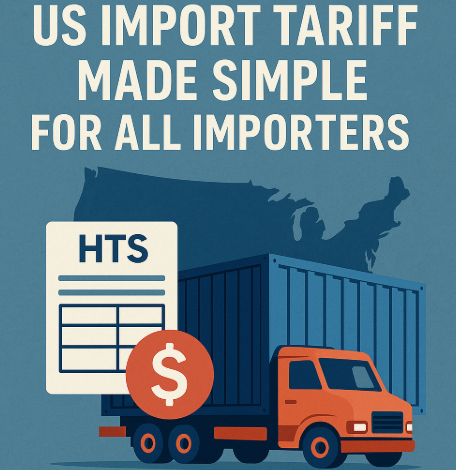
Although many businesses struggle with complex tariff rules, the US import tariff system becomes surprisingly manageable once you understand the role of HTS codes, classification logic, and duty formulas. Moreover, when importers plan ahead and calculate tariffs before shipments depart, they avoid unexpected costs, delays, and compliance problems.
Because tariff obligations differ widely across product categories, countries of origin, and trade programs, every importer needs a clear and accurate roadmap. Therefore, this guide explains everything necessary—tariff types, HS/HTS classification, cost examples, reduction strategies, documents, and logistics considerations—so importers can make confident decisions at every step.

What Is the US Import Tariff and Why Does It Matter for Importers?
Since every shipment entering the United States must be reviewed by U.S. Customs and Border Protection (CBP), importers must understand the tariff, tax, and compliance rules that determine their total landed cost. The US import tariff represents the percentage applied to the dutiable value of goods based on the HTS classification.
Because tariffs influence product pricing, supply chain choices, and inventory decisions, understanding how they work is essential for profitable importing. In addition, tariff obligations also shape sourcing strategies, since certain countries receive preferential treatment under Free Trade Agreements.
Therefore, knowing your tariff rates before shipping helps your business reduce financial risks and maintain predictable margins.
How Does the HTS Code Determine Your US Import Tariff?
Since product classification drives almost all customs outcomes, the HTS code—Harmonized Tariff Schedule—assigns every imported item a 10-digit code used for duty calculation. Although suppliers often suggest a code, CBP holds the importer legally responsible for choosing the correct one.
The HTS code determines:
- Tariff percentage
- Eligibility for duty exemption
- Additional taxes such as excise
- Potential anti-dumping or countervailing duties
- Special tariff treatment under trade agreements
Because the same product may fall under multiple possible classifications, accuracy matters. Therefore, comparing product features with HTS definitions prevents misclassification and avoids customs penalties.
Moreover, logistics experts like Velotactlcs Logistics frequently assist businesses in reviewing HTS classifications to ensure correct tariff assessment.

What Are Typical US Import Tariff Rates by Category?
Although rates vary widely, here is an overview of common product categories.
Table 1: Typical US Import Tariffs by HS Category
| Product Category | Typical Tariff Range | Notes |
|---|---|---|
| Electronics | 0%–6% | Many parts tariff-free |
| Apparel | 10%–32% | Depends on fabric & style |
| Footwear | 10%–37.5% | High for leather shoes |
| Machinery | 0%–5% | Industrial goods often low |
| Furniture | 0%–8% | Varies by material |
| Automobiles | 2.5% | Standard rate for cars |
| Light Trucks | 25% | Known as “chicken tax” |
Because tariff rates update annually, importers should verify the most recent HTS version before shipping.
How Do You Calculate US Import Tariffs Accurately?
Although the value on the commercial invoice is important, CBP uses a more detailed method called “dutiable value,” which typically includes:
- Cost of goods
- International shipping cost (CIF method)
- Insurance cost
- Packing charges
The basic formula is:
Tariff Amount = Dutiable Value × Tariff Rate
However, additional fees may also apply, including:
- MPF (Merchandise Processing Fee)
- HMF (Harbor Maintenance Fee for ocean freight)
- Excise taxes (for alcohol, tobacco, vehicles, etc.)
Because these fees influence your final landed cost, calculating them before purchasing is essential for pricing and budgeting.
How Do Incoterms Affect Tariff Calculation?
Since tariff calculation depends on the declared customs value, Incoterms define which costs are included. For example:
- FOB: Buyer pays freight, so CIF value is higher.
- CIF: Supplier includes freight and insurance, increasing dutiable value.
- DAP/DDP: Buyer may not directly handle duty but still must calculate landed cost.
Although import tariffs do not change by Incoterm, total value calculation does. Therefore, importers should choose Incoterms carefully to manage tariff exposure.
What Documents Are Required to Apply Tariffs Correctly?
Because customs relies on documentation to classify goods and assess duties, importers must provide accurate and consistent forms.
Table 2: Key Documents for Tariff Assessment
| Document | Purpose | Importance |
|---|---|---|
| Commercial Invoice | Declared value & description | Primary basis for tariffs |
| Packing List | Weight & volume details | Supports entry summary |
| Bill of Lading / AWB | Transportation record | Confirms shipment mode |
| HTS Classification | Duty determination | Defines tariff percentage |
| ISF (for ocean freight) | Security filing | Prevents customs holds |
| Customs Bond | Legal compliance guarantee | Required for most imports |
Because incomplete or inaccurate documents lead to delays, importers must ensure consistency across all files.

What Additional Tariffs Should Importers Be Aware Of?
Although basic tariffs apply to most goods, some products face additional charges:
1. Anti-Dumping (AD) Duties
Applied when foreign producers sell below fair value.
2. Countervailing Duties (CVD)
Applied when foreign governments provide unfair subsidies.
3. Section 201, 232, and 301 Tariffs
Special trade measures targeting specific products and countries.
Because some AD/CVD duties exceed 100%, importers should verify whether their HS code falls under any special tariff lists.
How Do Trade Agreements Influence US Import Tariffs?
Because the United States has several Free Trade Agreements (FTAs), goods from partner countries may qualify for reduced or zero tariffs. Agreements include:
- USMCA (Canada & Mexico)
- Australia FTA
- Israel FTA
- Singapore FTA
- South Korea FTA
To claim tariff reduction, importers must present valid certificates of origin and comply with product-specific rules.
Moreover, verifying eligibility early helps reduce landed cost significantly.
How Can Importers Reduce Tariffs Legally?
Although tariffs cannot be avoided entirely, several legal strategies help importers reduce total cost.
1. First-Sale Rule
Allows duty calculation based on the first transaction in a multi-tier supply chain.
2. Correct HTS Optimization
Some products have multiple legal classifications with different tariff rates.
3. Duty Drawback
When goods are re-exported, up to 99% of duties can be refunded.
4. Free Trade Agreements
Qualifying goods can enter at reduced or zero duty.
5. Section 321 (De Minimis)
Shipments valued under $800 may qualify for duty-free entry.
Because these methods require precision, importers often rely on professional logistics support to ensure compliance and cost optimization.
Velotactlcs Logistics assists importers with tariff planning, HTS verification, and customs strategy to minimize cost legally and effectively.
How Do Shipping Modes Influence Tariff-Related Costs?
Although tariff percentage stays the same, shipping mode influences value calculation and fees. Here is a comparison:
Table 3: Tariff Impact by Shipping Mode
| Shipping Mode | Duty Impact | Additional Fees | Best For |
|---|---|---|---|
| Air Freight | Higher CIF value | MPF only | Fast, high-value cargo |
| Ocean Freight | Includes freight + insurance | MPF + HMF | Bulk shipments |
| Express Courier | Simplified clearance | Carrier fees | Small parcels |
Because freight cost forms part of customs value, importers should consider shipping choices when estimating tariffs.
What Causes Tariff-Related Delays and How to Avoid Them?
Although many delays result from documentation errors, common causes include:
- Misclassified HTS codes
- Incorrect country-of-origin information
- Undervaluation or vague descriptions
- Late ISF filing
- Missing commercial invoice details
- AD/CVD verification reviews
Therefore, verifying documents before departure ensures smoother clearance.
Because Velotactlcs Logistics reviews all tariff-related documents and prepares filings proactively, we help importers avoid costly delays.
Conclusion
Understanding the US import tariff system helps businesses control landed cost, comply with customs rules, and improve supply chain planning. Moreover, when importers classify products correctly, review tariff updates, and use legal optimization strategies, they reduce risk and improve overall profitability.
If your company wants accurate tariff planning, HTS classification support, or end-to-end customs clearance, Velotactlcs Logistics provides dependable and professional assistance.
Need a quote?
Ready to get started? Contact us now to request a free shipping quote.
Frequently Asked Questions (FAQ)
Not always. Some goods are duty-free under HTS rules or FTAs. Checking the correct code ensures accurate tariff obligation.
Yes. Using HTS codes and CIF value, importers can calculate expected tariffs and plan their budget.
Yes. Under CIF valuation, freight and insurance cost increase the dutiable value.
They apply only to specific categories under investigation. Importers should verify whether their HS code is affected.
Shipments under $800 may qualify for duty-free entry, but certain products remain restricted.