
Managing import and export operations between the Philippines and the United States requires experience, accuracy, and strong supply-chain coordination. When businesses work with a professional us shipping agent import export Philippines partner, they gain smooth customs handling, predictable transit schedules, and end-to-end logistics visibility. Because modern trade moves quickly, importers and exporters cannot afford delays, unclear documentation, or unreliable carriers. This guide explains how a US-based shipping agent streamlines Philippine-US shipments and strengthens every part of your supply chain.

What Makes Philippines–US Import Export Operations Challenging?
Trade lanes between the Philippines and the United States involve several moving parts—from port operations and customs compliance to inland trucking and warehouse preparation. Additionally, unpredictable changes in freight rates, vessel schedules, and terminal congestion complicate planning. Many businesses struggle with:
- Inconsistent carrier sailing schedules
- Customs clearance delays due to incorrect HS codes
- High demurrage and detention fees
- Limited communication between forwarders and trucking teams
- Unpredictable transit time caused by transshipment
- Unclear duties, taxes, and compliance rules
- Slow updates during cargo movement
Because all of these factors affect cost and reliability, importers and exporters seek strong logistics guidance to stay competitive.
How Does a US Shipping Agent Simplify Import Export Activities With the Philippines?
A US-based shipping agent serves as the primary coordinator across carriers, Philippine forwarders, customs brokers, and US trucking networks. Moreover, the agent ensures every requirement—from documentation to container pickup—runs smoothly and with real-time visibility.
Key responsibilities include:
- Preparing and reviewing import/export documents
- Monitoring sailing schedules and securing bookings
- Coordinating supplier pickups and consolidations
- Managing US customs clearance
- Setting final-mile trucking appointments
- Providing door-to-door visibility updates
- Advising duties, taxes, and regulatory requirements
Additionally, an experienced partner anticipates problems before they occur and offers alternative routing or faster modes when needed.
How Much Does Shipping Cost Between the Philippines and the US?
Costs vary by cargo volume, shipping mode, origin port, and destination. The following table provides a real-world baseline for importers and exporters.
Shipping Cost Comparison Table
| Mode | Avg. Cost | Transit Time | Best For |
|---|---|---|---|
| Air Freight | USD 5.2–8.8/kg | 3–6 days | Urgent shipments |
| LCL Sea Freight | USD 50–85/CBM | 24–34 days | Small volume cargo |
| 20GP FCL | USD 1,250–1,850 | 21–30 days | Medium-volume goods |
| 40HQ FCL | USD 1,900–2,850 | 22–32 days | Bulk shipments |
However, prices change frequently due to fuel rates, peak season demand, and carrier space availability, making an experienced agent essential for accurate cost forecasting.
Which Ports in the Philippines Are Most Important for US Trade?
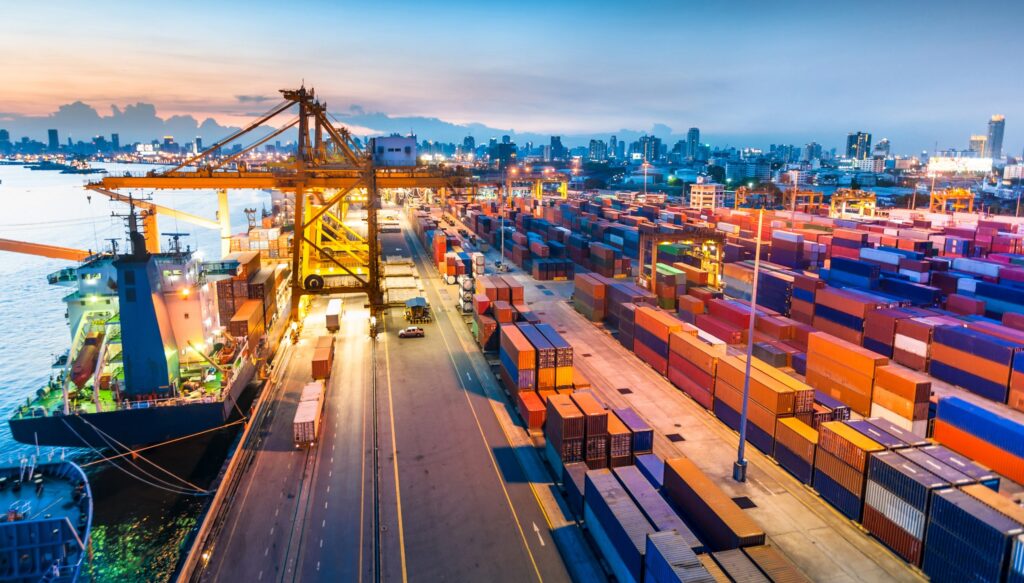
The Philippines operates several international terminals that handle US-bound freight. Each port has different strengths.
Key Export Ports
| Port | Strength | Notes |
|---|---|---|
| Manila (MNL) | Most frequent US services | Peak-season congestion possible |
| Cebu (CEB) | Strong for Visayas exports | Limited direct US sailings |
| Davao (DVO) | Ideal for Mindanao cargo | Transshipment often needed |
Since port activity affects transit time, your shipping agent selects the best routing for your cargo type and destination.
Why Is Customs Handling So Important for Philippines–US Shipments?
Customs compliance decides whether cargo clears smoothly or faces costly delays. Because US and Philippine regulations differ greatly, documentation accuracy becomes essential.
A shipping agent ensures:
- Correct HS code classification
- Complete commercial invoice details
- Clear packing list with dimensions and weights
- Proper certificates and regulatory documents
- FDA, USDA, or EPA compliance for restricted goods
- Early filing of US ISF 10+2 document
Moreover, small documentation errors can trigger customs exams, extend transit time, and increase container charges.
What Documents Are Required for Import and Export?
Accurate documentation guarantees smooth port operations and customs clearance.
Document Checklist Table
| Document | Purpose |
|---|---|
| Commercial Invoice | Declares cargo value |
| Packing List | Confirms volume and weight |
| Bill of Lading / AWB | Primary transport record |
| Certificate of Origin | Required for tariff eligibility |
| Export Declaration | Needed for Philippine outbound cargo |
| HS Code Documentation | Determines duties and regulatory scope |
| Commodity-specific permits | For food, electronics, cosmetics |
Because documentation variations differ by commodity, expert review reduces risk and ensures compliance.

How Do Shipping Agents Improve Export Performance for Philippine Manufacturers?
Exporting from the Philippines requires alignment between factories, consolidators, and ocean carriers. Furthermore, many small and medium-sized factories provide incomplete information, which slows the shipping process.
A US shipping agent helps by:
Coordinating pickup schedules
Consolidating multiple suppliers into fewer shipments
Checking packaging and labeling accuracy
Identifying the fastest or most cost-effective sailing
Providing milestone tracking from origin to destination
Therefore, exporters maintain predictable production cycles and faster turnaround times.
How Do Shipping Agents Help US Importers With Philippine Cargo?
Importers depend on accurate arrival estimates, reliable tracking, and transparent costs. Because Philippine cargo often passes through transshipment hubs in Singapore, Hong Kong, or Taiwan, real-time visibility becomes essential.
A professional agent ensures:
- Updated ETA predictions
- Reduced demurrage and detention fees
- Smooth coordination at US ports
- Quick customs clearance
- Efficient final-mile delivery to warehouses
Additionally, centralized communication eliminates confusion across multiple logistics providers.
Real Case Studies: Successful Philippines–US Import Export Operations
- Cargo: 450 kg
- Mode: Air Freight
- Cost: USD 2,650
- Transit Time: 4 days
- Result: HS code review prevented PGA inspection, achieving 24-hour clearance.
- Cargo: 1×40HQ
- Cost: USD 2,720
- Transit Time: 31 days
- Result: Pre-inspection reduced damage risk and achieved on-time delivery.
- Cargo: 8 CBM LCL
- Cost: USD 620
- Transit Time: 36 days
- Result: FDA documents checked early, preventing customs hold and storage costs.
How Should Companies Choose the Right US Shipping Agent for Philippine Trade?
To ensure smooth import/export operations, businesses should consider:
- Proven experience with Philippine trade lanes
- Transparent pricing structures
- Real-time tracking capabilities
- Multi-supplier consolidation support
- Deep customs clearance expertise
- Reliable end-to-end communication
- Access to air, sea, LCL, and FCL options
Because logistics performance affects customer satisfaction and operating cost, selecting the right partner becomes a long-term advantage.
Conclusion
Working with a professional us shipping agent import export Philippines partner gives businesses clear visibility, predictable costs, and faster customs clearance. With expert documentation checks, optimized routing, and strong communication, companies can confidently scale operations across both markets. Velotactlcs Logistics delivers the reliability, speed, and control needed for sustainable supply-chain growth.
Need a quote?
Ready to get started? Contact us now to request a free shipping quote.
Frequently Asked Questions (FAQ)
Yes, we manage both inbound and outbound logistics for all cargo types.
Absolutely. We consolidate at warehouses to reduce cost and simplify paperwork.
Air freight takes 3–6 days while sea freight takes 21–36 days depending on the port.
Certainly. We calculate based on HS code and US tariff rules.
Send your cargo details—weight, CBM, origin, and destination—and we will respond quickly.